
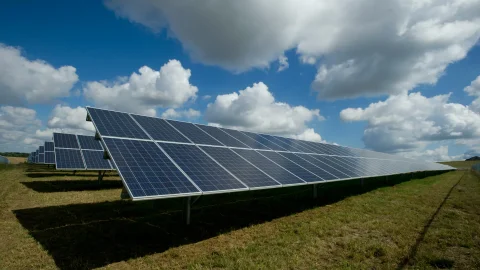
Researchers at the University of Cambridge first tested an approximately 1.2 m solar panel under the open sky, which converts plastic waste into pure hydrogen. The technology described in Nature Chemical Engineering uses a photoforming process: the panel directly absorbs light and triggers a chemical reaction that splits PET bottles and cellulose polymers simultaneously, breaking down water molecules.
Unlike the laboratory prototype with an area of 25 cm 2, the new panel is assembled at room temperature by a method of spraying: first a light-absorbing layer, then a catalyst based on cobalt and zirconium. This approach reduces cost dramatically and simplifies scaling. During 6 hours of operation under natural light, the hydrogen output was 5.24 mmol/m2 from glucose and 1.51 mmol/m2 from cellulose.
Developers note the simplicity and scalability of the installation, for which a patent has already been filed through Cambridge Enterprise. The main tasks for the next stage are to increase the durability of reactors and reduce the cost of hydrogen.