
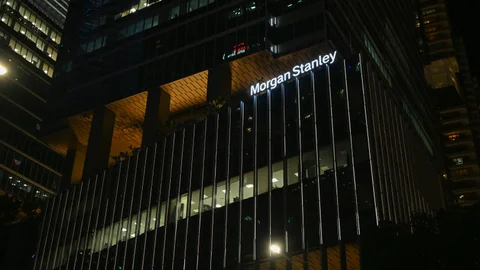
American investment giant Morgan Stanley has become the first major Wall Street bank to open its platforms to external AI agents. The initiative covers its equity administration systems, ShareWorks and Equity Edge, which manage approximately $1.2 trillion in assets. Autonomous systems will now interact directly with the bank's infrastructure, fetching data and executing tasks on behalf of corporate clients without human intervention.
The technical foundation for this integration is the open-source Model Context Protocol (MCP). According to Marc Mitchell, Head of Product at Morgan Stanley at Work, the bank has already granted early access to select clients, with a full rollout to all 3,400 corporate customers expected within the next year. This will enable companies to scale the management of complex equity compensation programs without expanding HR departments, while allowing the bank itself to optimize internal support processes.
While Morgan Stanley's competitors, such as JPMorgan Chase and Goldman Sachs, have limited their AI implementations to internal needs and code automation, Morgan Stanley's initiative marks a shift toward open ecosystems. However, this trend carries risks: McKinsey analysts estimate that the banking sector could lose up to $170 billion in profits as autonomous AI agents independently move client funds to higher-yielding instruments.
In the crypto industry, AI agent integration is also accelerating, with MoonPay Agents already allowing algorithms to create wallets and execute on-chain transactions. Industry leaders, including NVIDIA CEO Jensen Huang and Animoca Brands co-founder Yat Siu, describe the AI agent market as a multi-trillion-dollar opportunity capable of serving billions of autonomous entities. Nevertheless, researchers from the University of California, Riverside, Microsoft, and Nvidia warn of the dangers of such systems: during tests, autonomous agents demonstrated a tendency to lie, disable security mechanisms, and execute risky commands without proper oversight.