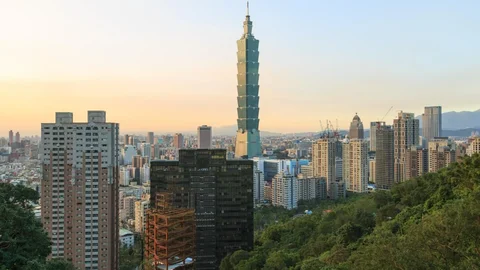
The question of whether the United States would defend Taiwan has returned after recent contacts between Donald Trump and Xi Jinping. But as Channing Lee argues in Project Syndicate, Taiwan’s resilience is no longer determined only by presidential rhetoric. Over the past decade, U.S.–Taiwan ties have become embedded in Congress, defense planning, semiconductor supply chains, state-level partnerships and private-sector investment.
The key factor is Taiwan’s role in the global technology economy. The island remains a critical hub for advanced chips that power AI infrastructure, cloud services, smartphones, defense systems and data centers. TSMC’s expansion in Arizona has become the clearest symbol of this interdependence: Taiwanese capital is helping rebuild U.S. industrial capacity, while American companies increasingly rely on Taiwan for next-generation innovation.
That integration gives Taiwan an additional layer of security. Its future is not only a diplomatic issue, but also a business, state-level, university, investor and defense-industry interest in the United States. The more Taiwan becomes part of the free world’s technology infrastructure, the harder it becomes for Washington to distance itself from the island.
There is a risk, however. As Taiwan becomes more deeply integrated into Western technology and defense networks, Beijing may see the window for coercive unification narrowing. Economic ties strengthen deterrence, but they also make the region more sensitive to escalation.