
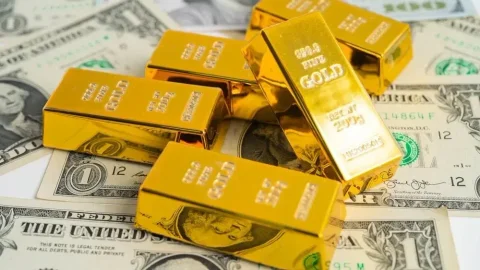
The traditional inverse correlation between gold and the US dollar index is at risk of undergoing significant changes in the near future. Traders have currently completed a large-scale liquidation of bets on the precious metal's rise, while simultaneously actively disposing of dollar assets. This confluence of circumstances is creating a unique market situation in which the traditional mechanisms of interaction between the currency and commodity markets may cease to function as usual.
While the dollar index (DXY) has shown a localized rise this month despite an influx of new short positions, a precipitous decline is unlikely. The huge volume of accumulated short positions acts as a natural brake on sharp downward movements, creating a sticky market environment. Meanwhile, gold, which has virtually doubled in value during the protracted trade conflicts, has freed itself from its technical limitations and now has the potential for an even more rapid rise than ever before.
The current situation poses particular danger for those betting solely on a weakening US dollar. If another round of trade tensions triggers a sharp aversion to risk, investors will begin to seek refuge in safe haven assets, which will support both gold and the dollar simultaneously. In this scenario, demand for the dollar as the world's leading reserve currency could be so strong that its appreciation significantly outpaces the precious metal's growth, disrupting traditional trading patterns.
The final market dynamics will depend on the strength of external economic shocks, which could push the dollar to impressive records despite bearish expectations. Gold, meanwhile, remains the main beneficiary of instability, but its rise may now be accompanied not by a decline, but by a parallel rise in the dollar. Investors should prepare for a period of "dual safe havens," where both assets will appreciate in tandem amid global uncertainty and a reassessment of fundamental relationships.