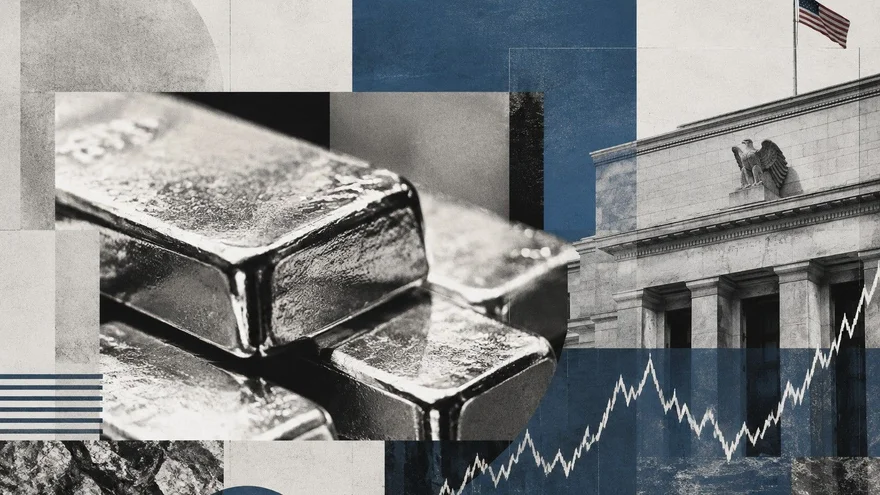
High rates may restrain silver's growth, while a shortage of the metal may support its price. We explore why these factors do not contradict each other and what they mean for different market participants.
In August, silver futures gained 15.9%. But past growth does not answer the main question for buyers: is there a basis to expect the trend to continue? After the decision of the Federal Reserve System — the central bank of the USA — this question became especially important. On September 16, the Fed raised the rate to 3.75–4.00% for the first time in three years.
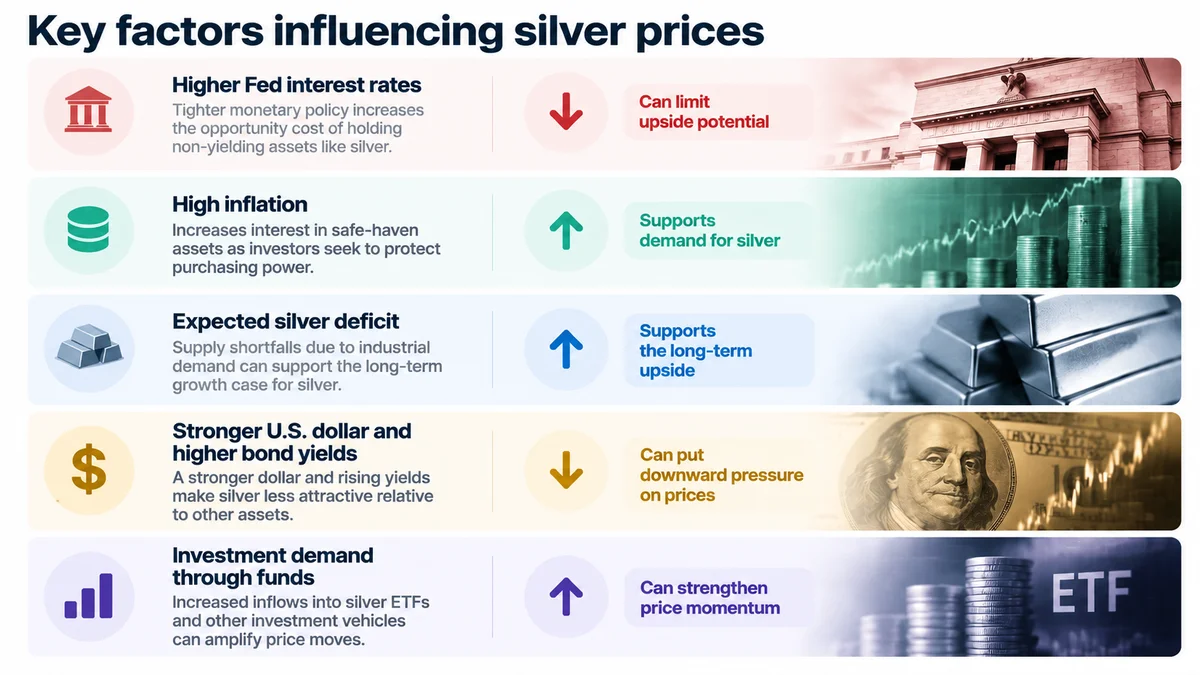
Now, silver is influenced by opposing factors. Higher rates may reduce investor interest in the metal. At the same time, the industry forecast still suggests that demand for silver will exceed supply for the year.
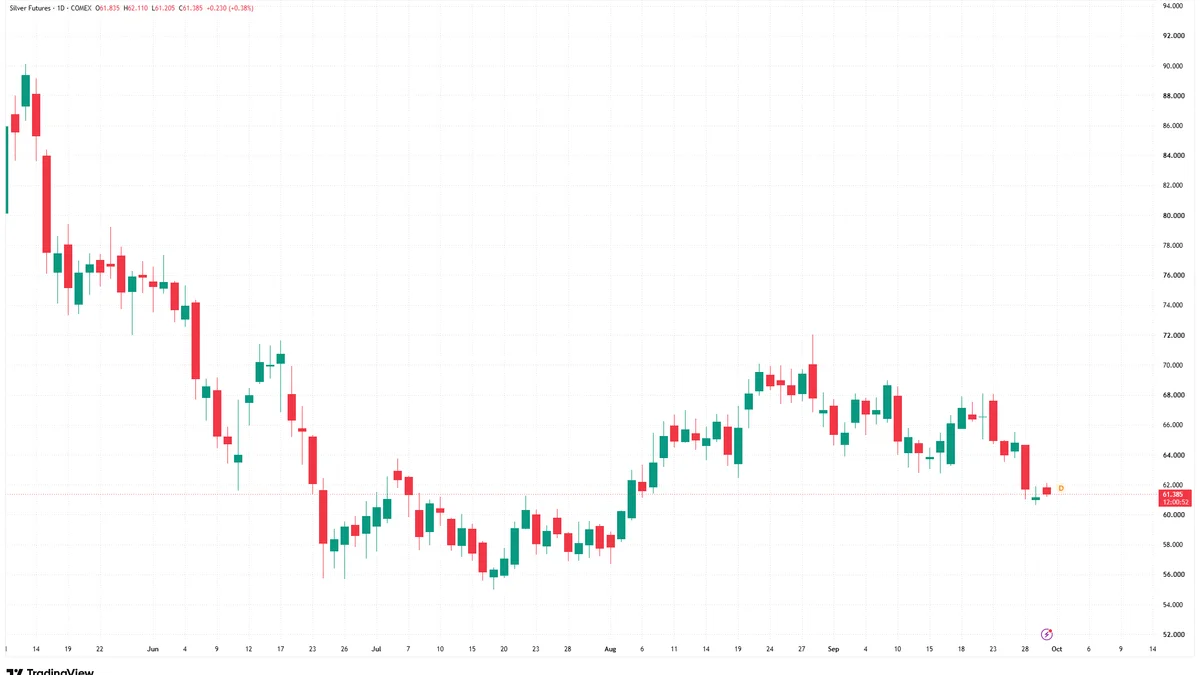
Long-term prospects for silver and the right time to buy are not the same. Therefore, the situation should be considered separately for a trade lasting several days and for investments over months.
Why the Fed's Decision is Important for Silver
Silver itself does not yield interest. Bonds, on the other hand, provide interest income. When their yield, adjusted for inflation, rises, investors have a more attractive alternative to holding the metal. This can restrain demand for silver.
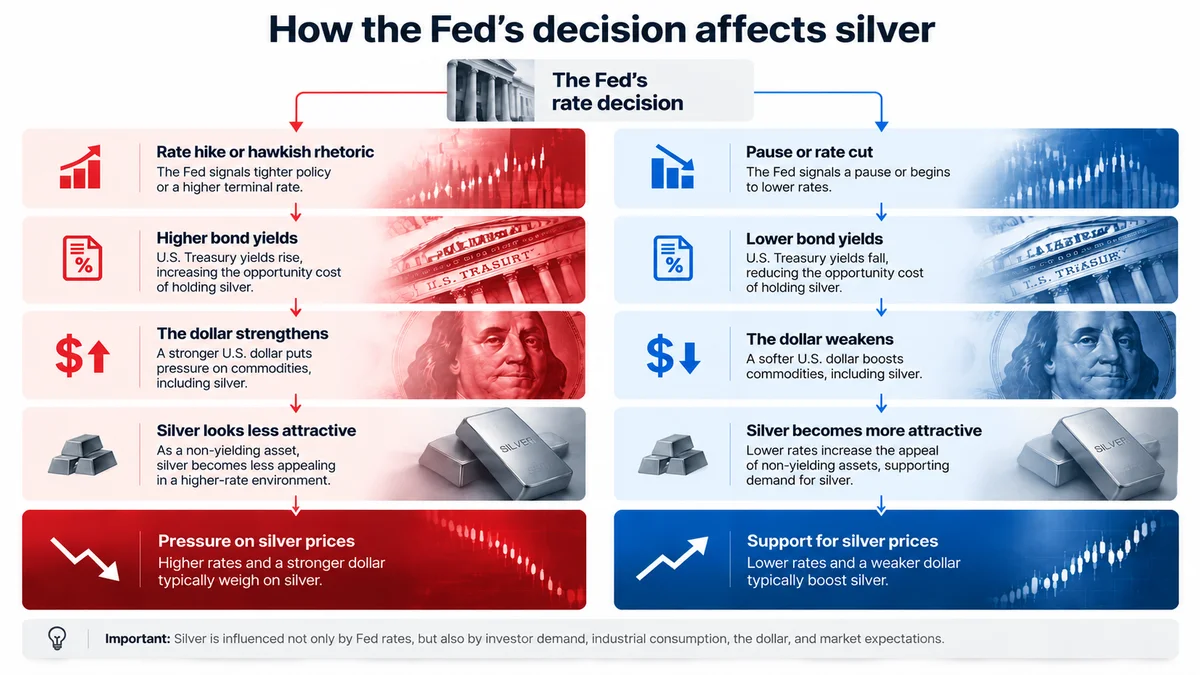
Therefore, high inflation does not necessarily lead to a rise in its price. The Fed's response is also important: fighting price increases may be accompanied by high rates, which hinder the metal's appreciation.
Inflation dynamics remain one of the key factors for the silver market, as it influences expectations regarding further Fed actions. Even a moderate slowdown in price growth does not guarantee a quick reduction in rates. In August, consumer prices in the US were 3.4% higher than a year earlier. Retail sales increased by 1.2% for the month. However, sales are measured in money, without adjusting for price increases: this does not mean that Americans bought 1.2% more goods. For silver, this is an argument against counting on a quick rate reduction. But the rate increase itself does not mean an inevitable decline in silver prices: what matters is how market expectations and the price itself change.
If Silver is in Short Supply, Why Might it Depreciate?
At the same time, industrial and investment demand can move in different directions. This possibility was pointed out by Metals Focus Managing Director Philip Newman in an interview with Kitco News on April 15, 2026: "A decline in demand in industrial sectors may be offset by demand from private investors. This is quite possible."
However, a deficit does not mean that the metal is no longer available for purchase. There are accumulated stocks in the market, and their owners can sell silver. Moreover, stocks in London vaults increased in August. However, the total volume of metal does not show how much of it owners are willing to offer to buyers.
There is also a nuance with demand. The same industry forecast suggests a 3% reduction in industrial consumption of silver in 2026. In solar energy, for example, manufacturers are trying to use less metal per unit of product. Therefore, an increase in panel production does not necessarily mean an increase in silver consumption.
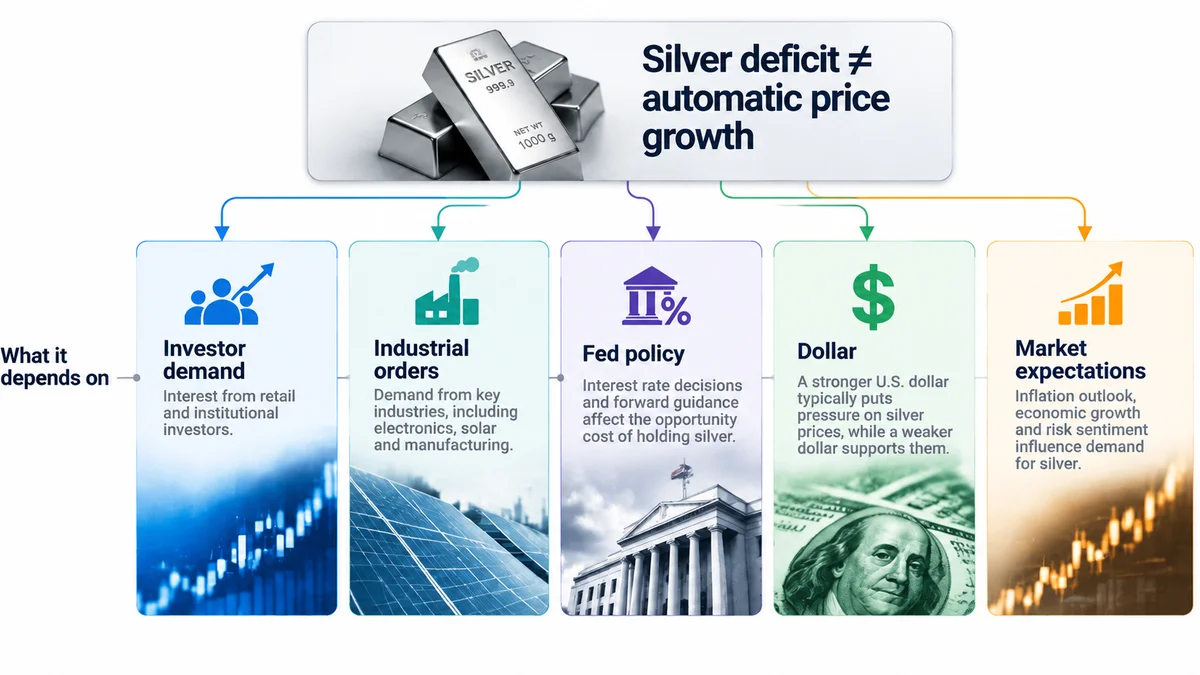
Thus, a deficit may persist even with reduced consumption. Both processes are important for price assessment, not just the attractive thesis for buyers about metal scarcity.
What Major Market Participants Are Doing
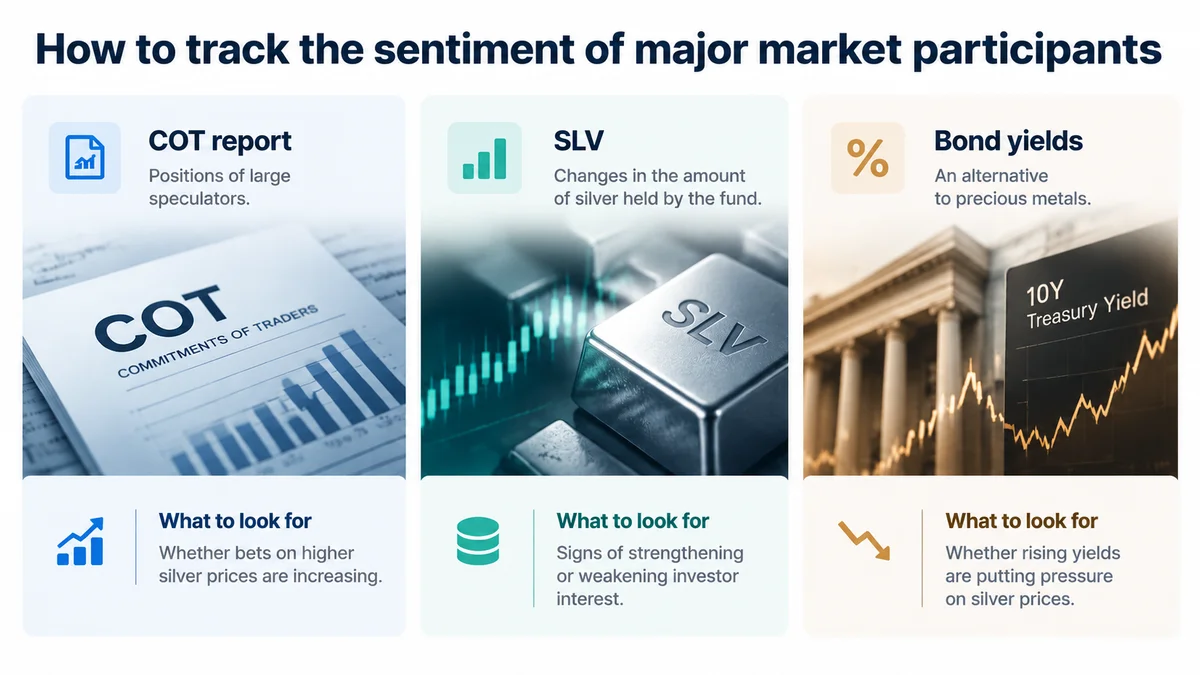
Data on investment demand do not yet provide a clear picture.
In the report on manager positions as of September 8, the balance of positions on silver's rise over positions on its decline increased. But this snapshot was taken before the September inflation data publications and the Fed's decision. It does not show how managers reacted to the latest news.
For understanding the trend, the sequence of observations is important. If the price recovers and the volume of metal in such products simultaneously increases, this provides more grounds to assume strengthening investment demand than a single day of price growth.
For Traders: Price Reaction Matters, Not Just the News
For a trade lasting several days or weeks, the reasoning "silver is scarce, so it should be bought" is insufficient. Likewise, the reverse formula: "The Fed raised the rate, so it should be sold" is also insufficient.
Osaic's Chief Market Strategist Phil Blancato noted in a Reuters comment on September 16, 2026, that the 0.25 percentage point rate increase was largely priced into market prices. According to him: "The more significant factor in the market's reaction will be the signals the Fed gives about further actions."
Therefore, instead of trading solely based on news, it is useful to consider three possible scenarios and monitor which one is confirmed by price movement:
Resumption of growth. The price rises above recent highs and holds there. This scenario looks more convincing if pressure from rates weakens and signs of strengthening demand appear.
Movement without clear direction. The price fluctuates within familiar boundaries, and attempts to break out do not continue. Not trading in such a situation is also an acceptable decision.
Continuation of decline. The price falls below recent lows, and recovery does not occur. The forecast of an annual deficit alone does not negate this scenario.
These are guidelines for observation, not ready-made entry signals.
Before trading, determine the acceptable loss, position size, and exit conditions. A stop-loss — an order to close a position in case of adverse price movement — helps manage risk but does not guarantee execution at the exact specified price. When using leverage, it is especially important to consider potential losses, not just the amount needed to open a trade.
For Investors: Term, Instrument, and Investment Size Matter
Over a horizon of months, the main question is different: will supply constraints and investor interest remain strong enough to outweigh the weakness of individual industrial sectors?
This idea should be tested against new demand and supply estimates, stock dynamics, and investment demand. A single price drop does not necessarily invalidate it. But maintaining the idea does not obligate maintaining the previous investment size.
Instrument | What to Understand |
Physical Silver | The result is influenced by the purchase and resale price, storage costs, and other associated expenses. |
Exchange-Traded Product Backed by Silver | Check the availability of metal, the structure of the product, and annual expenses. |
Mining Company Shares | This is an investment in a business: the result depends not only on silver but also on costs, debt, and mine operations. |
Futures | Important are the contract size, required margin, its duration, and settlement or delivery terms. |
CFD — Contract for Difference | The metal is not physically acquired. Consider leverage, commissions, and the cost of holding the position. |
These instruments cannot be considered interchangeable. For example, a rise in silver does not guarantee the same rise in the producer's shares, and the costs of holding a CFD for a long time can significantly alter the trade's outcome.
The size of the investment is also important. A hypothetical example: if silver without leverage occupies 5% of a portfolio and depreciates by 30%, the direct reduction in the total portfolio value would be about 1.5%. This assumes that other assets and the exchange rate remain unchanged. This is not a recommended share, but a way to assess the consequences of an unsuccessful scenario in advance.
Finally, the return on investment in dollar terms may differ from the return in the investor's currency. For example, a weakening of the dollar against the euro can reduce the return on investment when converted to euros if there is no separate protection against currency fluctuations.
Before trading silver, compare commissions, the spread between the purchase and sale price, the cost of holding the position, and the minimum trade size. Check the availability of the instrument for your country and the conditions of the servicing company on the AXI website.
View CFD conditions for silver at AXI
Events to Watch Next
After the Fed's decision, attention should shift to data that can alter expectations regarding rates and the state of the economy.
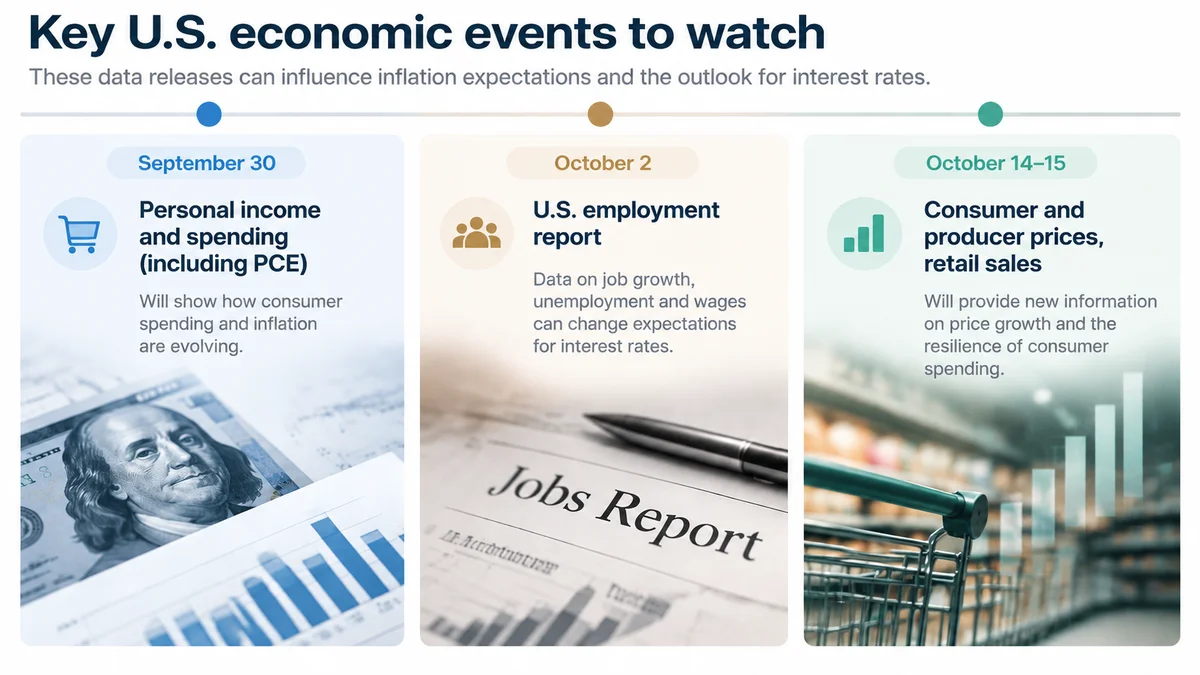
The significance lies not only in the indicator itself but also in its deviation from analyst expectations, the revision of past data, and the subsequent market reaction. The first price jump after the news does not yet indicate the beginning of a sustainable movement.
What Will Happen to Silver in the Near Future
In the coming days and weeks, the key for silver will be the balance between two factors: pressure from interest rates and demand for the metal. A decline in bond yields and increased investor interest could create conditions for price recovery. Conversely, maintaining high yields could restrain silver purchases, which do not yield interest themselves. The data reviewed in the article do not yet provide sufficient grounds to confidently speak of either a resumption of sustainable growth or an inevitable continuation of decline.
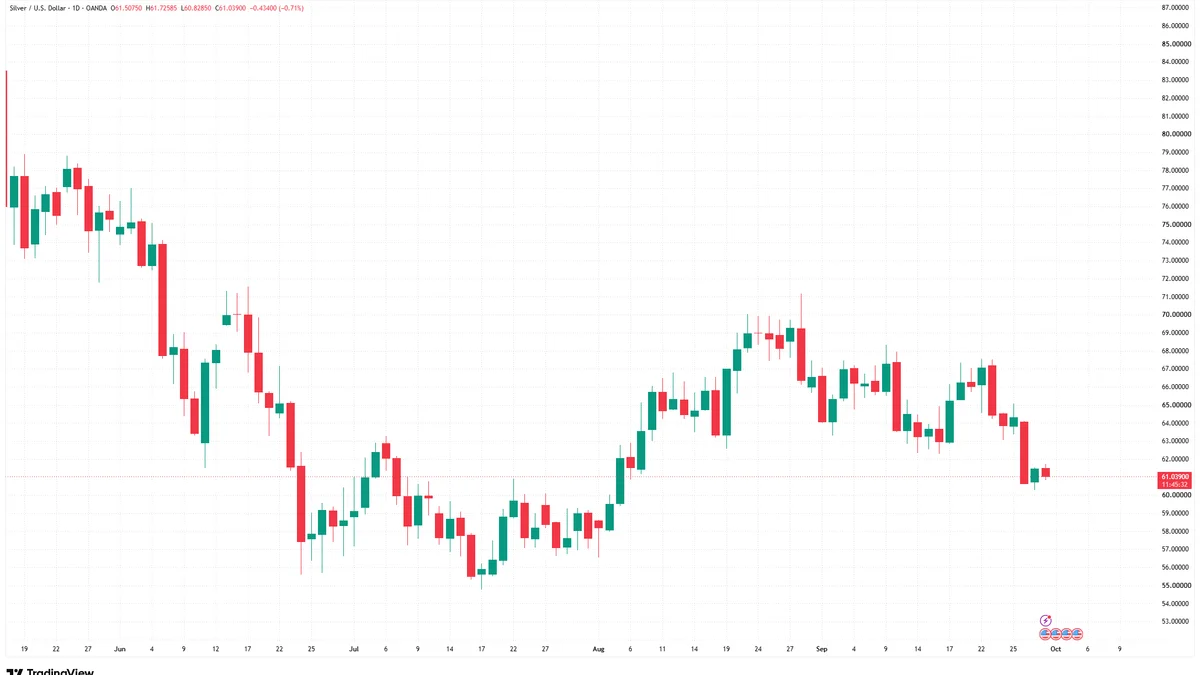
Silver to US Dollar (XAGUSD). OANDA quotes in real-time. Data may differ from COMEX futures prices mentioned in the article
The forecasted silver deficit remains an argument in favor of its long-term prospects but does not guarantee a price increase in the near future. Especially since this forecast simultaneously suggests a reduction in industrial consumption: a metal shortage by year-end may coincide with weakened demand in certain sectors. Therefore, assessing prospects solely based on a deficit report is insufficient.
The nearest benchmarks will be new data on US inflation and labor market, as well as silver's reaction to these publications. It is important not only the first movement after the news but also whether it persists in subsequent trading sessions.
Currently, the silver market is caught between two opposing forces: limited supply and potential pressure from high rates. Therefore, the key question remains not the presence of individual positive factors, but which one will prove stronger in the new market conditions.