

A 1995 Price List Valued One Gigabyte of RAM at $64,000
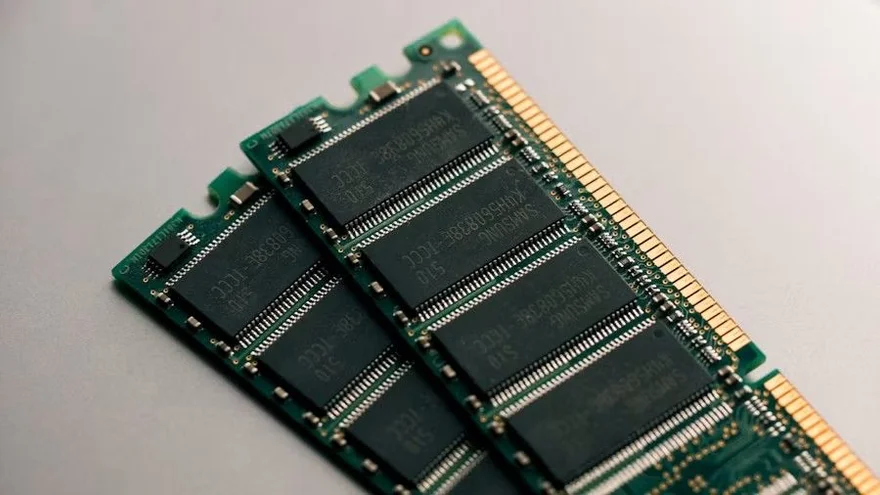
Professional communities are discussing an archived press release from Advantage Memory Corporation, dated 1995, which contains a price list for RAM modules in the then-new DIMM format. An analysis of historical data allows for a detailed comparison of the cost of computing resources from thirty years ago with today's market realities.
According to the published price list, a mathematical calculation shows that equipping a personal computer with one gigabyte of RAM in 1995 would have cost approximately $64,000. Adjusted for accumulated inflation over the past three decades, that sum is equivalent to roughly $140,000 in today's prices — comparable to the cost of a full residential home during that historical period.
The mid-1990s marked a technological transition in the computer industry from SIMM modules to the new DIMM standard. At that time, 16 megabytes was considered the standard amount of RAM for a home personal computer. Simple arithmetic based on the archived price list shows that purchasing that volume of memory using the new technology cost around $800. Adjusted for inflation in today's terms, that figure amounts to approximately $1,751 — for memory modules alone, not counting the cost of a central processor, storage drives, or other system components.
By comparison, a 16-gigabyte DDR5 RAM kit currently costs consumers between $200 and $250. Despite the enormous gap in historical retrospect, modern semiconductor market analysts are noting signs of a shift in pricing dynamics within the memory segment.
Industry forecasts point to possible structural changes in supply chains. According to available estimates, DRAM chip shipments to module manufacturers could decline by more than 70% in 2027. Meanwhile, contract prices for server memory are showing an upward trend, which is gradually being reflected in the consumer market segment as well. SK hynix Chairman Chey Tae-won stated that a shortage of silicon wafers for DRAM production could persist until at least 2030. The situation is compounded by the strategic decision of major memory manufacturers to shift production lines toward HBM (High Bandwidth Memory) modules for AI system accelerators, where operating margin figures are significantly higher.
A historical retrospective shows that in the second half of the 1990s, RAM prices fell to roughly one-fifth of their 1995 levels due to intense competition among manufacturers. The cost per gigabyte on storage drives also declined steadily every few months. Meanwhile, the cost of central processors remained relatively stable across both periods: top-tier chips from the mid-1990s sold for around $750, while mid-range models from current generations are priced at approximately $400.
An analysis of archival data vividly illustrates the scale of the decline in computing resource costs over three decades. Around that same historical era, Microsoft founder Bill Gates was articulating the vision of a personal computer in every home and on every desk. In retrospect, that forecast proved conservative, as the computing power that was considered high-performance in the 1990s is now integrated into mass-market mobile devices.