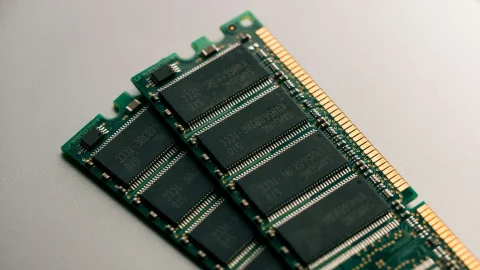
An eighteen-year-old private investor purchased a batch of twenty Kingston Fury Beast DDR5 RAM modules for a total of $ 1.6 thousand with the aim of their long-term storage and subsequent sale in 10-15 years. The buyer's strategy is based on the hypothesis of a cyclical shortage of hardware: he expects that by the time the current standard becomes obsolete, demand from owners of outdated systems will allow assets to be realized with a five-fold profit, reaching $8.0 thousand. This approach is based on the assumption that the growing demand from the artificial intelligence sector will not allow memory chip prices to quickly return to historical lows, repeating the scenarios of past market cycles.
The current semiconductor market situation is indeed showing signs that partially confirm this logic. The spot price of a 16-gigabit DDR5 chip increased from $6.84 in September 2025 to $27.20 by December, providing a quarterly increase of almost 298%. A similar trend is observed in the retail segment: 32 GB sets increased in price from less than $90.0 to $529.0 by the end of the year, and in the first quarter of 2026, consumer memory increased in price by up to 110%. HP also noted that the share of memory in the cost of PC components increased to 35% from 15-18% a quarter earlier. The fundamental reason for this trend is the redistribution of production capacities of leading manufacturers such as Samsung, SK Hynix and Micron. These companies, which control more than 95% of the global DRAM market, are actively shifting production lines to high-margin HBM memory for AI accelerators, which is estimated to absorb about 20% of global production in 2026.
Despite the optimistic forecasts, experts point to significant risks of such an investment strategy. Historical experience shows that technological components are poorly suited for long-term capital preservation: after eliminating shortages and commissioning new capacities, DRAM prices traditionally collapsed to record lows, as happened after the booms of 2017-2018 and the end of the 2010s. In addition, physical storage of modules for a decade carries risks of contact degradation and oxidation. By the time of the proposed sale, current computing platforms are likely to switch to fundamentally new standards, completely negating the collectible or practical value of outdated equipment.
***
The material has been prepared solely for informational purposes and does not constitute financial advice or recommendation.