

Alibaba to Raise $10.2 Billion Through Share Placement to Develop AI
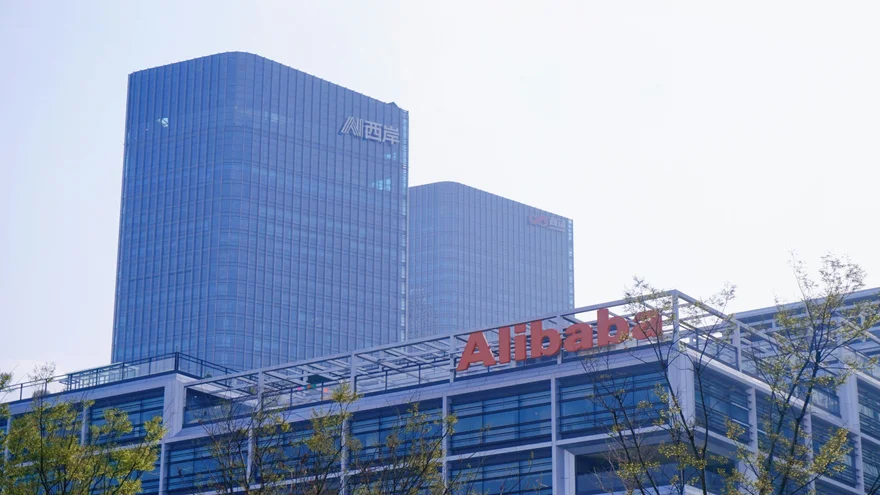
Chinese corporation Alibaba will place 710 million new shares worth HK$80 billion, equivalent to $10.2 billion USD. The company will direct all funds raised toward artificial intelligence development, including computing infrastructure, proprietary chips, models, and applications. The placement price was set at HK$112.70 per share, representing an 8.4% discount to the closing price on August 21. The deal is expected to close on August 26. According to Reuters, the issuance became the largest follow-on offering among all Hong Kong listed companies and the third largest globally in 2026, after similar placements by Alphabet and Intel. The new shares will represent approximately 3.6% of Alibaba's enlarged share capital.
Demand for the placement significantly exceeded the offered volume. According to sources at the agency, orders totaled approximately $28 billion, of which around $6 billion came from long-term and sovereign investors. In the company's official statement, it noted that the capital raised will enable expanded capabilities across the full AI stack. Alibaba did not disclose the exact allocation of funds across individual areas.
On August 24, Alibaba shares in Hong Kong fell by as much as 10.5%, later paring losses to approximately the size of the placement discount. Investors reacted negatively to the dilution of existing stakes. Additional pressure on the stock price comes from questions around the payback timeline for rapidly growing artificial intelligence expenditures.
Financial metrics already reflect the scale of investment. For April–June, Alibaba's capital expenditures increased 75% year-over-year, reaching 67.68 billion yuan, equivalent to approximately $10 billion. The company attributed the growth primarily to AI infrastructure development and processor procurement. At the same time, net profit for the same quarter declined by 75%. Revenue from the AI Cloud and Compute Services division surged 45% to 48.44 billion yuan, while revenue from AI products specifically exceeded $1.8 billion, marking triple-digit growth for the twelfth consecutive quarter.
The new placement complements a previously announced investment program. In February 2025, the company pledged to invest no less than 380 billion yuan in AI and cloud infrastructure over three years, which at current exchange rates amounts to approximately $56.5 billion. By August, Alibaba had already deployed nearly half of the program's allocated budget. The corporation's CEO Eddie Wu explained the acceleration of spending as a necessity to build computing capacity ahead of future demand. The company expects the investments to pay off in approximately three years, or in two and a half years with margin improvement. One of the ways Alibaba aims to reduce costs is by transitioning to its proprietary T-Head processors, whose share in data centers is set to gradually increase.
On a global scale, Chinese technology companies still invest significantly less in AI than their American competitors. According to Capital Group estimates, the combined capital expenditures of Microsoft, Amazon, Alphabet, Meta, and Oracle reached $791 billion through the end of July. For ByteDance, Alibaba, Tencent, and Baidu, the comparable figure stood at $118 billion. One of the reasons for this gap remains restrictions on the supply to China of the highest-performance accelerators, which forces local developers to more actively create their own processors and optimize models for lower computing resources.
Alibaba is making a simultaneous bet across multiple layers: proprietary T-Head chips, cloud infrastructure, the Qwen model family, and consumer AI products. In August, company representatives reported that downloads of its open-source models had exceeded 3 billion. The company has released more than 460 neural networks, on the basis of which developers have built hundreds of thousands of derivative solutions. In parallel, Alibaba continues its business restructuring and previously announced the sale of its gaming division Lingxi Games to Trustar Capital for upwards of $1.5 billion, citing a focus on AI and cloud technologies as the rationale.