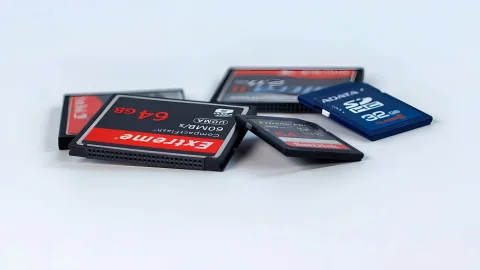
AMD Corporation has officially announced the acquisition of a promising startup Taalas from Toronto. This young company was founded just three years ago and specializes in unique silicon. In their chips, the weights of the neural network are physically burned directly into the metal structure. The deal is still awaiting final approval from regulatory authorities in various countries. However, technical experts are already actively discussing the bold concept of domestic use of such devices. Users will be able to buy artificial intelligence models like regular game cartridges for consoles. The software update is replaced here by the purchase of a new physical media. Boxes with different models and corresponding price tags will appear on store shelves. The computing architecture completely eliminates the classical separation of processor and memory according to the von Neumann scheme. The weights are stored directly in the metal connections between the transistors without separate cells. Data does not need to be constantly pulled from remote repositories to process requests. The HC1 demo contains a wired Llama model and occupies a huge crystal area. The claimed token generation rate is many times higher than the performance of modern accelerators from Nvidia and Cerebras. At the same time, public tests sometimes show hallucinations due to the strong compression of the model parameters.
Enthusiasts have already come up with many delivery formats for such unusual computing modules. These can be compact USB dongles or full-fledged PCIe expansion cards. Motherboard manufacturers are able to add special slots similar to RAM. Inevitably, there will be a secondary market for used cartridges with outdated versions of neural networks. Even smartphones can become modular devices with replaceable smart blocks. Skeptics rightly point to the physical limitations of lithographic equipment in the production of such chips. The area of the current demonstration sample is already approaching the technological limit of exposure. The quality of responses suffers noticeably due to the extreme compression of the eight-billion model to three bits. The context window is also limited by the amount of built-in static memory on the chip itself. By definition, it is technically impossible to burn a dynamic cache of keys into metal. The current demo supports only a small fraction of the context of the original language model. Proponents of the technology counter these remarks by not needing advanced reasoning. Simple tasks like classifying requests do not require the power of flagship systems. Instant response allows you to run dozens of attempts to solve a single problem in parallel. Taalas management strives to rethink inference through the creation of specialized hardware. AMD's vice president promises to strengthen the company's portfolio through the energy efficiency of the new technology.
The corporation's plans include integrating the development into the future roadmap of Instinct accelerators. Engineers will create collaborative system solutions to improve overall performance. The official press release does not mention consumer cartridges as a target product at all. The entire discussion about replacement modules arose exclusively in the professional community and the media. The market is getting a fundamentally new approach to the deployment of artificial intelligence models. The physical nature of the media solves many problems of protecting developers' intellectual property. Companies will be able to sell their algorithms without the risk of rapid copying or hacking. The power consumption of such systems is significantly lower than that of traditional general-purpose graphics accelerators. The absence of constant data movement drastically reduces heat generation during operation. Specialized tasks will receive unprecedented processing speed at minimal cost. Consumer electronics will be able to gain local intelligence without dependence on cloud services. The privacy of user data will increase due to the complete autonomy of computing. The technology industry is on the verge of forming a new segment of hardware. The success of commercialization depends on the ability of engineers to overcome current physical barriers. The balance between speed and quality of responses will be a major challenge for developers. Consumers will soon see real products bringing this futuristic concept to life. Experts will continue to closely monitor the development of this ambitious area.