Bitcoin Lags Behind S&P 500 Amid ETF Outflows

Bitcoin (BTC) continues to lag behind the US stock market despite the recovery of tech stocks. According to Bloomberg data as of November 10, 2026, the leading cryptocurrency has lost about 16% of its value since the beginning of the year, while the S&P 500 index has gained approximately 10%. The difference in returns has reached 26 percentage points.
The divergence became particularly noticeable on November 9, when the Nasdaq 100 index rose by 3.4% following a sell-off in tech stocks the previous week. Bitcoin barely supported the stock market recovery. By November 10, US stocks began to decline again, but the drop in BTC was more pronounced.
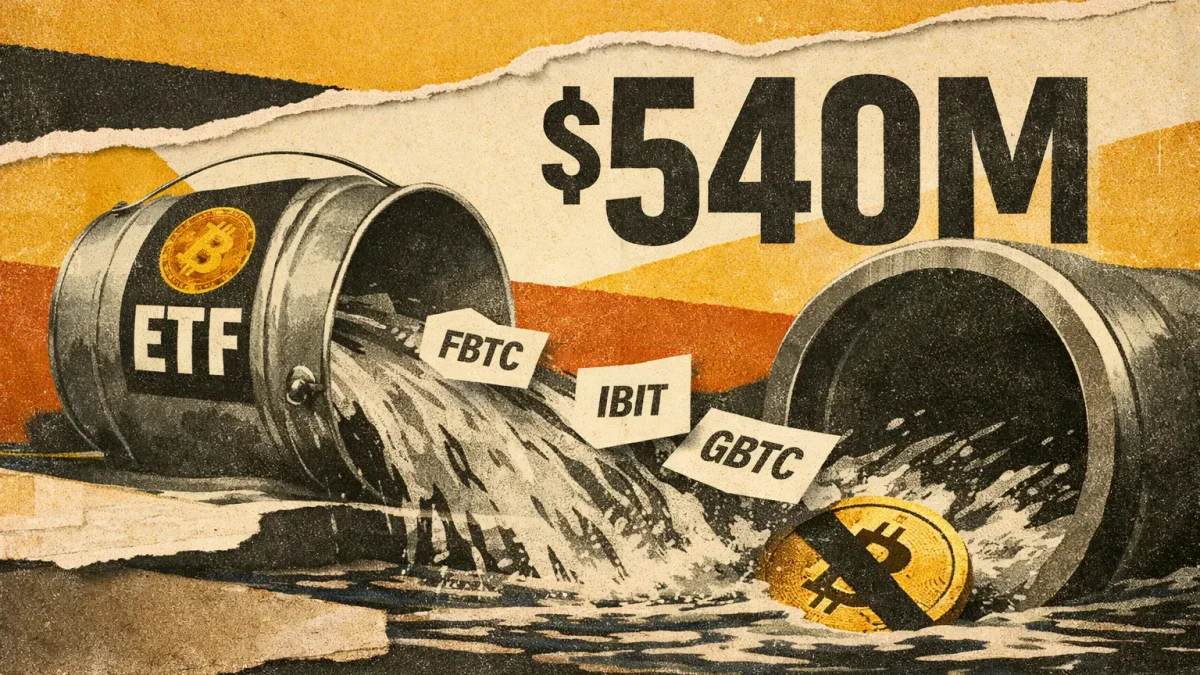
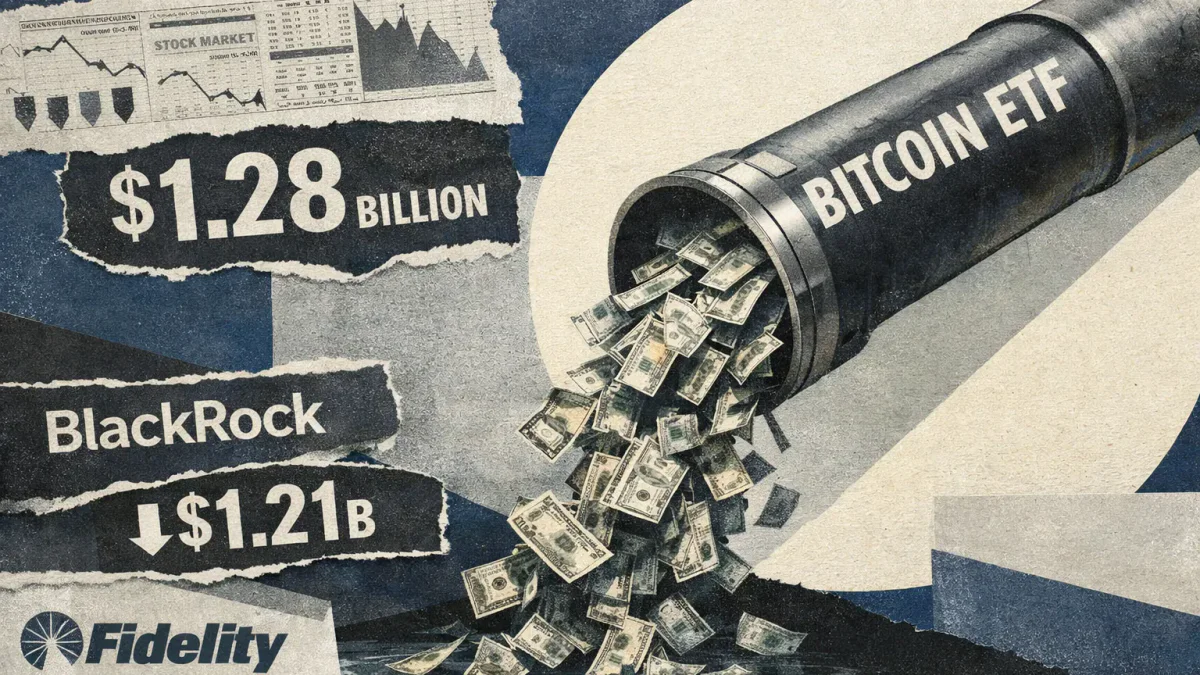
The weak performance was accompanied by a decrease in demand through US spot exchange-traded funds (ETF) for bitcoin. According to Farside Investors, over the 5 trading sessions from November 2 to 6, the total net outflow from such instruments amounted to about $1.28 billion.
Bitcoin Faces Competition for Speculative Capital
Market participants are considering several factors that could have influenced the decline in interest in bitcoin. Among them are the high yields of alternative assets, the consequences of large-scale liquidations of leveraged positions, and the reaction to a security incident at the Binance cryptocurrency exchange in late October.
However, the demand for risky investments does not necessarily disappear. Some speculative activity is concentrated in stocks of companies related to artificial intelligence (AI), as well as in alternative trading instruments. For example, the decentralized platform Hyperliquid offers operations with derivative contracts that allow the use of leverage.
Noelle Acheson, author of the Crypto Is Macro Now analytical newsletter, believes that bitcoin no longer holds its previous position among instruments attracting investors with a high risk appetite. In her assessment, it faces competition from small-cap companies and certain AI projects capable of demonstrating more significant price fluctuations.
However, the available data does not prove a direct shift of funds from bitcoin to these assets. Additional information on the structure of investment flows is needed for such a conclusion.
Institutional Strategies Change Bitcoin's Behavior
Another possible factor is the increased participation of large financial organizations in cryptocurrency trading. Paul Howard, senior director at trading company Wincent, explained to Bloomberg that the spread of derivative instruments and more complex hedging strategies are gradually changing the nature of bitcoin's price fluctuations.
In his assessment, such mechanisms can smooth out individual sharp movements as market participants use various risk management methods.
Historically, bitcoin has already lagged behind US stocks during periods of declining demand for risky assets, particularly in 2018 and 2022. However, Bloomberg notes that the current lag began to form back in 2025 when the cryptocurrency was reaching historical highs.
Alex Kuptsikevich, chief market analyst at brokerage company FxPro, believes that the persistent caution of market participants increases the risk of further price declines. However, his assessment does not determine the future dynamics of BTC.
Thus, the current lag of bitcoin behind stock indices is accompanied by a decrease in capital inflow through ETFs and a change in the structure of trading activity. How sustainable this divergence will be is still unknown.
This material is prepared solely for informational purposes and does not constitute financial advice or a recommendation.
Related articles