Bitcoin Miners Reduce Reserves Amid Shift to AI
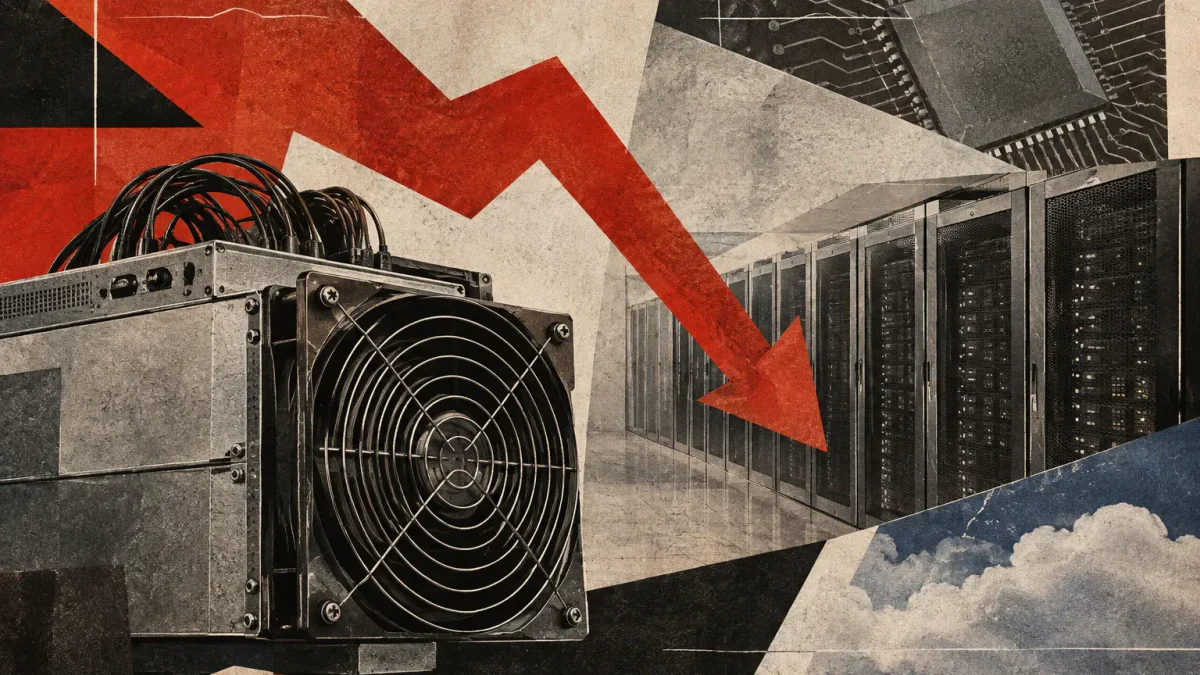
Public companies engaged in Bitcoin mining are reducing their cryptocurrency reserves amid expanding business in artificial intelligence and high-performance computing. According to the analytical platform Glassnode, as of November 18, 2026, tracked public miners have sold nearly half of their BTC holdings since January. Previously, many preferred to hold onto mined coins.
How much Bitcoin public companies have sold
According to Lookonchain's calculations published on November 10, since the beginning of 2026, 14 public companies have sold a total of 108,247 BTC. Analysts estimated the total value of these transactions at approximately $8.08 billion.
The largest volume of sales among the companies considered was by MARA Holdings. Lookonchain estimates that the miner sold 40,581 BTC for approximately $3.03 billion. The average sale price was $74,446 per coin.
Riot Platforms took second place, selling 20,264 BTC for approximately $1.51 billion. Analysts estimated the average price at $73,231.
The list of sellers also includes Bitdeer, Cango, CleanSpark, and other public companies related to cryptocurrency infrastructure.
However, Lookonchain's statistics and Glassnode's assessment reflect different indicators. The first platform calculated the sales volume of a specific group of public companies, while the second focused on the scale of reserve reduction among tracked miners.
Where MARA directs funds from BTC sales
The change in Bitcoin reserve management strategy is reflected in MARA Holdings' reports.
In the first nine months of 2026, the company sold about 26,984 BTC. After the end of the third quarter, it sold another 13,597 BTC for approximately $1.1 billion.
However, the sale of cryptocurrency does not mean that the entire amount received is directly used for building AI data centers.
According to MARA's reports, $750 million of the funds received after the quarter's end were used to fully repay Bitcoin-backed loans. This allowed the company to free up 17,477 BTC previously provided as collateral.
MARA's management views the sale of digital assets as a way to enhance financial flexibility. The funds can be used to reduce debt, finance capital projects, and develop new business directions.
One such direction is data centers for artificial intelligence and high-performance computing. The company is exploring opportunities to use energy infrastructure for both BTC mining and hosting computing equipment.
Riot Platforms signs long-term data center contracts
Riot Platforms is developing a similar strategy, engaging in both mining and building infrastructure for large computing loads.
In its third-quarter report, the company stated that in the first nine months of 2026, it sold 20,264 BTC for approximately $1.5 billion. Riot named financing the development of data centers as the main goal of the sales.
The company also disclosed the terms of new long-term agreements. Specifically, Riot signed a contract to provide 910 MW of computing power at the Corsicana site in Texas. The initial lease term is 15 years, and the expected agreement value is about $28 billion.
Another agreement provides for 191 MW of power at the Rockdale site for an initial term of 20 years. Its value is estimated at approximately $9.1 billion.
Considering agreements with several clients, Riot estimates the total contracted revenue from data centers at approximately $38 billion.
These are expected revenues over many years, not income the company has already received. Actual results will depend on project implementation and contract fulfillment.
Why miners are revising their Bitcoin storage strategy
The development of AI data centers provides mining companies with an additional option for using existing infrastructure.
Many public miners have connections to power grids, land plots, and sites designed for high energy consumption. Some of these resources can be adapted for hosting equipment for artificial intelligence and high-performance computing.
However, such re-equipment requires significant investment. Companies need to finance construction, cooling systems, power supply, and other infrastructure. Selling Bitcoin becomes one possible source of capital.
The reasons for reducing reserves may vary. Some companies direct funds to new projects, while others use them to settle obligations and cover current expenses.
Therefore, massive BTC sales do not necessarily indicate a complete withdrawal from the cryptocurrency business by miners. In some cases, it is about capital allocation between Bitcoin mining and new directions related to computing infrastructure.
The future dynamics of reserves will depend on the financial condition of mining companies, the cost of BTC mining, and capital needs for data center development.
This material is prepared solely for informational purposes and does not constitute financial advice or a recommendation.