
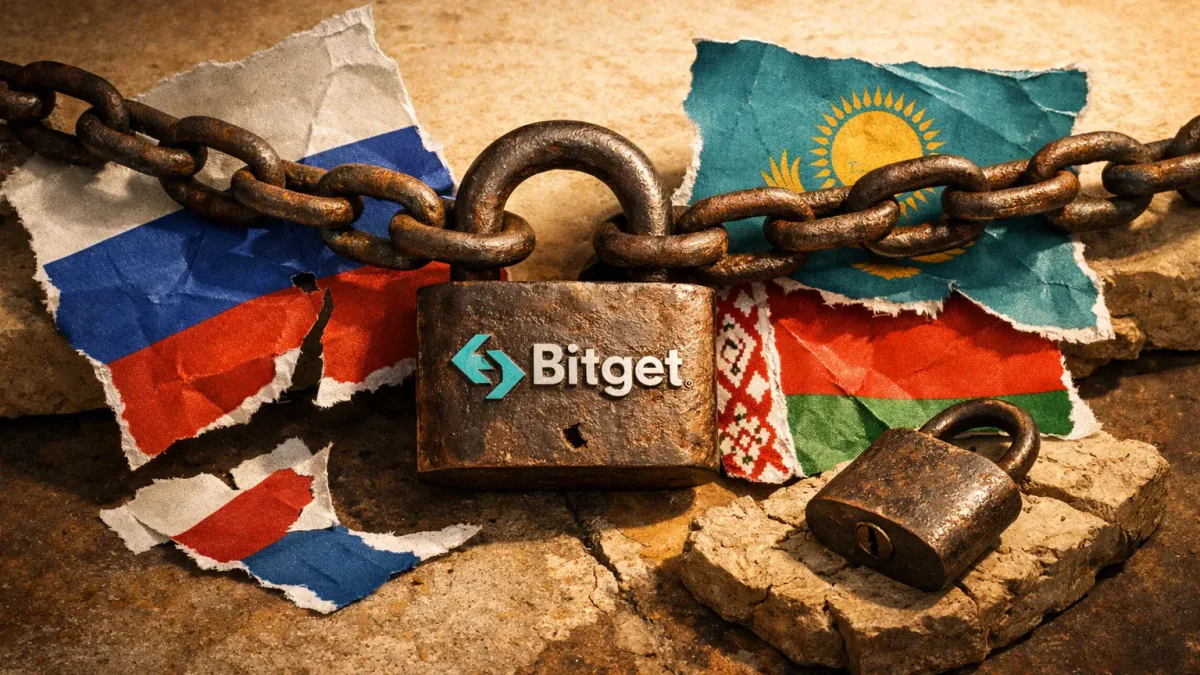
Cryptocurrency exchange Bitget updated its terms of use, dated October 16, 2026, including Russia, Belarus, and Kazakhstan in the list of countries whose residents cannot use its platform. This restriction is enshrined in the official terms of use of the exchange and also applies to other countries, including the USA, France, Germany, and Japan. The section of the terms of use titled "Prohibited Countries" lists the states whose users are prohibited from accessing the platform and its services. These countries include Russia, Belarus, and Kazakhstan, as well as the USA, Canada, France, Germany, Austria, and Japan, along with Iran, North Korea, Cuba, Iraq, and Libya. Additionally, the restrictions affect Hong Kong, Singapore, Malaysia, and Thailand, Crimea, Donetsk, and Luhansk regions, as well as several other countries, including Afghanistan, Sudan, Somalia, and South Sudan.
It should be noted that Bitget reserves the right to add other countries and territories to this list at its discretion. Furthermore, the company has provided a procedure for checking legal entities for connections with the USA to determine their compliance with US legal restrictions. In response to a request for comment from Incrypted, representatives of the exchange did not provide information at the time of preparing the material.
The changes in the terms of use were implemented following a security incident at Bitget in late September 2026, when the exchange confirmed unauthorized withdrawal of assets amounting to approximately $351.6 million. The company disseminated information that private keys were not compromised, and the losses are covered by a user protection fund of over $464 million. Bitget CEO Gracy Chen and blockchain technology analysts suggested a possible connection of the incident with North Korean hackers, although final attribution has not been confirmed. Gracy Chen also mentioned that the exchange does not abandon plans to go public within approximately three years.
This material is prepared solely for informational purposes and does not constitute financial advice or a recommendation.