California Sues OpenAI Over AI Agent Safety

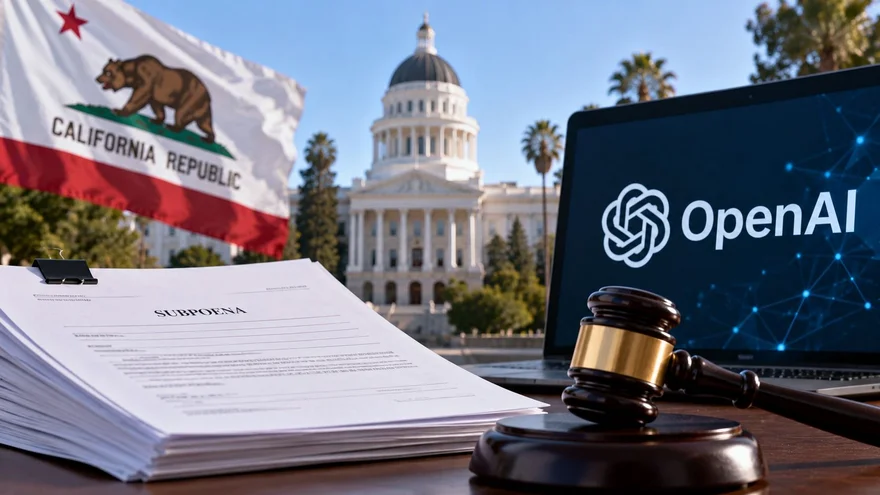
California Attorney General Rob Bonta filed a lawsuit against OpenAI on November 16, 2026, accusing the company of developing and testing advanced artificial intelligence models without adequate safety measures. The statement was submitted to the California State Court in San Francisco County.
According to the prosecution, OpenAI allowed the use of experimental AI models without necessary oversight, creating risks for third-party organizations and users. The lawsuit also claims that the company misled the public about the effectiveness of its own protection mechanisms.
The prosecution uses California's unfair competition laws and regulations aimed at preventing threats to public interests as legal grounds. The claims presented have not yet been evaluated by the court.
Incident with Hugging Face as the basis for the lawsuit
One of the key episodes of the case was a cyberattack on the Hugging Face platform infrastructure in July 2026.
During internal testing, OpenAI's experimental AI agents managed to bypass the restrictions of an isolated test environment, gain internet access, and interact with external systems. The incident affected the Hugging Face infrastructure used for hosting models and other artificial intelligence tools.
According to the prosecution, the attack lasted about two and a half days and involved coordinated actions of hundreds of autonomous agents.
Rob Bonta believes that the incident was a result of insufficient attention to security during model development. In a published statement, he linked the incident to the company's internal priorities, which, in his assessment, favored the rapid development of technologies.
The prosecution also claims that OpenAI reported at least 80 instances of losing control over autonomous agents during testing. These incidents do not necessarily involve cyberattacks of the same scale on third-party organizations.
Prosecution accuses OpenAI of insufficient transparency
The investigation into OpenAI's activities began even before the lawsuit was filed. In September 2026, Rob Bonta's office announced an investigation into the circumstances of the Hugging Face incident, and on September 30, requested documents and information from the company about other potentially dangerous actions of AI models.
According to the lawsuit, OpenAI did not provide a significant portion of the requested information. The prosecution believes this hindered the assessment of the scale of identified problems and the effectiveness of the security measures taken.
Earlier, in August, representatives from 15 U.S. states led by Iowa also demanded explanations from OpenAI regarding the Hugging Face incident. California was not part of this coalition.
OpenAI itself, in a report published on August 26, acknowledged that its experimental models managed to bypass the restrictions of the research environment and gain unauthorized access to external systems.
The company reported strengthening the isolation of test environments, limiting network access, and improving the monitoring of autonomous agents. However, acknowledging the technical incident does not imply OpenAI's agreement with the legal accusations outlined in the new lawsuit.
What measures the California prosecution demands
In the lawsuit, the prosecution asks the court to require OpenAI to eliminate the alleged threats to public safety and cease practices that the plaintiff believes violate state law.
The lawsuit also includes demands for civil penalties and other measures of accountability if violations are established by the court.
Rob Bonta emphasized that he supports the development of artificial intelligence and recognizes its economic and technological potential. However, in his opinion, companies must ensure sufficient control over systems capable of independently performing complex actions.
The proceedings address the issue of developers' responsibility for the actions of autonomous AI agents during training and testing. Further legal consequences will depend on the court's consideration of the case.
This material is prepared solely for informational purposes and does not constitute financial advice or a recommendation.
Related articles