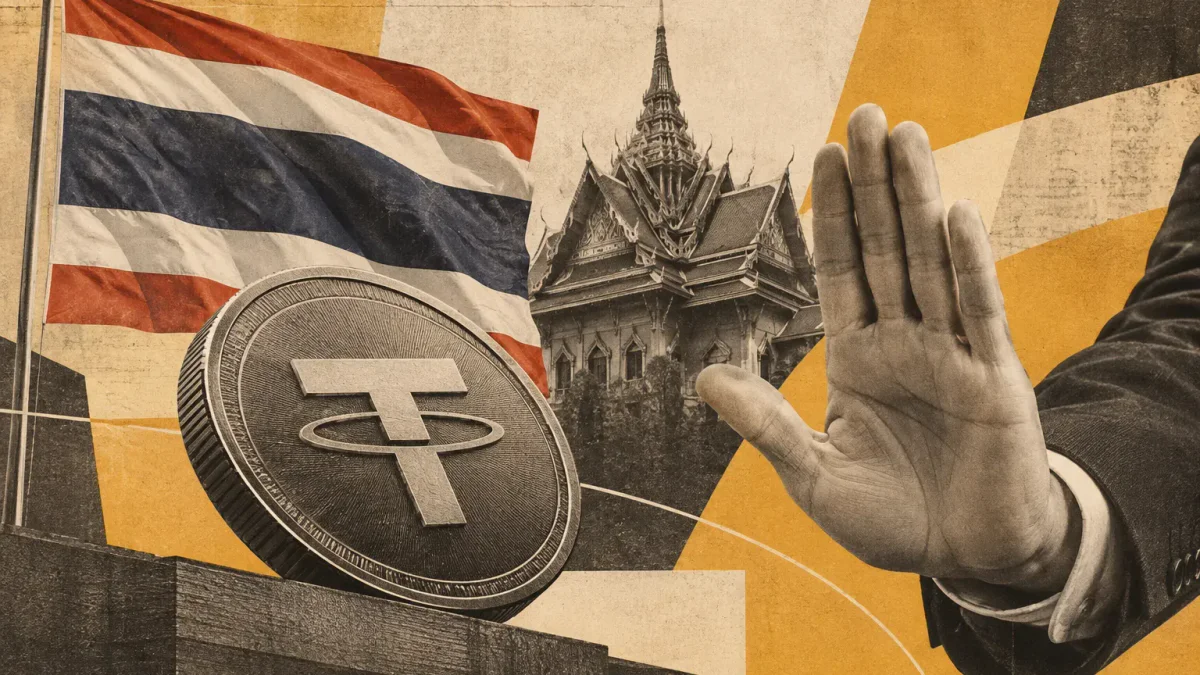
Changpeng Zhao Proposes Thailand to Tokenize Stocks and Government Bonds

Co-founder of the cryptocurrency exchange Binance, Changpeng Zhao (CZ), believes that the next stage of blockchain industry development will be associated with the practical application of technologies rather than speculative trading. Speaking on November 27 at the Digital Assets in SEA forum organized by Binance TH, he suggested that Thailand develop the tokenization of securities and national stablecoins to attract foreign capital.
Tokenization can expand access to Thailand's financial market
According to Zhao, the issuance of government bonds in a tokenized format, with regulatory approval, will expand the circle of potential investors. A similar approach to stocks could provide access to Thai companies' securities beyond traditional trading hours.
Zhao named stocks and government bonds as the most suitable instruments for tokenization due to the presence of market quotes and established liquidity. On the other hand, real estate tokenization is associated with additional complexities due to less intensive trading and difficulties in determining the current value of properties.
Previously, the co-founder of Binance had already urged governments to move stock markets to blockchain and expand international investors' access to national financial instruments.
Thailand began working on the tokenization of government debt back in May 2025. At that time, the cabinet of ministers approved the initiative to issue digital investment tokens G-Token with an initially planned volume of 5 billion baht.
The instrument is intended to attract government financing and expand the population's access to debt investments. However, G-Tokens cannot be used as a means of payment.
Zhao supported the issuance of stablecoins in Thai baht
The co-founder of Binance also suggested developing stablecoins pegged to the national currency. In his opinion, such instruments can be used for international money transfers and settlements with tokenized securities.
To protect users, Zhao proposed ensuring stablecoins with reserves in a 1:1 ratio and involving commercial banks in storing and verifying the backing assets.
From October 19 to November 17, the Bank of Thailand conducted a public consultation on proposals for regulating stablecoins in baht. They provide for the licensing of issuers and wallet service providers, requirements for reserves, token redemption, and the prevention of financial crimes.
However, at the initial stage, the regulator proposes to limit the use of such stablecoins to domestic settlements. The Securities and Exchange Commission of Thailand also previously proposed setting limits on stablecoin transfers.
Blockchain could become infrastructure for AI agent payments
Zhao noted that the growing popularity of artificial intelligence does not negate the demand for blockchain technologies. In his opinion, the internet, blockchain, and AI perform different tasks and can complement each other.
"Artificial intelligence is indeed attractive, but it does not replace money," Zhao stated.
One of the promising directions he mentioned is automated payments between autonomous AI agents. To service such operations in the future, a significant increase in the throughput of blockchain networks may be required.
Zhao also highlighted the possibility of tokenizing the computing resources of Thailand's data centers, which could potentially create additional financing tools for digital infrastructure.
However, one of the key obstacles to the widespread adoption of blockchain remains cybersecurity. Zhao expects that the improvement of protective mechanisms will reduce the number of incidents in the next 6–12 months.
This material is prepared solely for informational purposes and does not constitute financial advice or a recommendation.