

Circle Adds Support for Bitcoin and Euro in Gateway
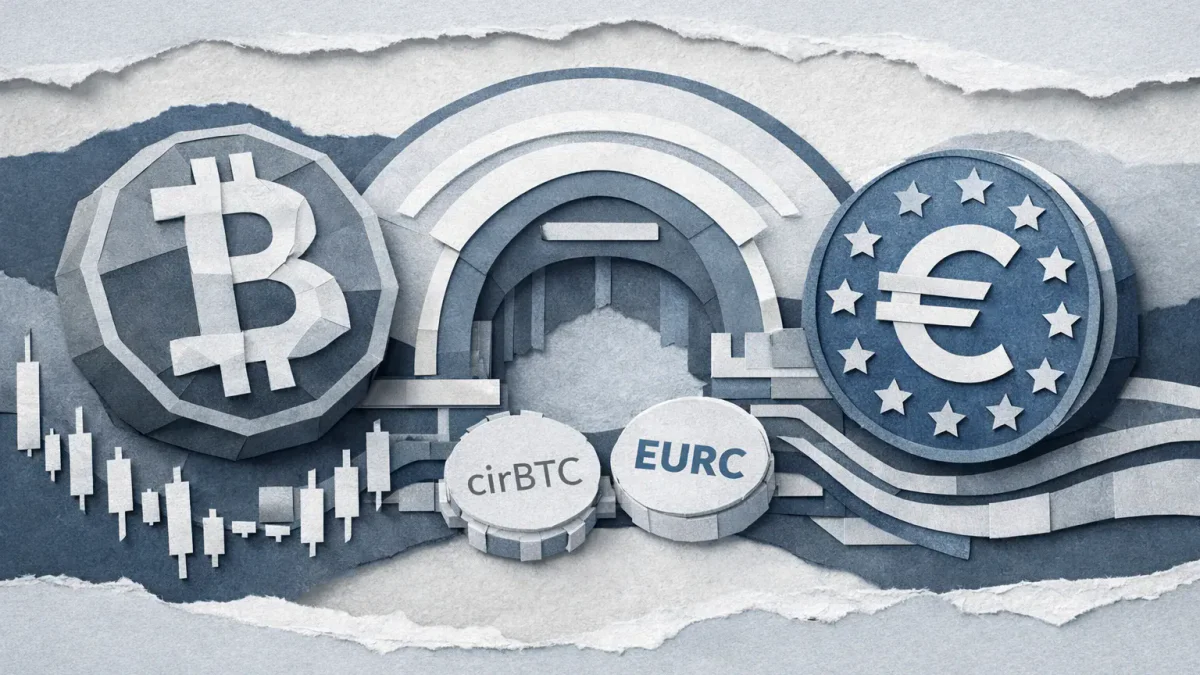
On October 23, Circle announced the expansion of its cross-chain balance service Gateway: it now supports the wrapped bitcoin token cirBTC and the euro stablecoin EURC alongside USDC, providing developers with a unified interface for moving three different assets.
The routes for bitcoin and euro differ. According to Circle's documentation, cirBTC is available on Arc and Ethereum, while EURC is supported on Arc, Avalanche, Base, Ethereum, Solana, and World Chain. Each asset maintains a separate balance: depositing EURC grants access to EURC in the networks it supports, but does not fund the withdrawal of cirBTC or convert euros to dollars. When changing the primary asset, applications still require a separate exchange operation.
Circle claims cross-chain access in less than 500 milliseconds after balance establishment. This condition does not include the time needed for finalizing a new deposit in the originating network, so when first transferring funds to Gateway, the user encounters a different time estimate than when using an already existing balance. Deposits are stored in non-custodial escrow contracts GatewayWallet; after an authorized request, the same asset can be issued in the supported destination network. Circle also provides an alternative withdrawal path independent of its API, though it involves a seven-day delay.
The new assets also work with the Nanopayments system, which batches off-chain payments for settlement. There is an additional restriction: nanopayments with assets other than USDC are limited to Ethereum Virtual Machine networks. The availability of EURC in Gateway on Solana does not imply support for EURC Nanopayments in this network.
Circle reports that at launch, it is waiving Gateway fees for cirBTC and EURC on Arc. Developers, however, need to assess the full transaction path, including deposits, withdrawals, and settlements: waiving gas fees for each individual payment does not eliminate costs for each batch or each interaction with a smart contract. For potential users, the practical test remains specific: the required asset, destination network, and payment method must match within a supported combination.
This material is prepared solely for informational purposes and does not constitute financial advice or a recommendation.