Coinbase, Circle, and Robinhood Stocks Drop 40–56%
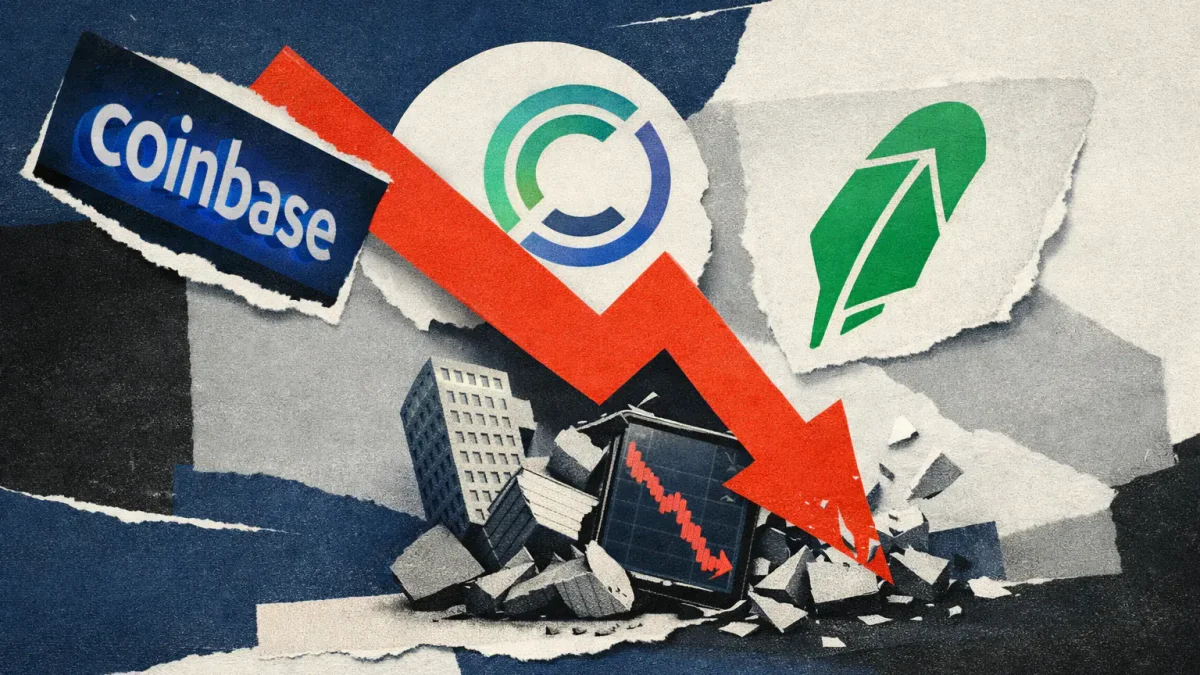
Shares of Coinbase (COIN), Circle (CRCL), and Robinhood (HOOD) are trading 40–56 percent below their highs. In October, the S&P 500 was at record levels, and Kobeissi Letter calls this a hidden bear market.
Since March 30, ten companies have accounted for 70 percent of the S&P 500's growth. This concentration masks losses in other assets, including those related to the crypto market: their owners are incurring losses that are not reflected in the index.
Hidden Bear Market
Kobeissi lists 20 tech companies whose shares have gone negative from their highs. AppLovin fell the most—by 65 percent. Coinbase is in third place: down 56 percent, Circle is down 44 percent, and Robinhood is down 40 percent.
Only Nvidia contributed 13 percent of the total index growth. Meanwhile, Micron and Alphabet are among the leaders, although their shares are trading 24 and 28 percent below their peaks.
In the second half of October, according to Kobeissi, the market expected the Fed to raise rates three more times by June 2027. In comparison, at the beginning of 2026, investors expected three cuts.
Circle issues the stablecoin USD Coin (USDC) and earns most of its profit from interest on reserves. In September, its shares fell by about 11 percent in one day after the Senate did not support the CLARITY Act bill on the crypto market structure.
Robinhood posted record revenue in Q3—$1.4 billion, but diluted earnings per share fell 16 percent year-over-year.
Bitcoin and Coinbase Report
Bitcoin is struggling to stay above $80,000: the price constantly falls below this mark. The redemption of $6 billion in US Treasury bonds on Tuesday did not help the rate rise.
Coinbase will release its Q3 report after the market closes on Thursday. The revenue forecast is about $1.2 billion, 36 percent below last year's result; analysts expect a loss. Revenue from retail transactions in Q2 fell 20 percent year-over-year to $452 million, and spot trading volume fell 25 percent compared to Q1.
Economist Peter Schiff compared the weak market breadth last month to the situation in 1973 and 1999–2000, after which the S&P 500 fell by 50 percent.
Analysts expect the opposite scenario: a sharp rally if pressure from energy prices and rates eases. For this, growth must be supported not only by the 10 largest stocks that are currently pulling the index.
This material is prepared solely for informational purposes and does not constitute financial advice or a recommendation.
Related articles