

CoreWeave's Debt Sparks Controversy Over Private Credit Market Bubble
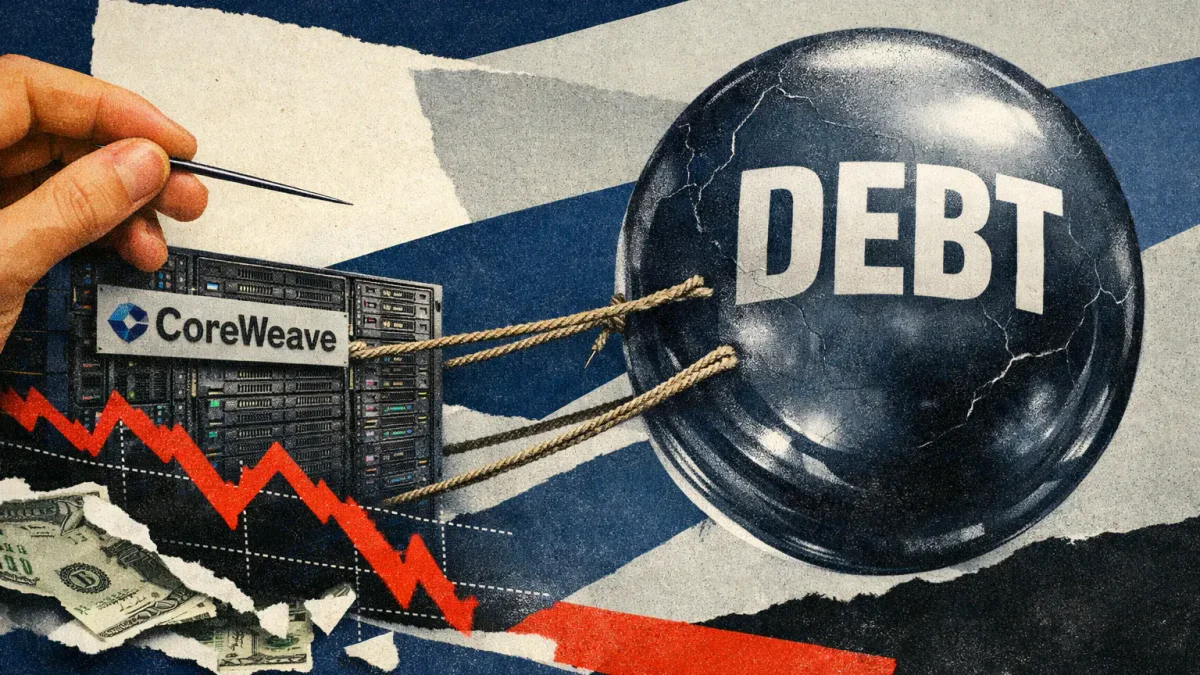
Shares of AI cloud provider CoreWeave fell by 15.46% on Wednesday and another 5.62% in after-hours trading after venture investor Chamath Palihapitiya posted a chart on X showing CoreWeave's bond yield at 15%. This indicates that investors are demanding a high premium for the risk of holding the debt. "Is AI development creating a bubble in the private credit market?" Palihapitiya asked. On Thursday, the shares slightly rebounded.
At the same time, the Financial Times published an interview with CoreWeave co-founder and CFO Brannin McBee: he wants to borrow even more—from insurance companies. The insurance sector's access to capital is "unlimited," he said.
CoreWeave's debt load has previously sparked controversy: in 2025, a Fortune analysis called the company a potential "epicenter of a future AI financial crash." The issue of AI companies' debts also arose after Oracle cited force majeure in its relations with Blue Owl, a developer of a large data center in New Mexico: there are concerns that the facility will not be ready for launch in 2028. Gartner estimates that by 2030, 80% of neo-cloud providers will cease independent operations as revenue will not cover expenses.
Critics are mistaken, says Evan Schlossman of Neostellar Capital Corp.—a public venture fund providing retail investors access to startup capital before IPO. Neostellar bought a stake in CoreWeave for $25 million in 2024 and sold 40% of that stake in the second quarter of 2025 with a $15 million profit.
In its second-quarter report, CoreWeave listed operating lease obligations of $16.3 billion and total debt of $35.6 billion. Revenue for the quarter was $4.6 billion, operating expenses exceeded sales, and the net loss was $1.4 billion. How will a company without profit repay $52 billion in debt and leases? The answer is $103.7 billion in remaining performance obligations (RPO), 41% of which are due by 2028.
This material is prepared solely for informational purposes and does not constitute financial advice or a recommendation.