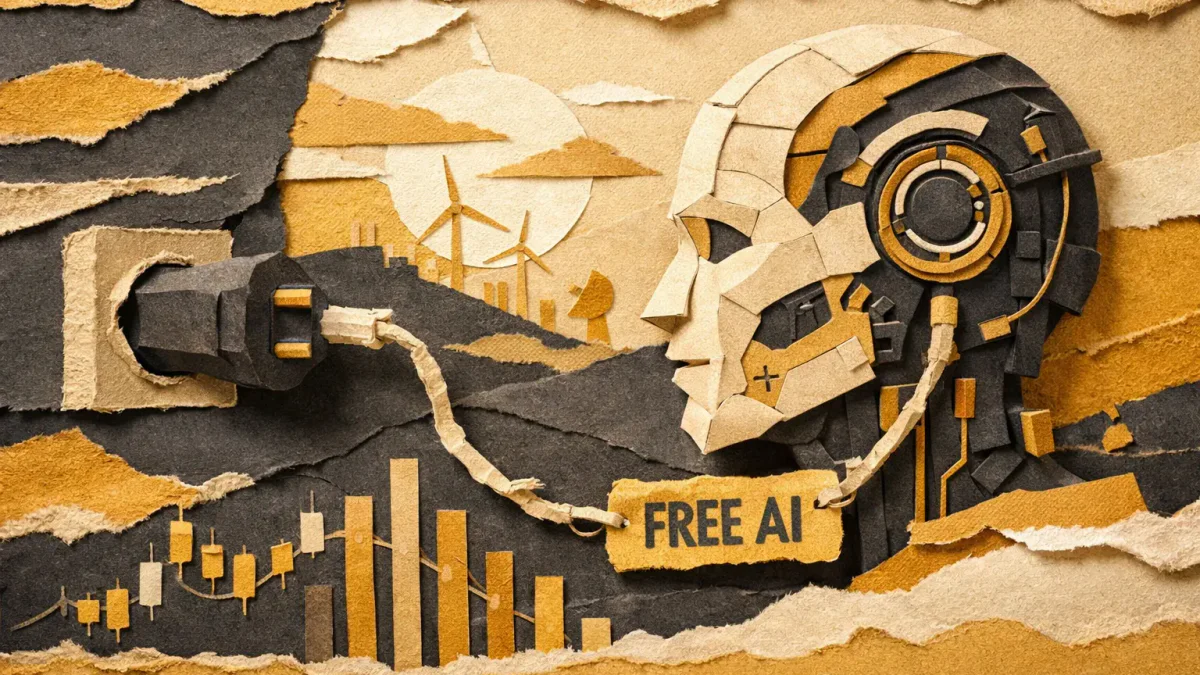
The cost of artificial intelligence is decreasing faster than any breakthrough technology of the past. AI analyst Andrew Curran wrote about this, comparing the price dynamics of AI with electricity, computing, batteries, and DNA sequencing.
According to Curran, AI is becoming cheaper 54 times faster than electricity did in its time. This pace has been maintained since the release of GPT-3: the decline is not slowing down. A chart attached to the post shows that other technologies took decades to achieve comparable cost reductions. Electricity became less than 100 times cheaper over 81 years (1892-1973). Lithium batteries became about 100 times cheaper over 33 years (1991-2024), DNA sequencing about a million times over 21 years (2001-2022), and computing power about a trillion times over 61 years (1940-2001). AI has reached a million-fold cost reduction in five years, from 2021 to 2026.
In the thread, one user asked the Grok chatbot from xAI how many years it would take for the cost of AI to approach zero. Grok replied that at the current pace (about 13-fold cost reduction per year at the same performance level), the price is already negligible for many tasks, and AI could become almost free in the next two to four years. According to Grok, there will not be a complete zero: energy and equipment set a small lower limit, but increasing efficiency blurs it. New capabilities of models are initially expensive and then rapidly become cheaper.
Another participant in the discussion tried to extrapolate Curran's chart to 2076. According to his calculations, AI will maintain the steepest curve but will slow down over time due to energy and chip constraints. The cost of a single AI task by 2076 could drop by about a trillion times compared to today, with a wide range of scenarios: from a billion times with a slow path to even greater cost reduction with a fast one. Other technologies, according to this model, will become cheaper more modestly: robot labor per hour by about 1000 times (the next major curve starting around 2035), space launches per kilogram by several hundred times, genome sequencing by tens of times, and solar energy with storage by about 10-20 times.
This material is prepared solely for informational purposes and does not constitute financial advice or a recommendation.
Related articles