Euro May Show Largest Annual Decline Against Yuan in 20 Years
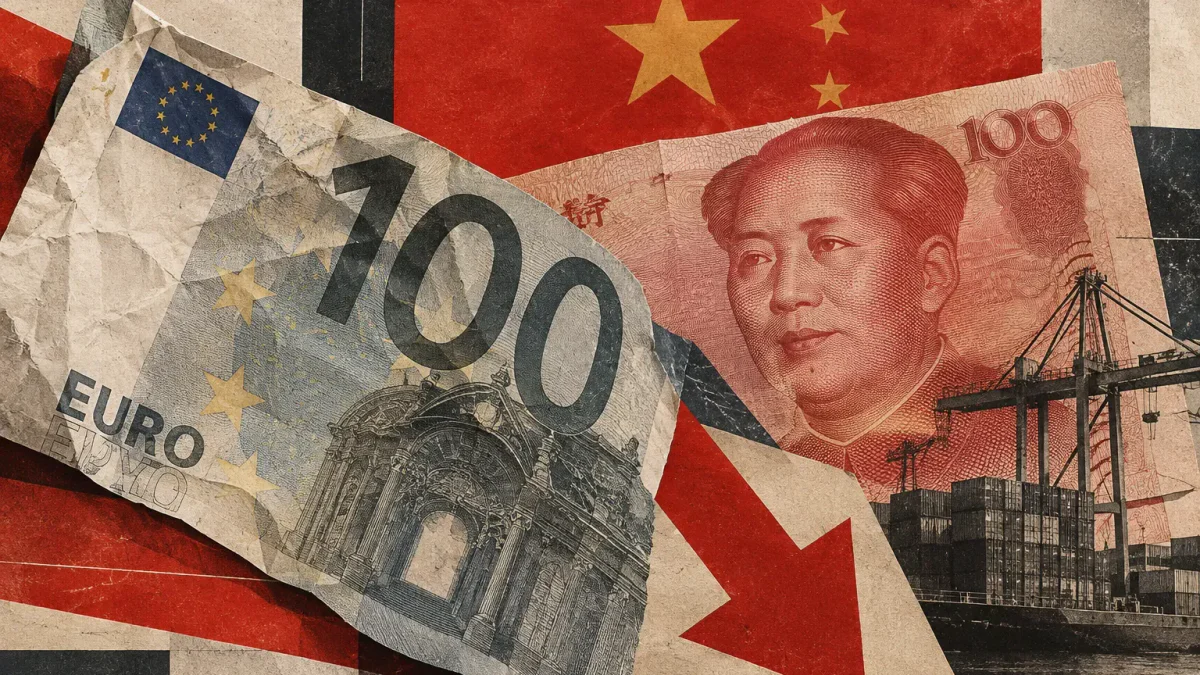
The euro is approaching the end of 2026 with its largest decline in two decades against the Chinese yuan. Since the beginning of the year, the European currency has lost about 11%. Meanwhile, European officials are urging China to allow further strengthening of its national currency, hoping to limit the growth of Chinese imports and reduce the trade imbalance.
Why the euro is weakening against the yuan
According to the European Central Bank, on November 26, the euro was at 7.3096 yuan compared to 8.2262 yuan at the end of 2025. If current rates persist until the end of December, the annual decline of the European currency will be the largest since 2005.
The euro is under pressure from political instability in France and expectations of relatively high interest rates in the United States. At the same time, the Chinese currency is supported by a significant trade surplus. According to Chinese customs authorities, from January to October 2026, it reached $1.04 trillion.
Earlier, analysts from TD Securities and Credit Agricole CIB also predicted the appreciation of the Chinese yuan, considering the high trade surplus as one of the factors supporting the currency.
Despite the relatively limited volume of direct trading in the EUR/CNY pair, its dynamics remain an important indicator of the relative strength of the Chinese currency. Chinese exporters often convert their euro revenue first into US dollars and only then into yuan.
The EU trade deficit continues to grow
The weakening of the euro has not yet been accompanied by an improvement in the European Union's trade balance with China. According to Eurostat data published on November 26, in the third quarter of 2026, imports of Chinese goods into the EU reached €163 billion, increasing by 14% year-on-year. European exports to China for the same period amounted to €49.1 billion, virtually unchanged from the previous year.
Thus, the trade deficit in goods between the EU and China reached approximately €114 billion for the quarter.
European officials view further strengthening of the yuan as one of the possible ways to reduce the trade imbalance. A more expensive Chinese currency, all else being equal, could increase the cost of Chinese goods for European buyers and improve the price competitiveness of European exports.
However, the People's Bank of China rejects accusations of deliberately weakening the national currency to gain trade advantages, pointing to broader structural causes of the imbalance.
What currency market analysts expect
Trang Li, a currency and interest rate specialist at LGT Private Banking in the Asia-Pacific region, allows for further depreciation of the euro against the yuan.
"Tightening European restrictions on Chinese goods could negatively affect investor sentiment and bilateral trade, while simultaneously increasing pressure for some yuan appreciation to address imbalances in competitiveness and trade," Li noted in a Bloomberg commentary.
At the same time, the specialist allows for the euro to recover to 7.4–7.5 yuan in 2027, provided that the presidential elections in France do not trigger a new wave of market instability.
The further dynamics of EUR/CNY will depend on the monetary policy of major central banks, the state of the European economy, and the development of trade relations between the EU and China. A change in the exchange rate alone may not be sufficient to reduce the accumulated trade imbalance.
This material is prepared solely for informational purposes and does not constitute financial advice or a recommendation.