Hong Kong to Expand Licensing for Crypto Services

Hong Kong intends to expand the regulation of the cryptocurrency market. By the end of 2026, the government plans to introduce a bill that will establish licensing requirements for companies engaged in operations with digital assets, consulting, management, and custody of cryptocurrencies. This was announced by Financial Secretary Paul Chan on November 16 at the Bloomberg Global Regulatory Forum.
Which crypto services will fall under the new requirements
The proposed changes are expected to complement the existing regulation of cryptocurrency trading platforms and stablecoin issuers. The new requirements will apply to four areas of activity:
Conducting operations with virtual assets.
Advising clients on digital assets.
Managing cryptocurrency assets.
Custodial storage of clients' digital assets.
The bill is planned to be introduced to the Legislative Council of Hong Kong by the end of 2026. Its adoption and the timing of the new requirements coming into effect have not yet been determined.
The document is being prepared in collaboration with the Hong Kong Securities and Futures Commission (SFC). It is assumed that the new rules will be based on the principles of regulating traditional financial services, taking into account the specifics of the cryptocurrency market.
“Decentralization does not mean reduced responsibility,” said Paul Chan, explaining the authorities' approach to regulating digital assets.
Hong Kong issued two licenses to stablecoin issuers
Paul Chan also reported on the results of the first stage of licensing stablecoin issuers. Out of 36 companies that applied, only two received permits.
Licenses were issued on April 10, 2026, to Anchorpoint Financial, created with the participation of Standard Chartered, HKT, and Animoca Brands, as well as to HSBC bank.
Both issuers subsequently released stablecoins pegged to the Hong Kong dollar.
Anchorpoint introduced HKDAP in August 2026. Initially, the instrument is primarily aimed at institutional clients and can be used for payments and settlements in tokenized asset transactions.
HSBC launched the stablecoin RedCoin on October 23. It became available through the PayMe payment app for transfers between users and settlements with merchants.
According to Chan, when licensing, the regulator pays special attention to the practical application of stablecoins and the viability of the issuers' business models. One of the promising directions the authorities see is international payments.
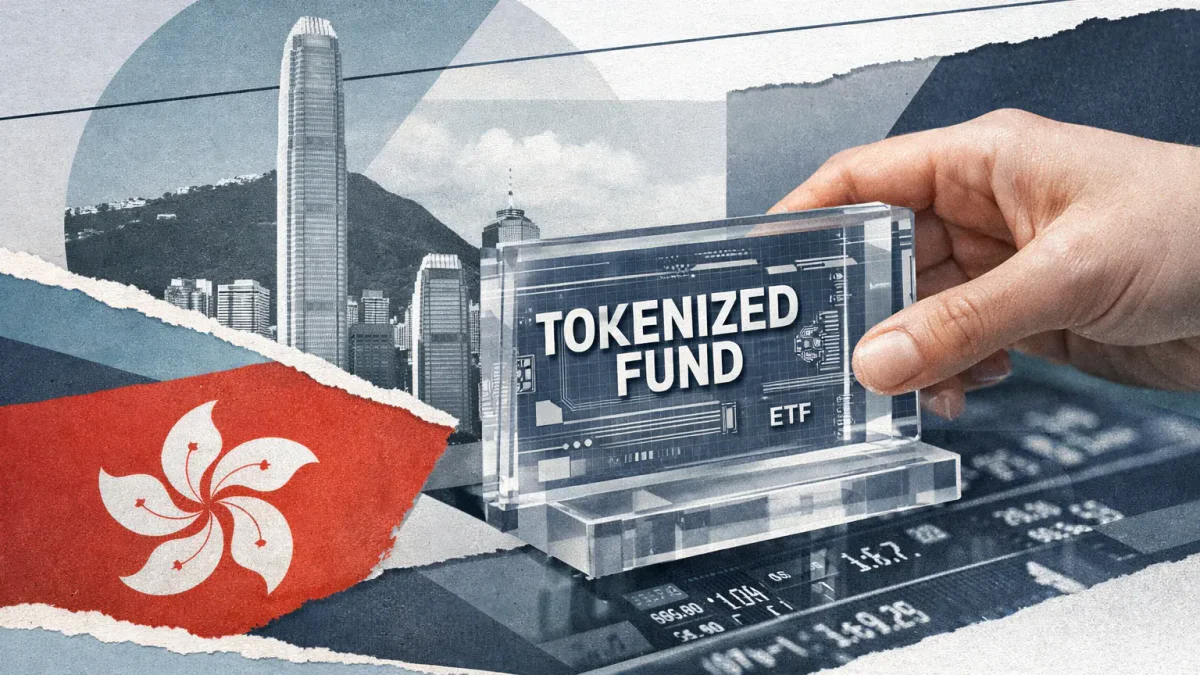
The tokenized funds market grew approximately sevenfold
Hong Kong authorities pay special attention to the development of tokenized financial instruments.
According to data provided by Paul Chan, the segment of publicly offered tokenized funds has increased approximately sevenfold over the past year.
Additionally, on October 26, two tokenized money market funds began 24/7 trading on licensed platforms. This allows transactions with such instruments outside traditional trading hours.
According to SFC data as of the end of September 2026, the regulator approved 17 retail investment products with tokenized assets or share classes. Among them are 13 money market funds, a gold investment product, and several exchange-traded funds. The assets under management of their tokenized classes amounted to about 10.3 billion Hong Kong dollars.
The authorities intend to apply requirements to tokenized financial products comparable to the rules for traditional instruments, supplementing them with measures to protect against technological risks.
Thus, Hong Kong is simultaneously expanding the regulation of cryptocurrency companies and developing the infrastructure for using digital assets in the financial system.
This material is prepared solely for informational purposes and does not constitute financial advice or a recommendation.
Related articles