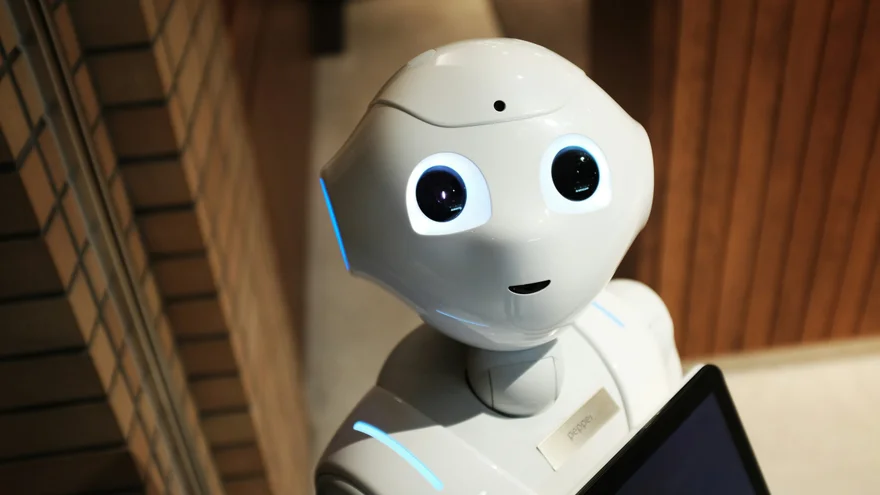
JPMorgan forecasts the release of up to 400,000 humanoid robots in the US by 2030

In the US, by 2030, 300,000–400,000 humanoid robots could be produced annually, and by 2035, around 1.5 million, according to JPMorgan analysts. This estimate was reported by Reuters on November 12. The bank anticipates the industry's transition from demonstration projects to commercial applications.
Industry and warehouses to become main customers
According to JPMorgan, the main consumers will be industrial companies, warehouses, and logistics operators. Robots are expected to be used for repetitive operations and to address labor shortages. The costs of their operation are approaching those of personnel, and working multiple shifts could save about $100,000 per year per customer, the bank estimates. This is a forecast, not a guaranteed result.
Mass production hindered by technical limitations
JPMorgan identifies the complexity of robotic hands, drives, AI control systems, and limited production capacities as the main obstacles. Robots also require data for training and computational resources. Except for Tesla, most American manufacturers are currently aiming to produce 10,000–30,000 units annually. The stated capacities do not mean that such volumes have already been achieved.
Component market could reach $30 billion
According to the bank's forecast, by 2035, the market volume for key components for humanoids, including motors, drives, and machine vision systems, will approach $30 billion. Among developers, JPMorgan highlights Tesla with Optimus, Agility Robotics with Digit, Boston Dynamics with Atlas, Figure AI, and Apptronik with Apollo.
For comparison, according to the International Federation of Robotics (IFR), around 7,000 full-sized humanoid robots over 140 cm tall were sold worldwide for professional tasks in 2025. JPMorgan's forecast suggests a significant expansion in production, but its realization depends on equipment costs, robot reliability, and mass assembly capabilities.
This material is prepared solely for informational purposes and does not constitute financial advice or a recommendation.
Related articles