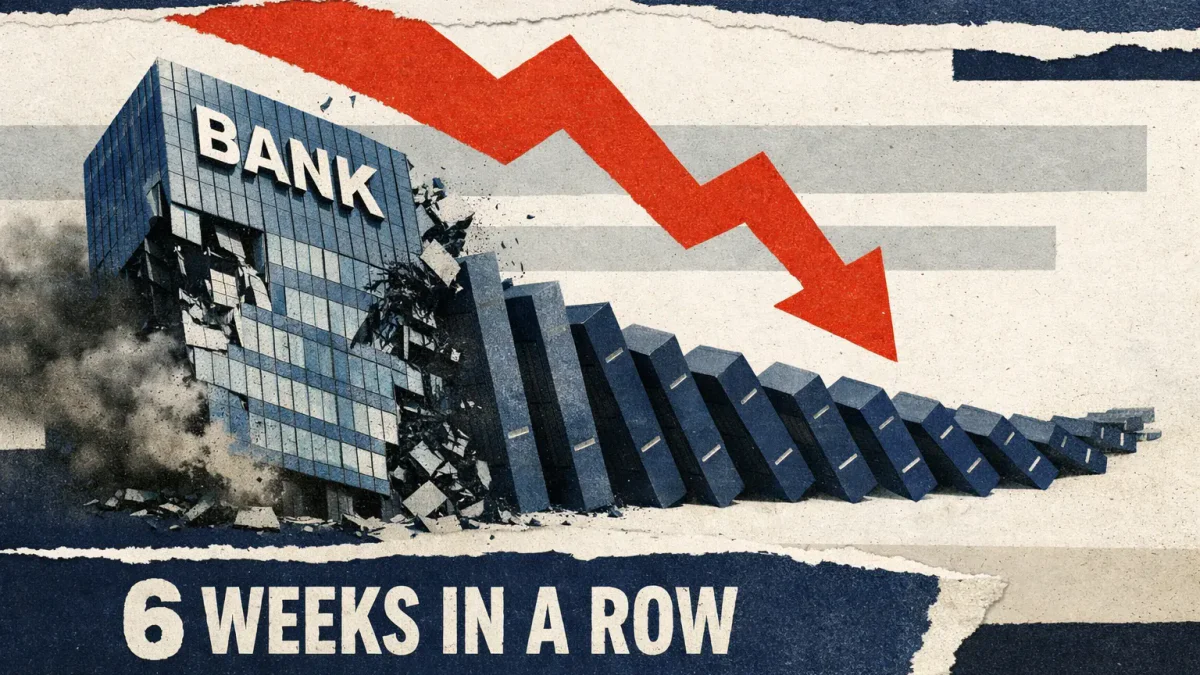
The share of stocks trading above their 50-day moving average has fallen to 21%—a level seen at the March low. Despite this, Katie Stockton from Fairlead Strategies highlighted three signals that would make her view on the U.S. stock market even more bearish.
According to her, key support levels remain stable, and chipmakers' stocks formed a local bottom last Friday. However, she describes the situation on the exchanges as quite fragile. Market breadth indicates how many stocks are participating in the overall movement: on CNBC Squawk Box, Stockton noted that fewer companies are involved, although charts continue to signal a bull cycle. "You can't argue with the presence of a bull cycle right now," she said.
The Philadelphia Semiconductor Index (SOX) lost 11.4% last week—the largest drop in the segment since April 2025. According to investment bank BTIG, the downward trend in the sector could extend until 2027.
Stockton highlights three risks. The first is if the support level is broken across many individual stocks. The second is the widening of credit spreads, meaning the increase in yield that investors demand for riskier corporate bonds: there is tension, but not enough to transition into a bear market phase. The third is a clear breakout of the Cboe Volatility Index (VIX), Wall Street's fear gauge; here she watches resistance, for example, around the 200-day moving average.
CoreWeave, which provides AI computing power and finances data centers through debt, has become a clear example of credit risk. After a roughly 16% drop in shares on October 14, investors demanded about 14.8% yield on bonds maturing in 2032. But Stockton still considers the tension to be local rather than systemic.
She expects the yield on 10-year U.S. Treasury bonds to stick around 5.25% for several weeks before continuing to rise. According to Freddie Mac, the 30-year mortgage rate was 7.40% on October 15, compared to 6.95% a month earlier, on September 17.
Risks extend beyond a single company: according to the London Stock Exchange Group, Alphabet, Amazon, Meta, and Oracle issued more than $228 billion in bonds by October 13. Wider spreads will test the resilience of this financing. Jeremy Siegel from WisdomTree warned of a potential Nasdaq drop—up to 30% if AI spending does not meet expectations.
This material is prepared solely for informational purposes and does not constitute financial advice or a recommendation.
Related articles