Microsoft to Create Team to Protect Business from Quantum Threats
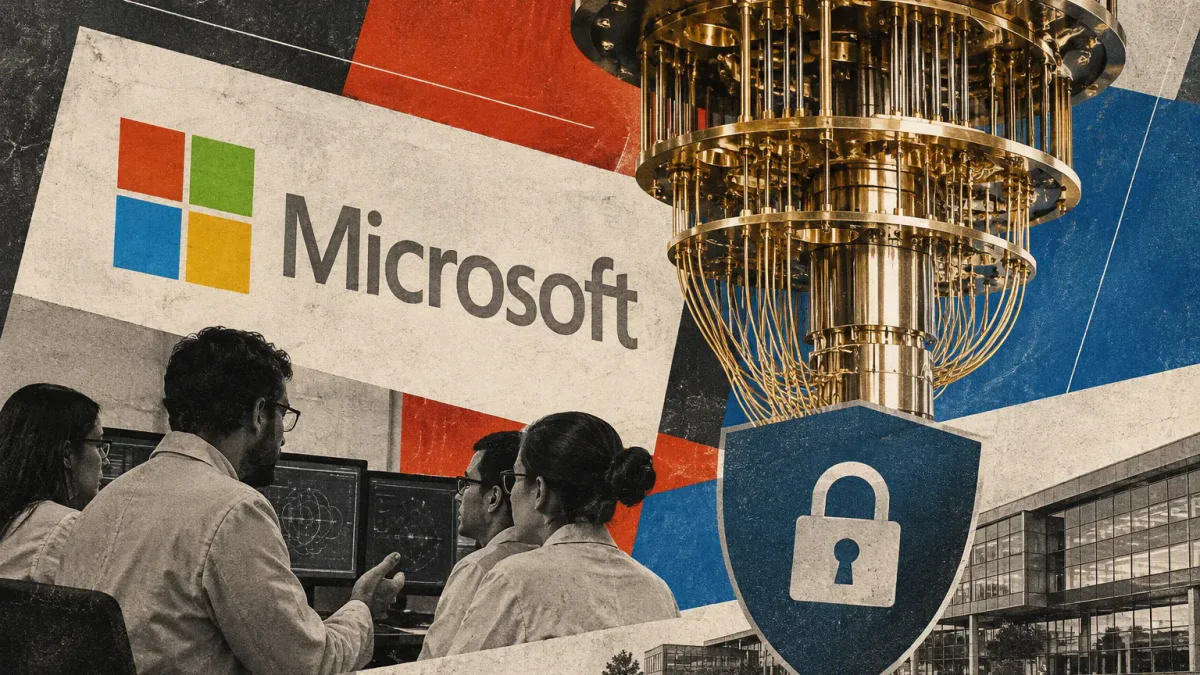
Microsoft Corporation is creating the Project Compass team to develop tools to protect businesses from threats associated with the development of quantum computing. The new division will operate in the company's research and development center in Israel.
The team will be led by Inbar Badian, who previously worked on preparing for the quantum era in Microsoft's security division.
The main task of Project Compass is to help companies identify vulnerable encryption systems and plan the transition to quantum-resistant cryptography.
How Project Compass Will Protect Corporate Data
The team will develop tools based on artificial intelligence and autonomous agents that can continuously monitor encryption systems, assess risks, and determine which vulnerabilities need to be addressed first.
Cryptographic mechanisms are used in applications, hardware, cloud services, and connections between them. However, organizations do not always have complete information about which security technologies are used in their infrastructure.
This complicates the detection of problems and the identification of systems that require updates.
The new tools should automate the analysis of cryptographic infrastructure and help companies prepare for the implementation of post-quantum algorithms.
Microsoft Prepares for Transition to Post-Quantum Cryptography
The creation of Project Compass is part of Microsoft's broader strategy to protect digital infrastructure from future quantum threats.
The company plans to enable early adoption of quantum-resistant cryptography by 2029 and complete the transition of its products and services to new security standards by 2033.
The need for such changes is related to the potential ability of sufficiently powerful quantum computers to break certain widely used encryption algorithms.
In June 2026, Microsoft also introduced the Majorana 2 quantum processor. According to the company, thanks to a new set of materials, the stability of qubits increased more than 1,000 times compared to the previous generation.
The development of quantum processors and the implementation of post-quantum cryptography remain separate areas of work for Microsoft, but both are related to the development of quantum technologies and the need to prepare digital infrastructure for their proliferation.
This material is prepared solely for informational purposes and does not constitute financial advice or a recommendation.