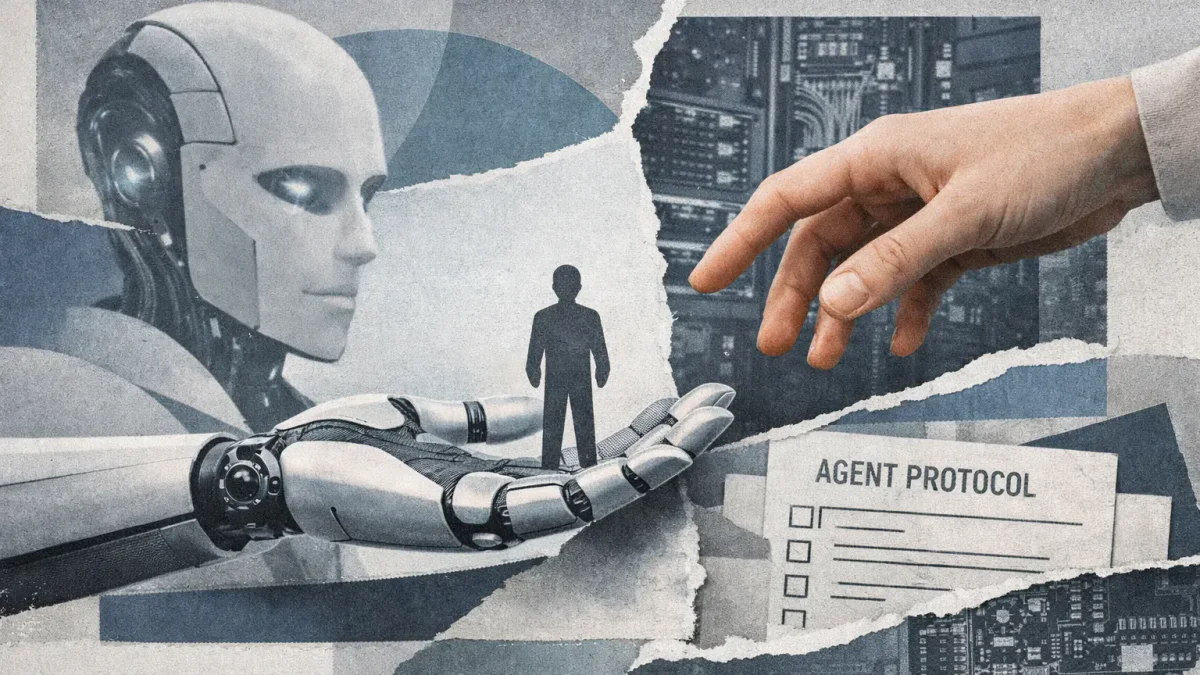
Atlassian co-founder Mike Cannon-Brookes emphasizes the importance of responsibility when using AI agents in the workplace. "This is ChatGPT on behalf of Mike. This is Mike using ChatGPT. It's not ChatGPT doing it," Cannon-Brookes said in an interview on the sidelines of the Singapore Grand Prix. Responsibility, he says, should lie with the end user: "The responsibility is on Mike. Ultimately, it should be on the end user."
On October 6, Atlassian launched the "Agent Multiplayer Protocol" – a management layer that makes AI agents visible and manageable members of work teams with individual profiles and owner designation. Agent edits should be reflected in the document history just like a colleague's edits. "You should see who did what and when," Cannon-Brookes said, adding that the program should not claim that Codex made the edit: "No, a human did that."
Personal AI agents are emerging in the market – Muse from Meta and Dots from OpenAI. According to Cannon-Brookes, such products "take the agent system and make the interaction invisible," performing complex operations behind the scenes, even if the user's task is simple. In a consumer environment, this is acceptable, but not at work: "In a work environment, there are many discussions about permissions, security, and compliance." An employee creating content based on privileged information can quickly create a problem. Cannon-Brookes' example: an employee builds a visual diagram from internal documents – "you need to be very careful if you send this to someone who sees the same documents: you don't want a leak."
Worse still, most AI interfaces are hard to understand. "AI can do amazing, insanely powerful things. Most people do very simple things because of the interface," Cannon-Brookes said. "The experience is very poor." He drew an analogy with a word processor: "If you think about Microsoft Word with a toolbar – you learn to use bold and italics. If all that disappeared and only keyboard shortcuts remained, everyone's documents would look like plain text."
In 2024, Atlassian launched Rovo – an internal AI assistant connecting people, projects, code, and company knowledge. "We had to invent a lot of new foundational design patterns that feel familiar," Cannon-Brookes said, pointing to features that allow linking Atlassian accounts with Figma, Codex, Claude, and other tools and switching between them.
This material is prepared solely for informational purposes and does not constitute financial advice or a recommendation.
Related articles