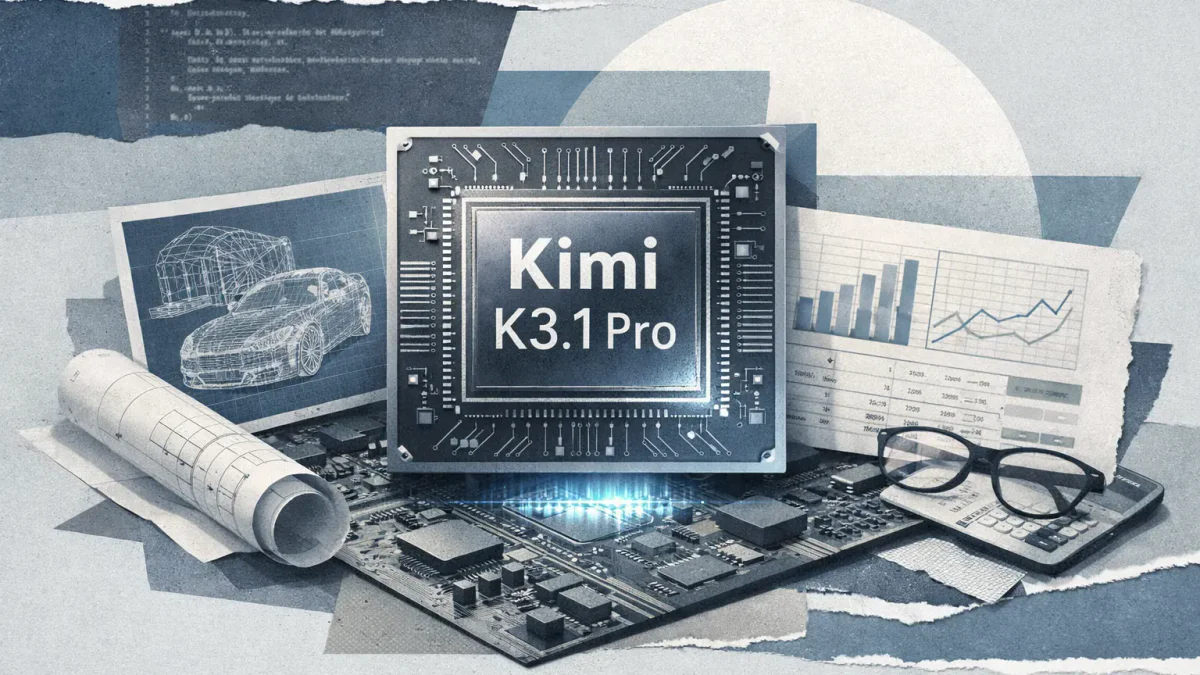
Chinese company Moonshot AI has released Kimi K3.1 Pro – an updated version of the Kimi K3 language model, aimed at complex engineering tasks and prolonged operation of AI agents.
The model uses a Mixture-of-Experts architecture with 2.8 trillion parameters, of which 104 billion are activated when processing a request. The context window reaches 1 million tokens, and the system accepts both text and images as input. Simultaneously, the company introduced Kimi K3.1 Pro Highspeed, which, according to the developers, generates responses two to three times faster than the standard version. Access to both models is provided through the Kimi website and applications, Work and Code services, as well as an API. The developers plan to publish the full weights by November 4.
In Terminal-Bench 4.0, which evaluates the execution of engineering tasks through a terminal, the model scored 65.7%, slightly behind Claude Opus 5.5 with a score of 66.4%, but ahead of GPT-6 Astra, which scored 58.2%. However, the results were obtained using different methodologies: the company tested its own model through Claude Code, while the competitors' scores were taken from published reports and the official ranking. The independent Artificial Analysis ranking recorded progress compared to the previous K3 version: 55 points in the Intelligence Index versus 44 and fourth place in the ranking. However, Moonshot AI acknowledges that K3.1 Pro still lags behind leading proprietary models available for at least three months.
In addition to programming, K3.1 Pro has enhanced capabilities for three-dimensional modeling and working with financial documents. It can create 3D objects from text descriptions, sketches, and images, write scripts for Blender and CAD programs, and change the geometry and materials of models. The Kimi application now includes a 3D Make function for viewing, editing, and exporting objects, including for 3D printing.
In the BenchCAD test, the model scored 92.7 points on the Voxel IoU metric, trailing Claude Opus 5.5 with 96.2 and GPT-6 Astra with 95.9. In financial tasks, the system analyzes reports, compares information from documents, and creates spreadsheets with linked formulas and forecasts. In the OfficeQA Pro v2 test, the result was 64.4 points. According to the company's internal data, the score in financial modeling increased by 7.2 points, and in preparing investment research – by 11.6 points compared to K3. Meanwhile, the output volume of tokens when solving tasks increased by approximately 14%, so the reduction of API rates by a third did not lead to a comparable decrease in the cost of completing individual tasks.
This material is prepared solely for informational purposes and does not constitute financial advice or a recommendation.
Related articles