OpenAI Claims Its AI Disproved the Exponential Time Hypothesis
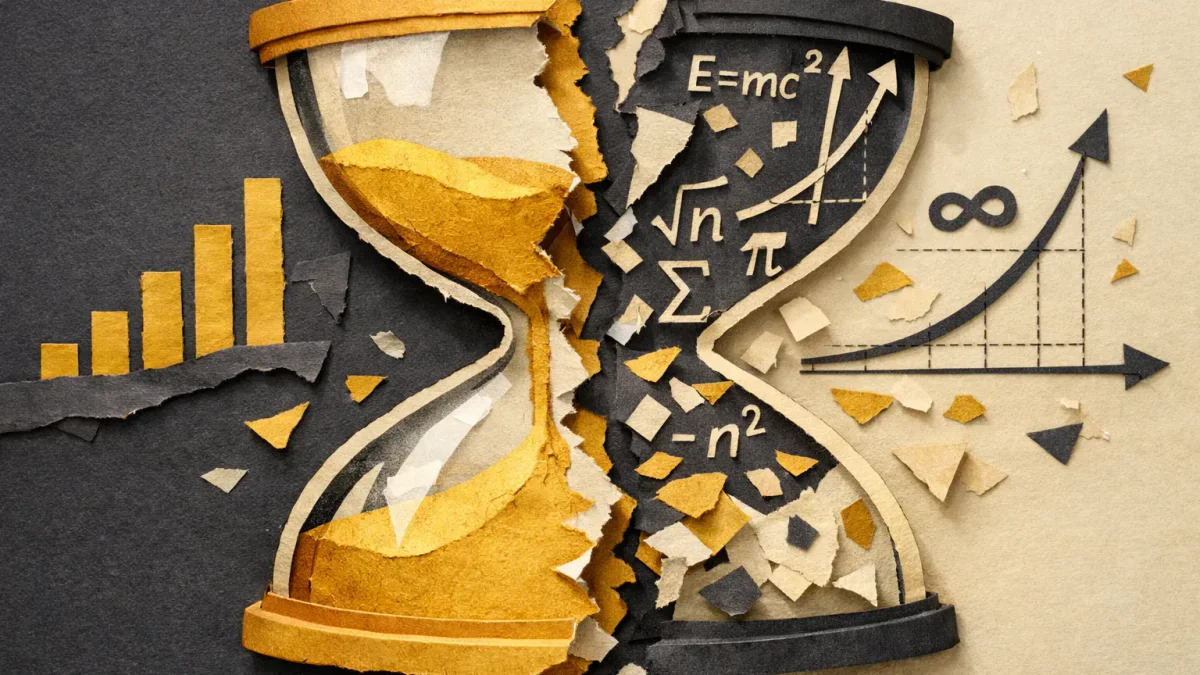
On October 26, OpenAI announced that its internal AI models refuted the Exponential Time Hypothesis (ETH), proved several mathematical conjectures, and obtained rigorous proofs of the existence of a number of quantum field theories. To verify these claims, the company engaged independent groups, including the authors of ETH and Nobel laureate in physics David Gross.
ETH was formulated in 1999: it suggests that the 3-SAT problem cannot be solved in sub-exponential time relative to the number of variables. Hundreds of papers on conditional computational difficulty rely on this hypothesis. According to OpenAI, the model found a way to refute it, but the approach does not guarantee a quick solution in practice: the asymptotic is below exponential, yet the execution time may remain enormous. This does not solve the P vs NP problem.
The verification is being conducted by a group led by Russell Impagliazzo and Ramamohan Paturi from the University of California, San Diego, and Ryan Williams from the Massachusetts Institute of Technology. The researchers emphasized that their involvement is not an endorsement of OpenAI's conclusion, and they plan an open verification.
In mathematics, according to the company, the models proved Christopher Sogge's 1991 local smoothing conjecture in all dimensions; this implies the proof of the Kakeya and Stein conjectures on Fourier transform restriction. The proof was formulated on October 18, formalized in Lean on October 19, and published in an open repository.
In physics, the models constructed a proof of the existence of interacting quantum field theories in four-dimensional spacetime, including quantum chromodynamics and the pure Yang-Mills theory. This is related to the Clay Institute's Millennium Problem, but it also requires proof of mass gap; OpenAI has not claimed a complete solution. The verification group was led by David Gross and included Michael Douglas, Arthur Jaffe, Igor Klebanov, and Nikita Nekrasov.
OpenAI proposed three models of interaction: in mathematics – open publication without special reviewers, in computer science – publication simultaneously with an independent group, in physics – preliminary transfer to experts. Participation is voluntary and unpaid, and non-disclosure agreements are not required. The company does not claim scientific merits and acknowledged the inequality of access to information among the first invited specialists.
This material is prepared solely for informational purposes and does not constitute financial advice or a recommendation.
Related articles