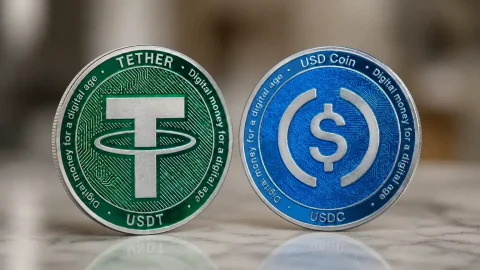
On September 30, 2026, Stripe launched its stablecoin OpenUSD on several public blockchains, including Ethereum, Solana, Base, and Tempo (a network incubated by Stripe). The token is fully backed by US dollars on a 1:1 basis. OpenUSD challenges the dominance of Tether's USDT and Circle's USDC. According to Stripe CEO Patrick Collison, a significant portion of the yield is shared directly with partners rather than remaining with the stablecoin issuer. At the time of the initial announcement in June, OpenUSD was supported by more than 140 partners, including Mastercard, Visa, and Coinbase.
Coinbase's support is interesting given its agreement with Circle on USDC, from which the exchange receives a significant portion of the yield. Despite this, OpenUSD is a direct competitor to USDC. Circle CEO Jeremy Allaire downplayed OpenUSD's competitiveness, citing USDC's network effects. Jorn Lambert, Chief Product Officer at Mastercard, described the situation as not a 'winner-takes-all' scenario but an adaptation to a multi-chain future with multiple forms of money. According to him, bank deposits, card networks, digital assets, and stablecoins will operate within a unified financial system, and infrastructure players must offer flexible options. Visa, like Mastercard, maintains a neutral 'multi-coin, multi-chain' approach.
As the issuer of OUSD, Stripe is a major player with global payment integration, and it is not surprising if the company attempts to capture market share from USDT and USDC. Previously, it attempted to acquire PayPal along with its stablecoin stack. The most obvious target is USDC, which dominates regulated payments and consumer channels with a 54% share. If Stripe and its partners leverage their distribution network, USDC could face a challenge. However, USDT is firmly entrenched in offshore markets as a hedge against inflation in developing countries, where regulated stablecoins, including USDC, find it difficult to penetrate. Thus, OUSD may compete with USDC in regulated payments, but it will face a tougher battle against USDT.
Related articles