Owner of Trezor and Exodus Reports $613,000 Cryptocurrency Theft
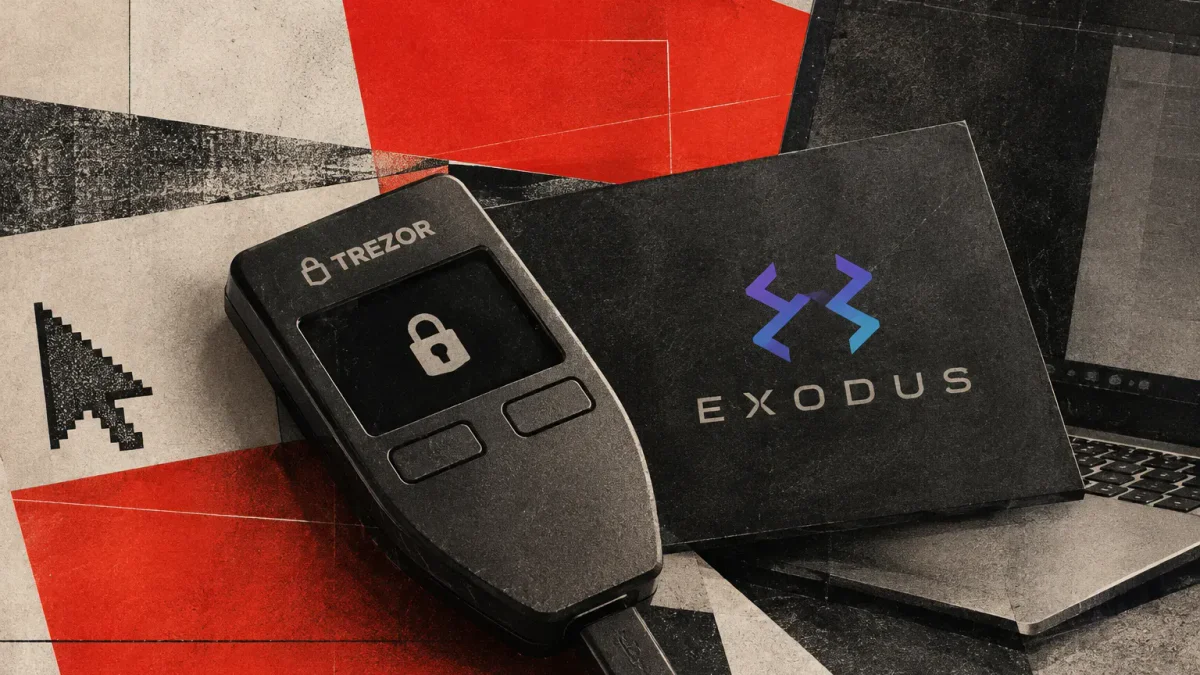
A Trezor Safe 7 hardware wallet user reported losing approximately $613,000 in cryptocurrencies stored on the hardware device and the Exodus app.
According to the analytical platform Onchain Lens, the funds were transferred using the owner's authority of the respective addresses. However, the affected party claims not to have confirmed any of the transactions.
The cause of the alleged compromise has not yet been determined.
Which assets were withdrawn from the wallets
According to Onchain Lens, the user connected the Trezor Safe 7 hardware wallet to an iPhone 17 Pro Max smartphone. The Exodus app was also used on the same device.
The total value of the withdrawn assets was approximately $613,000.
The majority of the losses were in USDT on the TRON network – about $580,000, or nearly 95% of the total amount.
Approximately $23,400 in USDC was withdrawn on the Solana network, and about $9,500 from the Exodus software wallet.
One of the transfers of 49,999 USDT caught the attention of researchers. According to them, the operation was carried out using the address owner's authority, rather than a previously granted third-party application permission to spend tokens.
Why analysts are studying digital signatures
Trezor hardware wallets are designed to store private keys in a secure environment on the device.
Under normal use, the user must verify the transaction parameters and confirm it directly on the hardware wallet.
However, blockchain analysis showed that the disputed transfers were authorized with the corresponding cryptographic credentials.
This may indicate a compromise of the keys or the signing of transactions through the wallet system. However, the blockchain data itself does not allow determining the exact method by which the signature was obtained.
According to Solid Intel, the owner claims that the seed phrase was created on the Trezor itself and was never stored digitally.
He also denies confirming the transactions that led to the loss of assets.
There is currently no independent confirmation of the circumstances of the compromise.
Is the loss of funds related to Bluetooth
Trezor Safe 7 supports wireless connection to smartphones via Bluetooth.
The manufacturer claims that the wireless module is isolated from the components where private keys are stored. Therefore, compromising the Bluetooth connection itself should not provide access to cryptocurrency assets.
Researchers were drawn to the version of the smartphone's operating system used by the affected party – iOS 27.2.1.
Apple released this update on November 9, 2026. It included fixes for Bluetooth vulnerabilities, including an issue where an attacker within wireless range could potentially corrupt process memory.
However, Onchain Lens found no connection between this vulnerability and the cryptocurrency withdrawal.
Thus, the theory of an attack via Bluetooth remains unconfirmed for now.
What is known about the causes of the incident
According to BeInCrypto, as of the time of publication, Trezor and Exodus have not provided comments on the reasons for the loss of funds.
The affected party also claims to have received the hardware wallet in sealed packaging without visible signs of tampering.
However, the condition of the packaging and the absence of a digital copy of the seed phrase alone do not rule out all possible scenarios of compromise.
To determine the cause, it is necessary to investigate the device, connection history, software, and circumstances of the transaction signing.
It is still unknown whether the attackers gained access to the private keys, used another method of transaction authorization, or exploited an unknown technical vulnerability.
The incident shows that having a hardware wallet does not automatically determine the cause of unauthorized transfers. In this case, researchers still need to establish how the transactions received valid cryptographic signatures.
This material is prepared solely for informational purposes and does not constitute financial advice or a recommendation.