Restrictions on Data Centers in the US May Benefit Bitcoin Miners
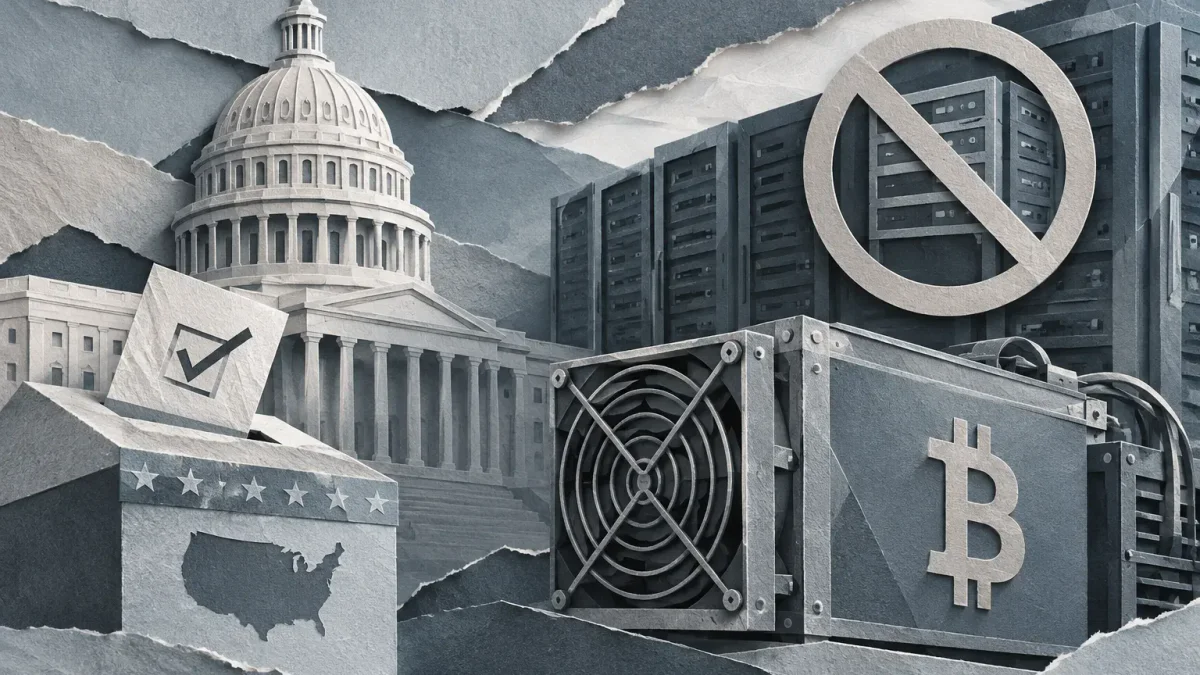
After the November 3, 2026, votes in the U.S., building new data centers may become more challenging, while existing bitcoin mining capacities could become more attractive to AI companies. According to Ballotpedia, in 40 out of 41 local votes, voters supported a restrictive approach. In 27 cases, such initiatives were approved, while in 13, proposals favorable for construction were rejected. This does not imply the introduction of 40 direct bans.
Why mining sites might gain an advantage
Among the adopted measures are five full bans, 12 partial ones, and temporary moratoriums in three municipalities in Maine. In Grove City, Ohio, large projects consuming more than 20 MW must receive voter approval. Miners already connected to the power grid and with permits may find it easier to offer their capacities to AI operators than new entrants building facilities from scratch.
Why transitioning to AI remains costly
According to CoinShares, in 2025 and early 2026, public miners signed agreements in the AI and high-performance computing sectors worth over $70 billion. This is the contract value, not the revenue received. Creating infrastructure for AI costs approximately $8–15 million per megawatt compared to $0.7–1 million for traditional mining. New cooling systems, network equipment, and stable power supply are required: unlike miners, AI centers usually cannot reduce load for long periods when tariffs rise.
What will change in the energy market
According to the International Energy Agency, U.S. data centers consumed 224 TWh in 2025 and may consume 426 TWh by 2030. Experts suggest that the new Congress may pay more attention to distributing the costs of expanding power grids between operators and consumers. However, existing connections do not guarantee a successful transition: much depends on local permits, costs, and demand for computing services.
This material is prepared solely for informational purposes and does not constitute financial advice or a recommendation.
Related articles