Reuters Reveals $3.2 Billion Dependency of Chinese AI Projects on Nvidia Chips
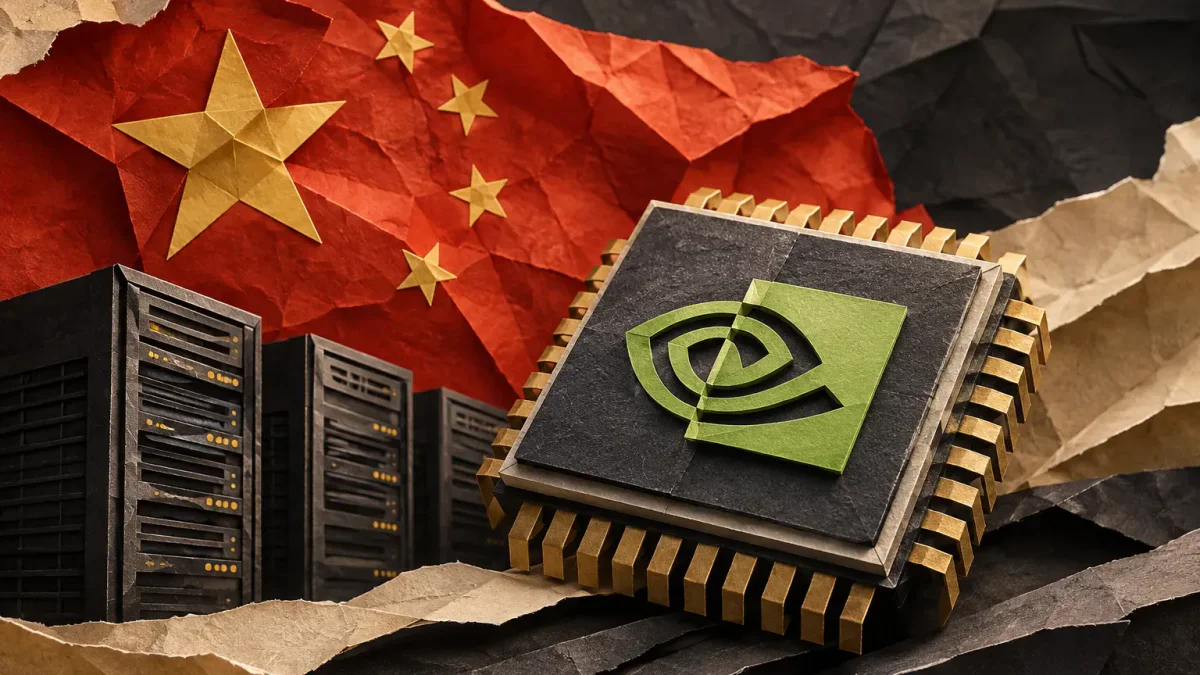
In China, projects are being implemented to develop artificial intelligence infrastructure with a total value of over 23 billion yuan ($3.2 billion), involving the use of Nvidia processors. This conclusion was reached by Reuters after examining more than 150 documents, including government procurements, investment plans, construction contracts, and corporate reports. The study showed that demand for American AI accelerators persists even under restrictions on the supply of advanced semiconductors.
Chinese Data Centers Rely on Nvidia Processors
Among the identified projects were computing centers, university complexes, and facilities funded by regional structures. Their infrastructure is designed to use Nvidia H100, H200, and H800 accelerators, whose supply to China is restricted by U.S. export regulations.
The geography of the projects covers both major technology centers in the country and remote regions. For example, in Gansu province, it was planned to install several thousand Nvidia processors by the end of 2026. However, journalists were unable to confirm the actual delivery of this equipment.
The $3.2 billion represents the total cost of the identified projects, not just expenses for chip purchases. The amount also includes the construction of data centers, power supply systems, and other infrastructure. Some facilities are already operational, some are under construction, and others exist only as investment plans or signed contracts.
Nvidia's Share in the Chinese AI Chip Market Reduced to 34%
Despite supply restrictions, Nvidia continues to hold a significant portion of the Chinese market for computing accelerators. According to IDC data, in the first half of 2026, the company delivered about 678,000 AI processors to China, which is 44% less than the same period of the previous year. Its share in this segment was 34%.
For comparison, Chinese company Huawei delivered 572,000 accelerators during the same period, capturing about 28% of the market. Local manufacturers are expanding their presence by offering their own solutions for training and deploying artificial intelligence models.
Meanwhile, Nvidia previously stated that export restrictions have effectively deprived it of the opportunity to operate in the Chinese data center computing market. The difference between the company's statement and IDC's assessment is explained by differences in accounting methodology. These data also do not clarify how certain Chinese organizations gained access to equipment subject to restrictions.
What Risks Arise for Chinese AI Projects
Further restriction of access to American accelerators could lead to delays in the implementation of computing projects and increase their costs. Data center operators will have to seek alternative sources of equipment or adapt their infrastructure to processors from Chinese manufacturers.
Switching to other accelerators requires not only replacing hardware but also changing the software environment used for training and running AI models. For already designed computing complexes, this could mean additional costs and postponement of launch dates.
Uncertainty increased after Nvidia's leadership change. On November 12, the company announced the resignation of Jensen Huang as CEO. Interim leadership was taken over by CFO Colette Kress. Huang previously advocated for maintaining Nvidia's access to the Chinese market, so his departure could affect the company's future interactions with regulators.
Amid concerns about AI chip supplies, shares of several Chinese tech companies fell on November 13. According to the Financial Times, shares of AI model developers Z.ai and MiniMax lost about 10% and 8%, respectively. Meanwhile, shares of local semiconductor manufacturer Cambricon rose by more than 20% over the week amid expectations of increased demand for Chinese solutions.
The results of the Reuters study indicate that part of China's AI infrastructure remains dependent on Nvidia technologies. Despite the development of their own processors, their integration into existing and under-construction computing centers may require additional investments and technical adaptation.
This material is prepared solely for informational purposes and does not constitute financial advice or a recommendation.
Related articles