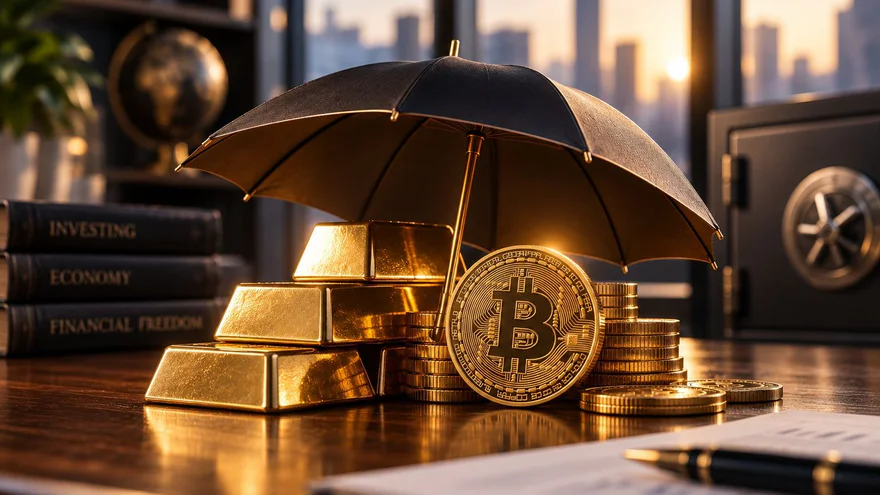
Robert Kiyosaki, the renowned author of bestsellers such as “Rich Dad, Poor Dad,” compared owning gold, silver, and Bitcoin to having insurance against financial troubles. He stated that preparing for economic instability is not the same as predicting doom. Kiyosaki emphasized his stance on his page on X, calling himself a “financial survivor” and noting that people don’t buy car insurance because they want to crash, but to protect themselves against unforeseen circumstances.
He cited a conversation with a woman who wondered if preparing for economic hardships was too pessimistic. In response, Kiyosaki asked her, “Do you have gold, silver, Bitcoin?” – reiterating one of the central tenets of his investment philosophy: “I only want money that the government cannot print.” He expressed his concerns about the loss of purchasing power due to inflation and large-scale money printing. In his view, having limited assets outside of government currencies provides some degree of protection. Bitcoin, in his opinion, is particularly well-suited for this strategy, as its supply is capped at 21 million coins, although limited supply alone is not enough to guarantee the preservation of purchasing power over any specific period.
It is worth noting that Kiyosaki’s recent comments were significantly less apocalyptic than his previous warnings, but the core strategy remains the same. He had previously expressed concerns that rising debts, inflation, geopolitical tensions, and weaknesses in traditional pension systems could lead to a larger financial crisis. He continues to recommend holding BTC, gold, and silver as an alternative to traditional fiat savings. Kiyosaki also continues to purchase assets during periods of market weakness. Previously, he claimed that the financial crisis is “accelerating,” and instead of moving into cash, he accumulates assets, including BTC and ETH. However, his public stance on this issue has changed several times. For instance, in June, he explained why he did not buy Bitcoin and Ethereum during price drops, despite prices soon reaching a low.
Related articles