S&P Maintains Minimal Stability Rating for USDT
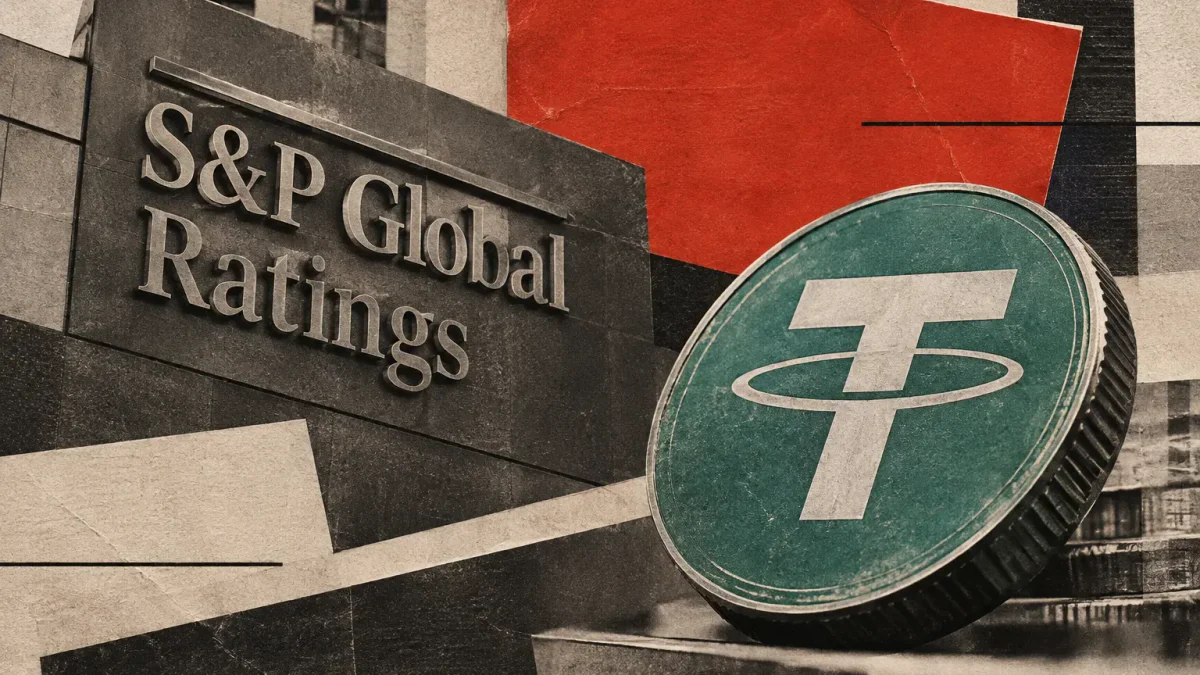
S&P Global Ratings maintained the lowest stability rating for USDT at 5 points on a five-level scale. In the report dated November 18, the agency noted that the value of riskier assets in reserves had reached 28% of the tokens in circulation, compared to 24% a year earlier. Meanwhile, Tether has a positive reserve buffer and disputes the assessment methodology.
Why S&P rates USDT's stability at the lowest level
In the Stablecoin Stability Assessment system, a rating of 1 corresponds to the highest stability of a stablecoin, while 5 is the lowest. S&P assesses the ability of a digital asset to maintain its peg to the underlying currency, taking into account the quality of reserves, liquidity, redemption mechanisms, and other factors.
In November 2026, the agency maintained the USDT rating at 5 (Weak), set a year earlier. Analysts noted additional weaknesses in the reserve structure but did not lower the rating further, as the scale does not provide for a lower value.
S&P focused primarily on the increase in investments in assets whose value can significantly change depending on market conditions.
The agency categorized the following assets:
Gold.
Public stocks.
Secured loans.
Corporate bonds.
According to S&P calculations, the total value of such assets as of September 30 corresponded to 28% of the USDT in circulation. A year earlier, the figure was 24%.
The agency warned that a significant decrease in the value of these investments could lead to a situation where USDT's backing is insufficient to cover obligations. This is a potential risk, not an identified reserve shortfall.
What Tether's financial data shows
According to the reserve report as of September 30, 2026, prepared with BDO's confirmation, Tether's total assets amounted to about $191.5 billion, while liabilities were $183.5 billion.
The excess of assets over liabilities was approximately $7.95 billion. This reserve buffer allows the company to cover potential declines in the value of some assets, but its sufficiency depends on the scale and nature of market changes.
The report also discloses the value of individual reserve categories:
Physical gold – about $19.2 billion.
Bitcoin – about $8.4 billion.
Public stocks – about $4.2 billion.
Thus, Tether maintains a positive excess of assets over liabilities, despite the presence of market risk instruments in the reserves.
However, BDO's confirmation reflects the state of reserves on a specific reporting date and does not eliminate uncertainty about their value and liquidity under adverse market conditions.
What questions S&P raises about reserve transparency
In addition to the asset structure, the agency focused on regulatory mechanisms and financial information disclosure.
Tether operates under the supervision of El Salvador's Digital Assets Commission (CNAD). According to S&P, current requirements stipulate that at least 70% of reserves be placed in instruments that can be liquidated within 30 days.
However, the agency considers these conditions broad enough, as they allow for the use of assets with varying levels of market and credit risk.
Additional questions from S&P relate to the disclosure of reserve storage information. Specifically, the published reports do not contain a complete list of custodians and counterparties, nor information that would allow assessing the degree of separation of reserve assets from other corporate risks.
In August 2026, Tether reported that KPMG conducted an independent audit of the company's financial statements for 2025 and issued an unqualified opinion. However, S&P noted that the full audited financial documents and auditor's opinion were not published for independent review.
How Tether responded to S&P's assessment
In response to the agency's findings, Tether stated that the main issue lies in the assessment methodology, not in the state of its reserves.
The company also referenced the film "The Big Short," about the 2008 financial crisis, questioning the approach of traditional rating agencies to risk analysis.
Despite critical remarks about the reserve structure and reporting transparency, S&P acknowledged that USDT has maintained a good track record of price stability, especially over the past 12 months.
Thus, the published assessment reflects the agency's concern about the quality of collateral and control mechanisms. It does not imply that USDT has already lost its peg to the dollar or that its reserves are currently less than its liabilities.
This material is prepared solely for informational purposes and does not constitute financial advice or a recommendation.