

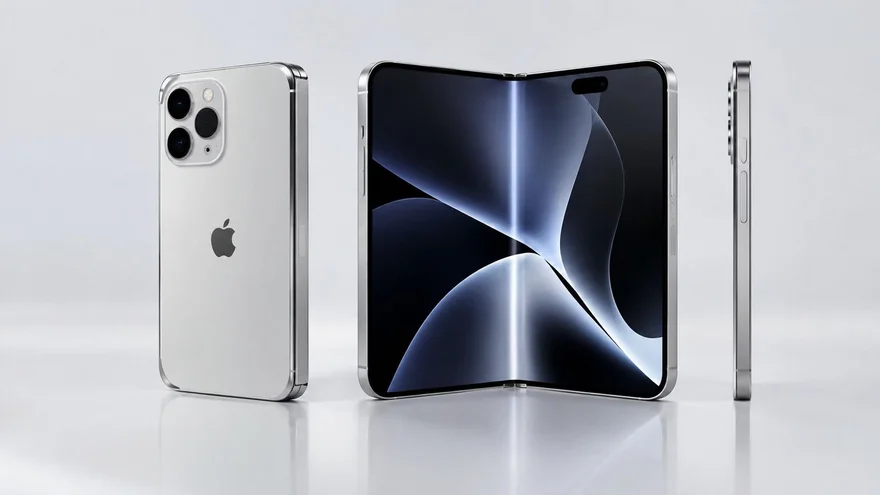
Even before the launch of the foldable iPhone Duo, developers began testing the new form factor in the Xcode simulator and discovered features that could affect website functionality. On the external display, Safari, judging by the published screenshots, leaves a significant portion of the area for its own control elements. As a result, the web page occupies about 70% of the available space, and the content is compressed and shifted to the left. On the right, a permanent panel with browser control elements is displayed, including status, camera, navigation, reading mode, and tab management. At the bottom, there is a separate area with the address bar. On regular iPhones, the Safari interface hides a significant portion of these elements during scrolling, so developers have focused on the constant presence of the panel in the compact Duo mode.
Part of the discussion is about how compatible such an interface will be with existing web layouts. Developers note that standard responsive design mechanisms already allow for unusual screen sizes: dynamic height units like dvh, the viewport-fit=cover parameter, and CSS variables like safe-area-inset can be used for this. However, in the Duo simulator, the viewing area remains rigidly limited, so regular adaptation does not always allow the content to stretch across the entire available surface. Meanwhile, progressive web apps look more correct in the test environment. A separate issue remains with vertical formats of 9:16: when displayed on a wide external screen, they will have to use additional fields or crop part of the image. Web developers also point out that supporting the new device will require separate testing, as typical scenarios for regular smartphones do not always transfer to the foldable body.
When the device is unfolded, the situation looks different. According to the author of the published screenshot, the internal screen of the Duo feels closer to a tablet format and has an aspect ratio of about 4:3, and switching between device states works correctly. The main question now is how quickly websites and applications will adapt to the external display. Some developers believe that companies will find it difficult to justify separate expenses for optimization for a relatively small audience of the new device. Others suggest changing the Safari interface itself, for example, by automatically hiding the side panel or opening it with a swipe. Meanwhile, even Apple's own website in the simulator used is not yet fully adapted to the new form factor. Sales of the iPhone Duo are set to begin on October 23, so Apple and developers still have time to further adjust the software.
Related articles