Samsung Increases Investments in Foundry Capacities in the US and South Korea
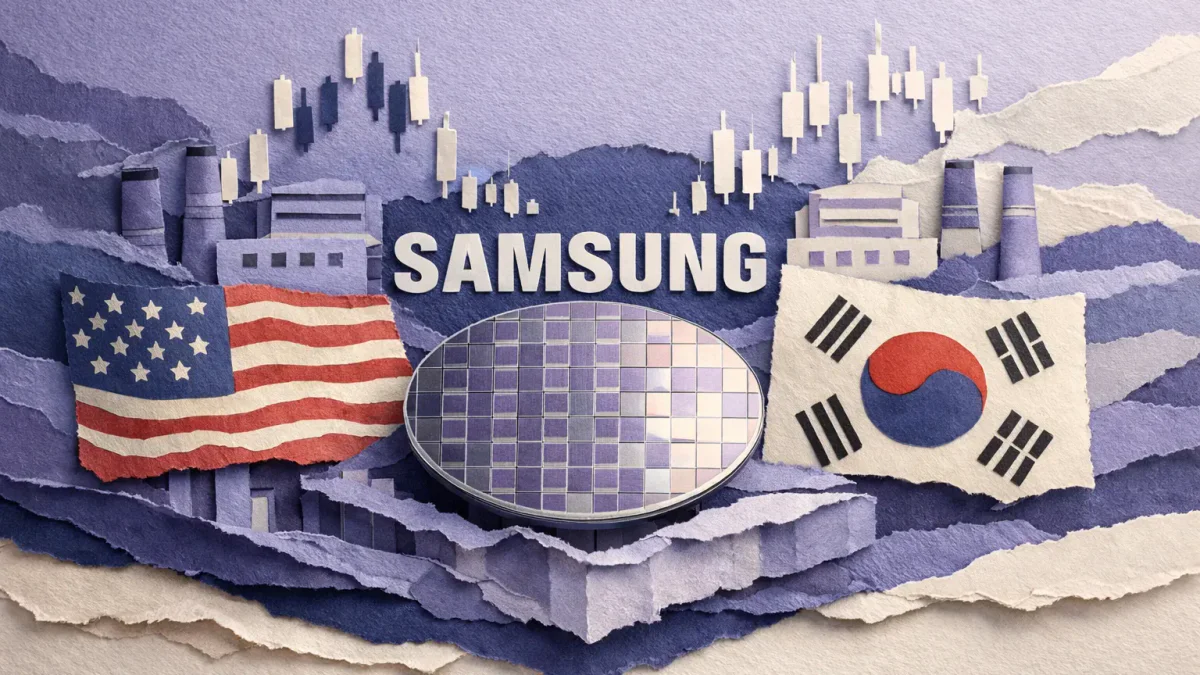
Samsung Electronics is increasing its investments in contract chip manufacturing in the US and South Korea. The reason is simple: demand for chips for artificial intelligence and high-performance computing continues to grow, and the company needs sufficient capacity to meet it.
Texas
The American part of the plan is focused on a new foundry complex in Taylor, Texas. Samsung is investing $37 billion in the site. The first factory in Taylor is expected to start operations at the end of 2026 and will use the 2 nm process – one of the most advanced chip manufacturing technologies. The goal for Fab 1 is 20,000 wafers per month at 2 nm by the second half of 2027.
Samsung has also placed additional orders for 2 nm equipment for Taylor Fab 1. The new equipment will add capacity for approximately 6,000 wafers per month. A second factory is also being prepared: construction of Taylor Fab 2 will begin soon, with mass production expected by 2030. The Taylor plant is expected to produce chips for major clients, including Tesla and Meta.
South Korea
Samsung is not only building abroad. In South Korea, the company plans two new semiconductor factories in Gwangju. They are part of commitments amounting to 400 trillion won, or approximately $290 billion.
The domestic expansion fits into a multi-year roadmap: Samsung has a plan for 450 trillion won aimed at increasing production with advanced processes and maintaining internal supplies in line with its ambitions for global technological leadership. The company's total spending plan exceeds 2,000 trillion won across various regions.
Why it matters now
The investments come amid improved revenue from Samsung's foundry business. Growth is driven by sales of chips using advanced processes and for high-performance computing. The company's corporate strategy is focused on two simultaneous goals: expanding internal capacities and increasing profitability in the foundry segment.
Key milestones to watch: the launch of Taylor Fab 1 at the end of 2026, reaching 20,000 wafers per month by the second half of 2027, the start of construction for Fab 2, and progress on the two factories in Gwangju.
This material is prepared solely for informational purposes and does not constitute financial advice or a recommendation.
Related articles