Scott Aaronson Suggested the Possibility of a Cryptographic Breakthrough at OpenAI and Anthropic

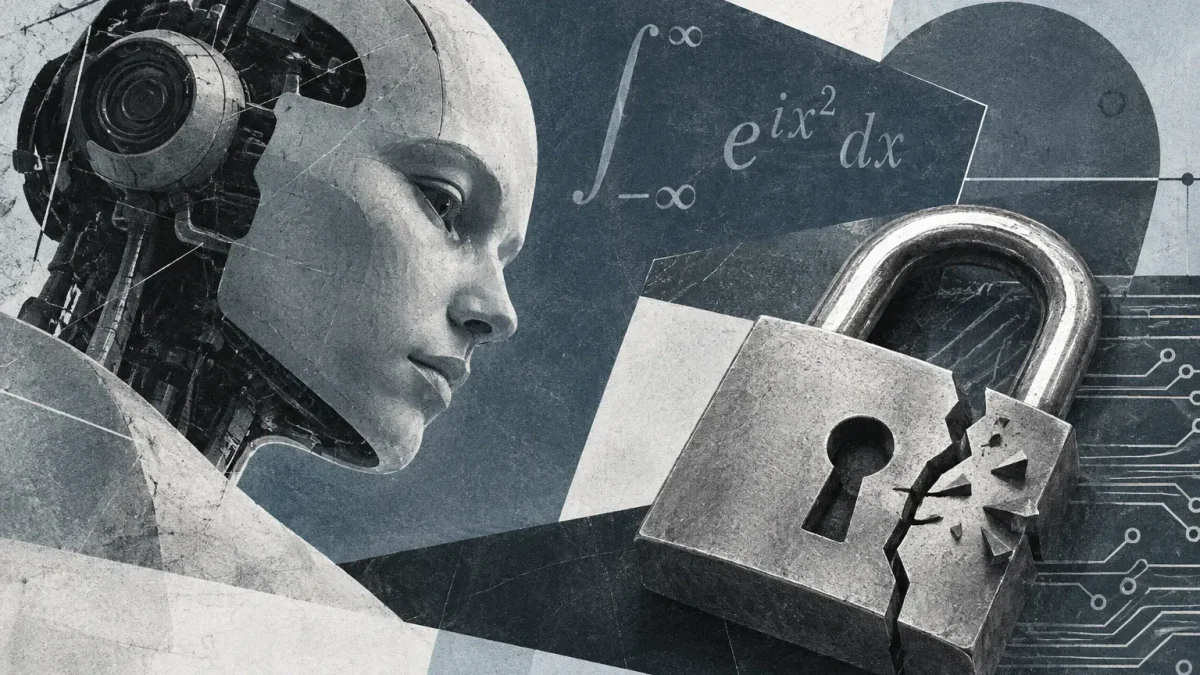
Professor Scott Aaronson from the University of Texas at Austin, a specialist in quantum computing, reported unconfirmed information regarding a new cryptographic algorithm that may have been developed at OpenAI or Anthropic. If confirmed, the discovery could potentially threaten the security of the RSA cryptosystem.
On November 24, the scientist wrote in his blog Shtetl-Optimized that he had repeatedly heard about a possible solution to the problem of integer factorization in polynomial time. However, he admitted that he does not know how reliable this information is.
The next day, Aaronson reported that several sources indicate significant cryptographic breakthroughs at AI laboratories. However, the technical details are unknown to him.
Why a mathematical discovery could threaten RSA
RSA is used for data encryption and digital signatures, including in the infrastructure of digital certificates. Its strength is related to the complexity of decomposing large integers into prime factors.
The emergence of a practically efficient factorization algorithm could threaten RSA security even without the use of quantum computers.
Meanwhile, Bitcoin and Ethereum use other cryptographic mechanisms based on elliptic curves. Therefore, solving the factorization problem does not in itself imply the ability to access cryptocurrency wallets.
Previously, Zcash co-founder Eli Ben-Sasson also warned about potential threats of artificial intelligence to cryptocurrencies, urging developers to pay more attention to alternative cryptographic solutions.
OpenAI and Anthropic presented new mathematical research
Speculations about a cryptographic breakthrough emerged amid a series of mathematical works by leading artificial intelligence developers.
On November 20, Anthropic mathematician Levent Alpoge presented a claimed proof of the Riemann hypothesis, developed in collaboration with Claude. The formalized work contains about 17 million lines of Lean code.
On November 23, OpenAI and Anthropic presented works with claimed proofs of Valiant's hypothesis on the inequality of VP and VNP – the algebraic analog of the P versus NP problem.
The next day, OpenAI published nine more mathematical works. Among them are studies on the computational complexity of matrix multiplication and the finite Fourier transform.
Some results are accompanied by formal proofs in the Lean language, which allows for automatic verification of mathematical reasoning.
Aaronson believes that the pace of recent discoveries may indicate the beginning of a new phase of artificial intelligence application in mathematics. However, the published studies do not yet confirm the existence of a practically efficient algorithm for breaking RSA or the cryptographic mechanisms of Bitcoin and Ethereum.
This material is prepared solely for informational purposes and does not constitute financial advice or a recommendation.