Silver RSI Indicator Reaches Lowest Level Since 2020
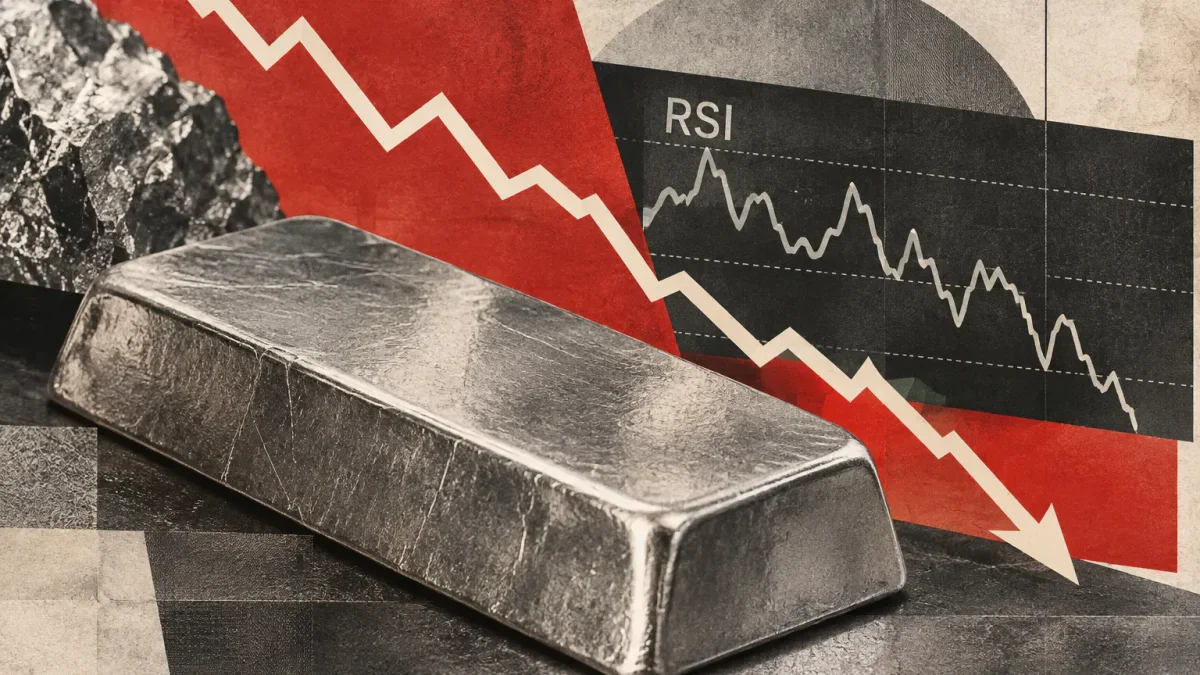
The price of silver fell to approximately $42.30 per troy ounce on November 24. Over the month, the metal lost about 22%, and its price was almost 65% below the historical high in January. Amid the prolonged decline, the weekly Relative Strength Index (RSI) approached the 30 mark. According to Barchart, this is the lowest value of the indicator since 2020.
What Technical Analysis Shows for Silver
The RSI evaluates the ratio of recent price increases to decreases on a scale from 0 to 100. Values below 30 are usually considered to be in the oversold zone, but reaching this level does not mean the decline is over. In a sustained downtrend, the indicator can remain near this mark for an extended period.
In March 2020, silver fell to $11.64 per ounce, after which it rose by more than 140% over five months. However, the recovery then occurred against the backdrop of lower interest rates, large-scale monetary stimulus measures, and subsequent industrial demand revival. In November 2026, the conditions for the precious metals market are significantly different.
Expectations of Fed Rate Hike Pressure Silver
Following the October meeting, the U.S. Federal Reserve maintained the target rate range at 3.75–4%. Currently, market participants predominantly expect a rate hike at the December 8–9 meeting. Rising bond yields can reduce the attractiveness of silver, as holding physical metal does not provide regular interest payments.
On November 25, the publication of the October Personal Consumption Expenditures (PCE) price index is scheduled. This indicator is used by the Fed to assess inflation. If the data exceeds market expectations, it may strengthen expectations of further monetary policy tightening.
Silver Deficit Persists Amid Declining Investment Demand
According to the November forecast by the Silver Institute and research company Metals Focus, global demand for the metal in 2026 will exceed supply by 35 million troy ounces. If the forecast materializes, it will be the sixth consecutive year of deficit. However, total demand, according to researchers, will decrease by 5% compared to 2025.
As of November 3, the volume of silver in exchange-traded investment products decreased by 55 million ounces since the beginning of the year. However, compared to the end of June, stocks increased by 24 million ounces, partially offsetting the first half's reduction.
The persistence of a physical metal deficit does not rule out further declines in its market value. Silver's short-term dynamics are also influenced by investment flows, bond yields, the dollar exchange rate, and expectations regarding interest rates. A low RSI value alone does not determine the price reversal point.
This material is prepared solely for informational purposes and does not constitute financial advice or a recommendation.