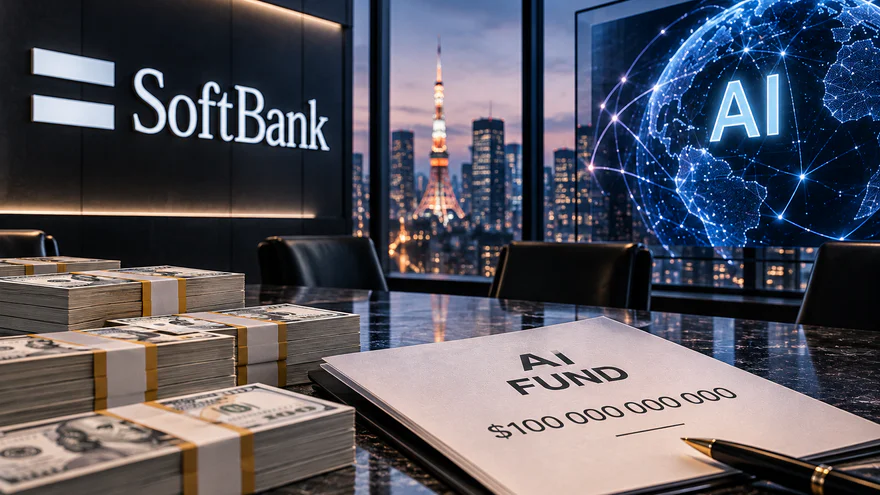
SoftBank founder Masayoshi Son is aiming to raise up to $100 billion from Gulf countries for a new venture capital fund focused on artificial intelligence. He plans to use the raised funds to create a fund that will acquire companies and use artificial intelligence and other advanced technologies to transform their operations. Recently, billionaire Ray Dalio warned that the AI market bubble could soon burst. This opinion is shared by Michael Burry, known for his predictions about financial crises, who is nearing the time when his market downturn predictions may come true. It is not surprising that the launch of another $100 billion fund initiated by Son strengthens the argument of skeptics.
Investors in the region are well aware of the success of the first Vision Fund by SoftBank, created in 2017 with the support of institutions like the Saudi Investment Fund and the Emirati Mubadala. Despite the significant gains achieved by the fund, they are hard to call outstanding – by the end of June, the total asset value was $26.6 billion, which raises questions about upcoming investments. Moreover, this year OpenAI, a company SoftBank invested $65 billion in, does not plan to go public. And SB Energy, a subsidiary, postponed its plans for a stock market listing as bankers failed to convince investors to agree to a $50 billion valuation. This shows that exit opportunities from startups valued over a billion dollars are becoming increasingly limited. With rising global bond yields, lenders are reassessing the risks associated with AI investments. SoftBank is paying record returns on its high-risk bonds and agreed to secure a $10 billion loan backed by OpenAI shares, which is unusual considering the loan is already collateralized. Under significant pressure on its financial statements, SoftBank has exhausted its traditional financing options and is increasingly turning to less attractive financing alternatives.
This situation reflects the broader market. All investments ultimately depend on expected returns, cost of capital, and the time required to recoup the investment. Under current trends, all three factors are gradually undermining the rationale for AI investments. The puzzling aspect is that regional investors are even considering Son's proposals, indicating not a lowering of investment standards but the possibility of a lucrative deal. Furthermore, during a speech at the Forbes conference in Singapore, Dalio noted, "Everyone says their wealth is a billion dollars, but try to spend that amount... you will need to sell assets of your property to get the money, and that is why bubbles usually burst." The problem lies in turning paper gains into real money. The search for new sources of capital itself indicates that the investment cycle in artificial intelligence is entering its late stages.
This material is prepared solely for informational purposes and does not constitute financial advice or a recommendation.
Related articles