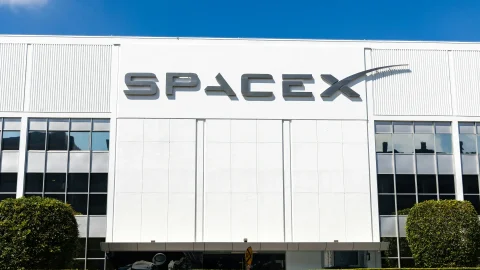
SpaceX has announced plans to build a new launch site on the Gulf of Mexico coast in Louisiana, investing approximately $100 billion in the project. The complex will occupy 125,000 acres — roughly 505 square kilometers — in an area known as Pecan Island. The new facility has been named Starbase Louisiana.
SpaceX President and COO Gwynne Shotwell explained that the site is designed as a self-sufficient spaceport with its own fuel production, power generation, a deepwater port, rocket processing facilities, and an airport. This infrastructure will allow vehicles to be serviced without reliance on external supplies. The territory will house five launch complexes, each comprising two pads and a separate fuel farm. This will make Starbase Louisiana SpaceX's fourth and largest launch facility, with an estimated throughput of thousands of missions per year.
According to Louisiana's economic development agency, construction is set to begin in 2027, with the first launch planned for 2029. The state has provided tax incentives and hiring assistance, while SpaceX has agreed to pay more than $820 million in local contributions over 25 years and donate $25 million to a regional community fund. The site was chosen for several reasons: the vast acreage provides room for infrastructure expansion, the Gulf offers access to a wide range of launch trajectories, Louisiana's natural gas reserves will supply electricity and methane for Starship's Raptor engines, and deepwater access enables the transport of large-scale stages and equipment by sea.
The announced launch cadence depends directly on SpaceX's ability to make Starship fully and rapidly reusable. The recently redesigned Starship V3 completed its first full test flight, and back in 2024 the company caught a returning Super Heavy booster for the first time using the launch tower's mechanical arms. The new site is intended to support Starlink satellite deployments, lunar and Mars missions, and the rollout of orbital data centers — an initiative that, by the company's estimates, could require up to one million spacecraft in orbit.
State authorities anticipate the creation of 3,000 direct jobs over ten years, with an average salary of $92,600 per year, along with more than 8,100 indirect positions. The scale of construction has nonetheless drawn significant criticism, primarily over environmental concerns. The site is located on fragile coastal wetlands adjacent to protected natural areas. Local residents and conservation groups fear that noise, light pollution, traffic, and the construction itself will harm fishing, migratory birds, and the marshlands that serve as a natural buffer against hurricanes.
Many residents have also stated that deal negotiations were conducted without their input. Those concerns are reinforced by the company's past experience: during Starship's first integrated test launch in Texas, SpaceX underestimated the impact of the blast wave, which resulted in a crater forming beneath the launch mount and debris being scattered across the surrounding area. Before flights can begin, the facility must obtain federal licensing and pass an environmental review. SpaceX assures that only a small portion of the site will be developed, that large areas will be left untouched, and that the company will work with relevant state agencies to restore eroding wetlands — with public community meetings planned for the coming months.