SPB Exchange Starts Test Trading of Bitcoin, ETH, and USDT
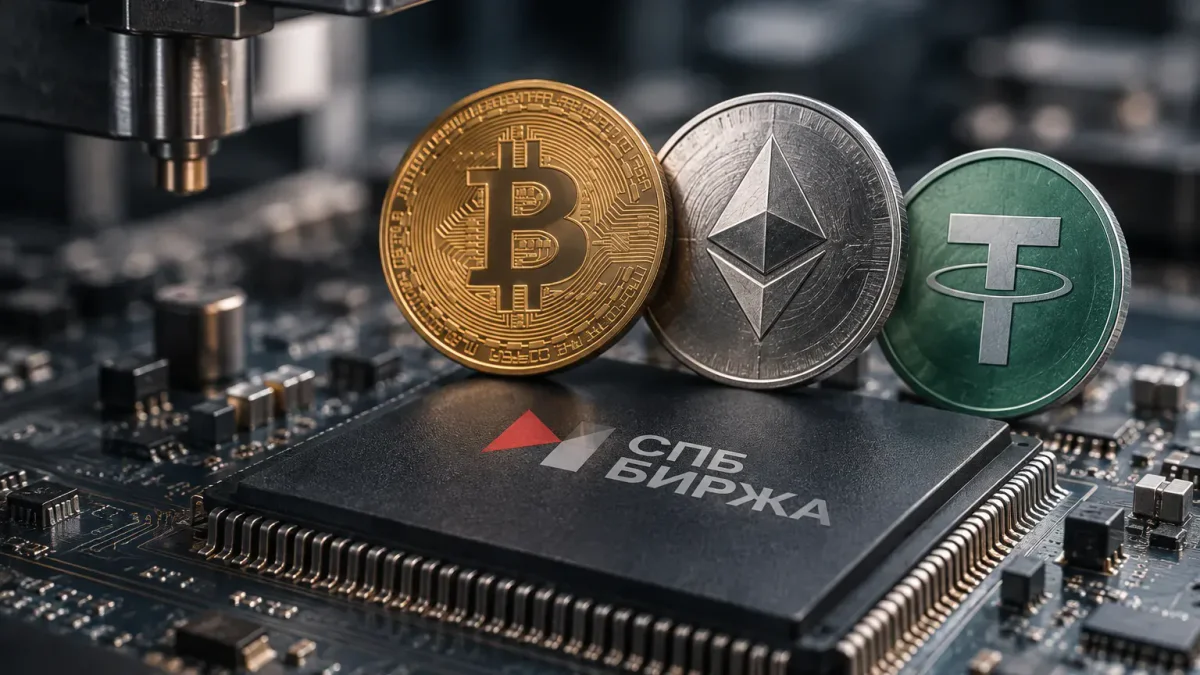
The SPB Exchange has begun test trading of Bitcoin, Ethereum, and USDT in pairs with the ruble. As reported by the platform's CEO, Evgeny Serdyukov, on November 18, trial transactions are being conducted by professional market participants. To launch real operations, the exchange needs to coordinate trading rules with the Bank of Russia and obtain the necessary permissions for depository infrastructure.
Information partner of the publication — "Financial Sentry", a Telegram channel about the Russian economy, financial markets, and digital assets.
Which Cryptocurrencies is SPB Exchange Testing
SPB Exchange has started testing the infrastructure for organized trading of digital currencies. This was announced by the platform's CEO, Evgeny Serdyukov, at the sidelines of the NAUFOR Ural Conference on November 18.
According to the head, cryptocurrency pairs are already registered on the test platforms, and professional participants are conducting trial transactions and verifying their reflection in internal accounting systems.
In the first phase, three trading pairs are being tested:
BTC/RUB — Bitcoin to Russian ruble;
ETH/RUB — Ethereum to Russian ruble;
USDT/RUB — Tether to Russian ruble.
These same instruments are expected to be used once real trading begins.
Currently, operations are conducted exclusively in a test environment. Private investors cannot make real transactions with the listed cryptocurrencies on the SPB Exchange.
When Will Real Cryptocurrency Trading Begin
According to the directive of the Bank of Russia, Russian exchanges are allowed to launch organized trading of digital currencies from November 22, 2026. However, the arrival of this date does not automatically mean the opening of trading on every platform.
Organizers must first coordinate with the regulator on the rules for conducting operations, ensure the accounting of orders and transactions, and meet the requirements for trading and settlement infrastructure.
SPB Exchange has already submitted its trading and clearing rules to the Bank of Russia. Additionally, the platform needs to obtain a license for a settlement digital depository.
According to Serdyukov's estimate, the first real transactions could occur by the end of 2026. However, the widespread provision of services by market participants will likely begin only in 2027.
Simultaneously, the Moscow Exchange is preparing for the launch. According to its official announcement, from December 1, 2026, the platform plans to start operations with BTC, ETH, and USDT. Initially, these will be pilot transactions with the gradual inclusion of participants.
Thus, both Russian exchanges are preparing the infrastructure for cryptocurrency trading, but the actual launch dates and the scale of operations will depend on meeting regulatory requirements.
What Restrictions Will Apply to Investors
The Bank of Russia has defined a list of cryptocurrencies available to non-qualified investors. From November 17, 2026, Bitcoin, Ethereum, and USDT may be admitted to public trading.
However, the regulator has set several conditions for private investors:
Purchase limit. A non-qualified investor can purchase cryptocurrencies for an amount not exceeding 300,000 rubles within a calendar year through one intermediary.
Mandatory testing. Before making transactions, the investor must pass a test to understand the risks of the cryptocurrency market.
Limited list of assets. Non-qualified investors have access only to cryptocurrencies that meet established criteria.
Access through intermediaries. Purchases can be made through brokers, managers, or crypto exchanges operating within a regulated infrastructure.
Qualified investors will have access to a broader range of cryptocurrencies without the purchase limit set for non-qualified investors. However, the testing requirement also applies to them.
The conditions are outlined in the clarification of the Bank of Russia dated November 6.
The entry of traditional exchanges into the cryptocurrency market could change the structure of access for Russian investors to digital assets. One of the key changes is the emergence of a regulated trading infrastructure that integrates familiar stock market mechanisms for executing trades, clearing, and asset accounting.
For investors, this potentially means expanding ways to work with cryptocurrencies through professional intermediaries. For brokers and exchanges, it means the emergence of an additional business direction that requires the development of technological systems and depository services.
Information partner of the publication — “Financial Sentry”, a Telegram channel about the Russian economy, financial markets, and digital assets. Subscribe to stay updated on the latest financial news, regulatory decisions, and key events affecting the markets.
This material is prepared solely for informational purposes and does not constitute financial advice or a recommendation.