

Tech Giant Arm Unites Eighty Companies for Robotics
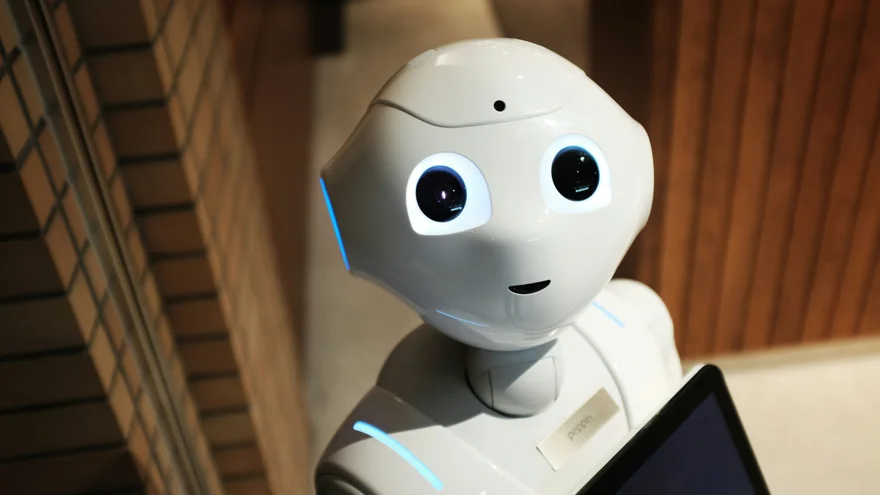
Arm has launched the Total Design for Physical AI ecosystem and introduced the Robotics Capability Framework — a system for unified description of robot capabilities. More than 80 companies have already joined the initiative, including AWS, Hugging Face, NXP, QNX, Siemens, Unitree Robotics, Qwen, PSYONIC, and Liquid AI.
The Robotics Capability Framework proposes dividing robotic systems into six levels of complexity — from RL0 to RL5. Systems gradually progress from reactive behavior to contextual understanding, cognitive capabilities, and self-learning. This does not involve standardizing specific hardware or software. The Framework links a robot's capabilities to real-world application scenarios and technical requirements: latency, compute placement, memory volume, power consumption, determinism, and safety. This will allow companies to answer more precisely what a robot is actually capable of doing, rather than simply claiming it is "autonomous."
The Arm Total Design program has been expanded to cover physical AI. The initiative brings together developers of software, AI models, sensors, computing hardware, virtual platforms, and digital twins. Arm expects this approach to reduce integration complexity and accelerate the transition of robotics projects from prototypes to real-world deployment.
The company is strengthening its role in the physical AI market, positioning its architecture as the computational foundation for systems that simultaneously perceive the surrounding world, make decisions, and act within it — subject to constraints on time, energy, and safety.
Today, developers use the same terminology for very different systems — an industrial robot, an autonomous mobile platform, or a humanoid machine. This makes it difficult for customers to compare solutions. Arm addresses the problem through a unified description of capabilities and requirements, leaving developers free to choose their architecture, models, and software stack. The Framework does not standardize the performance, architecture, or implementation methods of robots.
In August, Wang Xiaogang, chairman of China's ACE Robotics, predicted a "ChatGPT moment" for robots by the end of 2027.