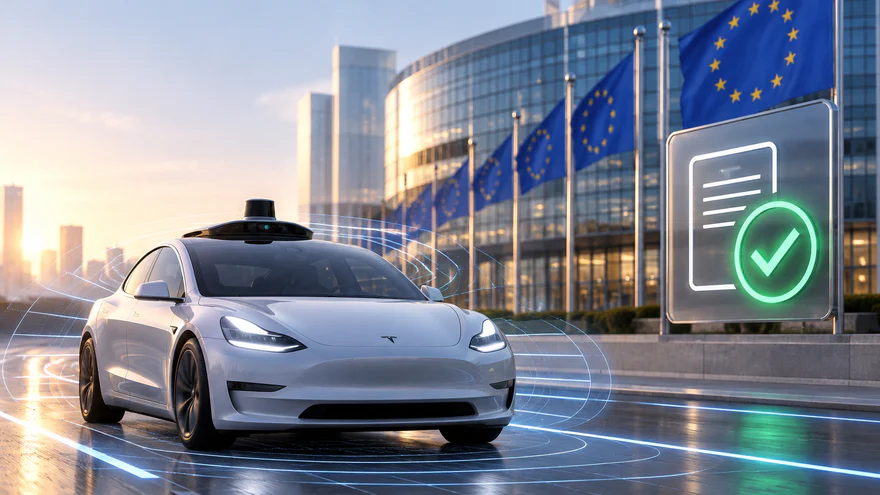
Tesla is actively pushing for the approval of its Full Self-Driving (FSD) system across the entire European Union. Eight EU countries have already consented to the use of the system, but a pan-European decision is delayed, with critics questioning the data on which the company's arguments are based. As of October 2026, national FSD approvals are in effect in eight EU countries, covering approximately 12.6% of the union's population.
The main impetus comes from the Netherlands. On April 10, 2026, the Dutch road regulator RDW granted FSD preliminary pan-European type approval after 18 months of testing, which included over 1,000 tests and 1.76 million kilometers of driving. This decision means more than it seems: under mutual recognition, other countries can accept the approval without conducting their own independent tests. But the main goal is approval at the entire bloc level, and this decision goes through the Technical Committee on Motor Vehicles (TCMV), which moves slowly. The TCMV meeting expected on October 6, 2026, did not lead to a vote. The next opportunity may shift to December 2026.
Tesla's main argument for regulators relies on safety: the company claims that FSD results in seven times fewer accidents compared to the average American driver. Independent researchers call this figure misleading. Elon Musk has publicly blamed regulatory delays for road deaths, stating that the lack of approval costs lives. Meanwhile, local testing data from the Netherlands, the very trials that opened Dutch approval, remain classified as a commercial secret. The public cannot examine the evidence behind the decision that triggered a domino effect in eight countries.
The European approval system is built on caution. A national regulator can issue preliminary type approval, and mutual recognition allows this decision to spread. But for bloc-wide approval, the consent of a committee of member states is required. This structure explains Tesla's two-track strategy: winning by countries through mutual recognition while pressuring the TCMV for a full pan-European decision. The first track has yielded eight markets. The second has only resulted in a calendar entry for December.
The December deadline is the obvious thing to watch. Another meeting without a vote will extend uncertainty into 2027. A favorable vote would turn the patchwork of national approvals into a single market. Tesla's lobbying relies on the figure of seven times fewer accidents and Musk's rhetoric that the delay costs lives. The classified Dutch data is at the center of this tension. For European drivers, the practical stake is simpler: in eight countries covering about 12.6% of the EU population, FSD has passed the national barrier. In the rest of the bloc, the answer depends on a committee that has yet to vote, on a safety claim that has yet to convince critics, and on test results that no one outside the process is allowed to read.
This material is prepared solely for informational purposes and does not constitute financial advice or a recommendation.
Related articles