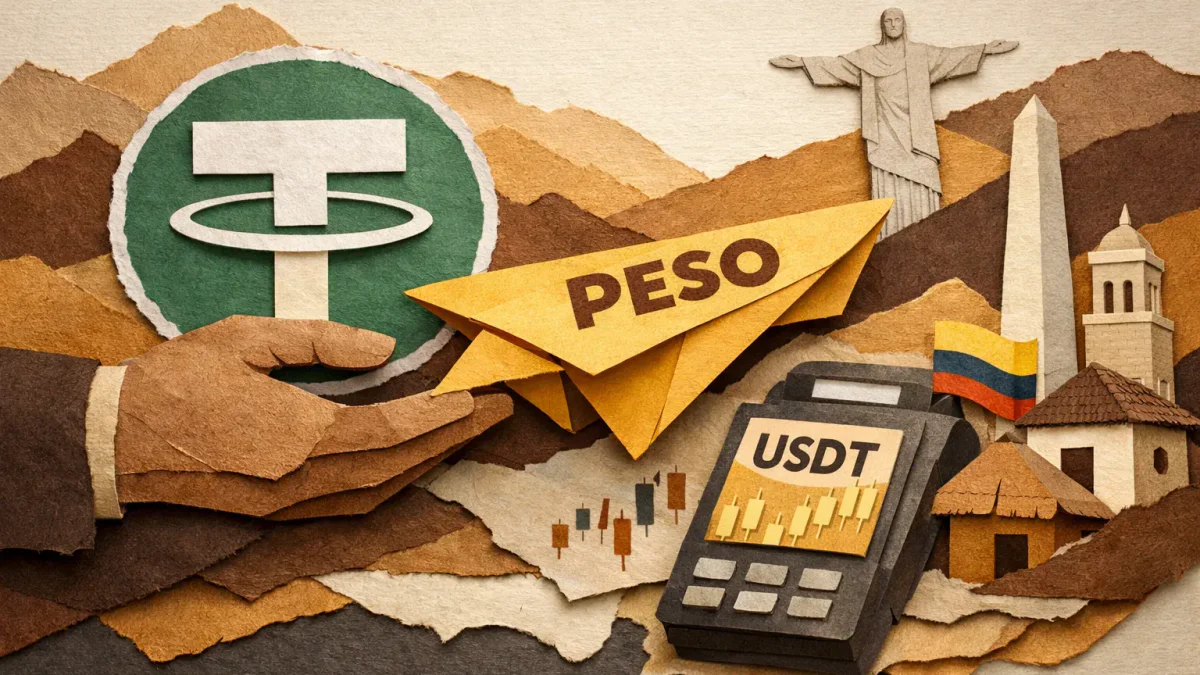
Tether led a pre-seed round in the Bolivian fintech Peso to expand USDT payments in Bolivia, Brazil, Colombia, and Argentina. Tether did not disclose the amount, company valuation, or other participants.
Peso is a financial app that allows users to hold USDT, transfer funds abroad, make purchases, and use savings and investment services. The company connects digital dollar balances with traditional payment systems: bank transfers, QR payments, and merchant terminals, and also offers virtual accounts in the client's name. In Bolivia, Peso already accepts USDT in the food delivery service Yango – this is an active service, but the number of transactions, restaurants, and payment volumes are not disclosed. Through connections with the Bolivian banking system, users can transfer funds between USDT and the local currency via ACH.
According to Tether's announcement on October 21, the funds will go towards payment infrastructure, merchant services, and conversion to local currency. Peso intends to develop a terminal network and virtual accounts, linking settlement services in four countries and focusing on local deposit and withdrawal schemes so that businesses can accept stablecoins without operating exclusively within crypto platforms.
“Latin Americans are already using USD₮; there was a lack of infrastructure to spend it in everyday life without friction,” said Peso CEO and co-founder Alejandro Teran. “Peso is building that very infrastructure for everyday spending, turning USD₮ from a savings tool into a payment channel people rely on every day,” added Tether CEO Paolo Ardoino.
Among the target sectors, Peso names e-commerce, retail, ride-hailing, and banking services, but no completed integrations with ride-hailing, except for Yango, have been announced. Tether does not provide transaction cost comparisons and settlement benchmarks.
This material is prepared solely for informational purposes and does not constitute financial advice or a recommendation.
Related articles