
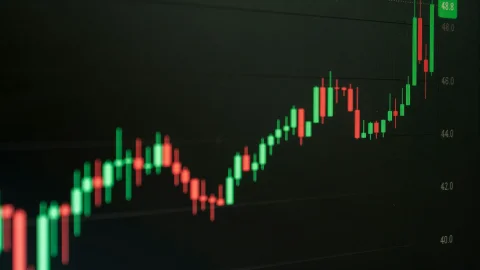
In terms of total value, tokenized stocks are among the fastest‑growing categories in the risk‑weighted asset space. According to the RWA xyz platform, this category ranks second in terms of growth rates among RWA, уступая only to venture capital, which saw growth of approximately 270% over the same period. The adoption becomes even more evident when you look at the trading volume on the blockchain. According to Blockworks, the volume of trading in tokenized stocks exceeded nine billion dollars. In January, this figure was one billion dollars, and a year ago it was three hundred million dollars. Most of this growth occurred in just two months.
For most of the year, the trend in volume changes appeared stable and gradual. In April, volumes reached two and seven‑tenths billion dollars, and in May – three and six‑tenths billion, which is a natural growth for this category. In June, the indicators grew exponentially, doubling to seven and two‑tenths billion dollars, and then in July they increased by another twenty‑five percent. Monthly growth of this magnitude cannot be explained by an increase in the activity of existing users – it is linked to the emergence of new platforms. The sharp jump in trading volumes in June and July coincides with the launch of Robinhood Chain and Binance Stocks. Both products provided stock tokens to millions of existing users.
For most of last year, tokenized stocks were listed on crypto‑oriented decentralized exchanges and remained below one billion dollars per month. Buying such assets meant finding a suitable pool, trusting little‑known issuers, and accepting spreads that made the transaction virtually unprofitable. However, the situation has changed: tokenized stocks have moved to the interfaces of brokerage and exchange platforms serving millions of existing customers, which has completely simplified the connection process. The demand is based on access arbitrage: users don’t buy the shares themselves, but the wrapper – 24/7 trading, fractional lot sizes, settlements in stablecoins, and accessibility for investors outside the US, who find it difficult to open a brokerage account. An additional incentive was the easing of regulations: after the adoption of the GENIUS Act, mechanisms for working with stablecoins emerged, providing the settlement component with a real legal basis. Meanwhile, traditional platforms are striving for the same result. Nasdaq plans to extend trading to twenty‑three hours a day, five days a week, thereby placing the largest operating exchange on a par with the argument for round‑the‑clock operation of tokenized stocks. If a regulated platform offers virtually continuous access with full settlement finality, the advantage of the crypto market shrinks, although it still retains trading on weekends, global access without a relationship with a US broker, fragmentation at very low volumes, and compatibility with decentralized finance protocols. The key question for analysts is whether $9 billion was the beginning of a long-term growth curve or the peak of a leap driven by the launch of new platforms. The data for August will be the first month when the effect of new placements should be offset.
***
The material has been prepared solely for informational purposes and does not constitute financial advice or recommendation.