UK Budget Fails to Support London Stock Exchange
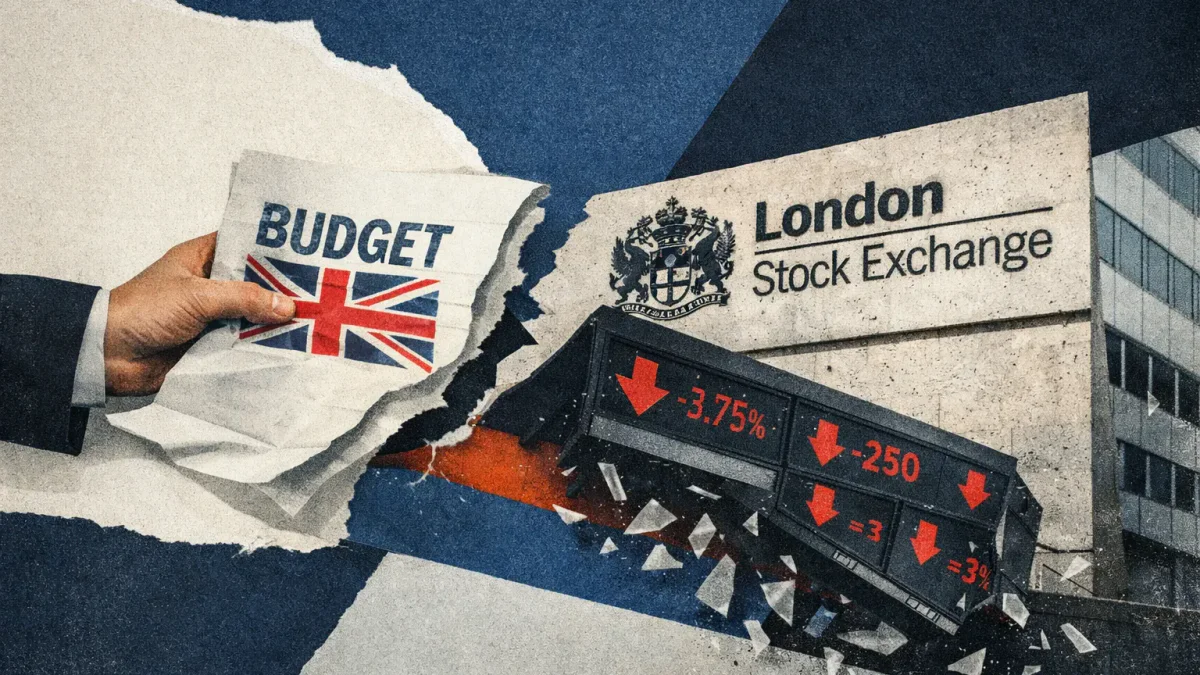
The UK budget did not offer the measures needed to revive the London Stock Exchange, market participants reported, despite encouraging words about capital markets. The Chancellor of the Exchequer's budget statement included plans to increase funding for public investment funds and develop incentives for first-time investors. However, it lacked specific steps expected in the City, such as the abolition of the 0.5% levy on share purchases.
Market Reaction
“Good words about public markets, but without a sense of urgency,” said Charles Hall, head of research at investment bank Peel Hunt. Investor disappointment in stocks became part of mixed business assessments: government bond and currency traders welcomed the confirmation of budget rules, the financial sector accepted a less significant than expected increase in bank levies, and leading business groups criticized the lack of measures to reduce tax and regulatory burdens.
Scale of the Problem
The weakness of UK capital markets is linked to the suppression of investments needed for growth. London Stock Exchange head Julia Hoggett called the departure of companies from the City a matter of national security. London faces a wave of takeovers of public companies by foreign buyers, and the pace of listings does not compensate for the departures. The problem is partly caused by a decline in investments by local pension funds and retail investors in UK stocks, making London shares undervalued and attractive for foreign takeovers. The value of takeovers of UK companies by foreign buyers has more than tripled over the year, to about $90 billion.
What the Budget Included
The Chancellor abandoned the previous government's plan to reduce the tax-free amount on cash in individual savings accounts. Instead, the government, together with the industry, will explore new incentives for first-time investors in stock and share accounts. The budget also expanded the capabilities of the British Business Bank and offered a tax break to entrepreneurs. The 0.5% levy on share purchases is expected to bring in £5.1 billion ($6.8 billion) in the current financial year; its abolition was not included.
“It's disappointing that the Chancellor did not take action on the levy,” said Richard Stone, head of the Association of Investment Companies. “With pressure on the market, inaction leaves the door open for foreign bargain hunters.” Rebecca McLean from Aberdeen noted that the budget removed some uncertainty but did not provide a new catalyst. Among the companies considering listing in London are Ardshinbank, Waterstones, and SumUp; Dangote Cement is preparing a secondary listing as early as next month.
This material is prepared solely for informational purposes and does not constitute financial advice or a recommendation.
Related articles