
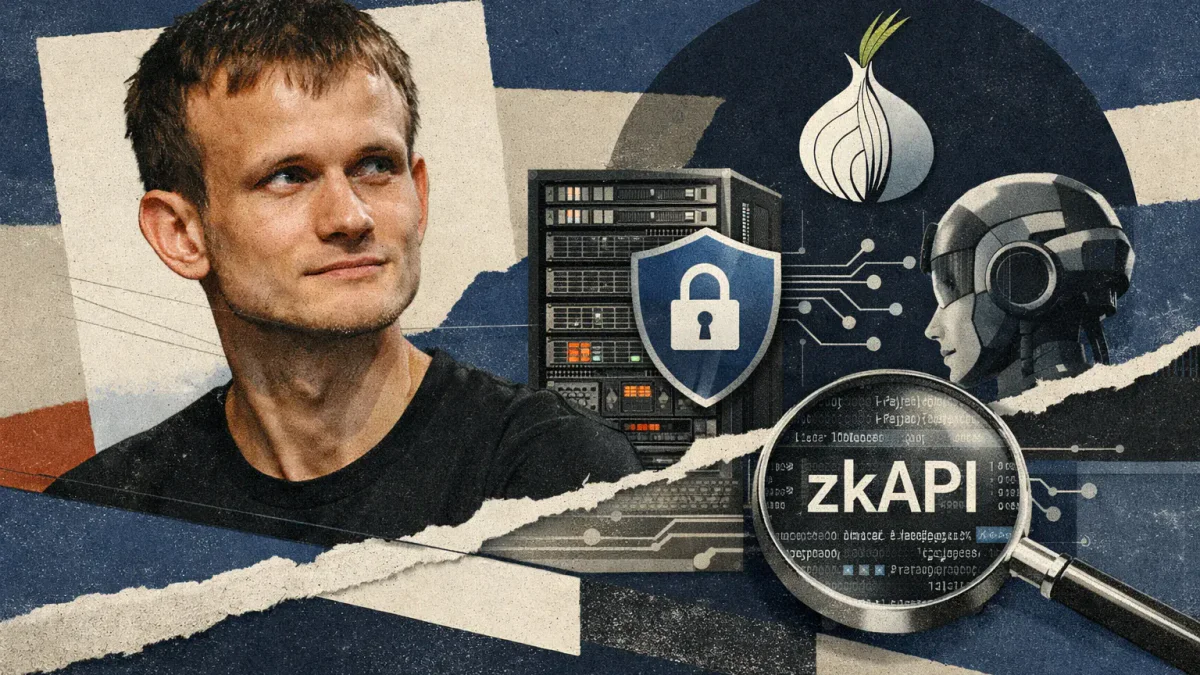
Ethereum co-founder Vitalik Buterin demonstrated an experimental configuration aimed at enhancing the privacy of AI agents. The system combines the zkAPI protocol and the Tor network, allowing conversations to be isolated and AI requests to be rewritten locally. Each conversation receives a separate Tor route, your requests are masked with random masking traffic, and zkAPI ensures that users do not reveal their identity through payments.
Buterin noted that his system is integrated with an agency environment called pi and is designed to conceal the connection between the user, their payments, and requests to AI services. He also stated that the system assigns each conversation a separate route through Tor and adds random traffic for masking, using zkAPI to protect data. Additionally, requests are rewritten using a language model that can be customized to take advantage of features of interest to the user. Buterin's statement about the system reads as follows: “Each conversation receives a separate Tor route, your requests are masked with random masking traffic, zkAPI ensures that you do not reveal your identity through payments.” However, he emphasized that the proposed solution remains experimental. In the current configuration, production proof keys are not yet prepared, and the protocol's network settings are not deployed.
Users can deposit Ethereum (ETH) to pay for access to AI, with zkAPI using zero-knowledge proofs to verify the availability of funds without revealing specific payment sources. A reduction in the cost of deposit and withdrawal operations through zkAPI is expected soon on the Ethereum mainnet, which may simplify access to this system. Vitalik Buterin also expressed the need for a specialized mixnet to further protect privacy when using solutions like his system for AI agents.
This material is prepared solely for informational purposes and does not constitute financial advice or a recommendation.