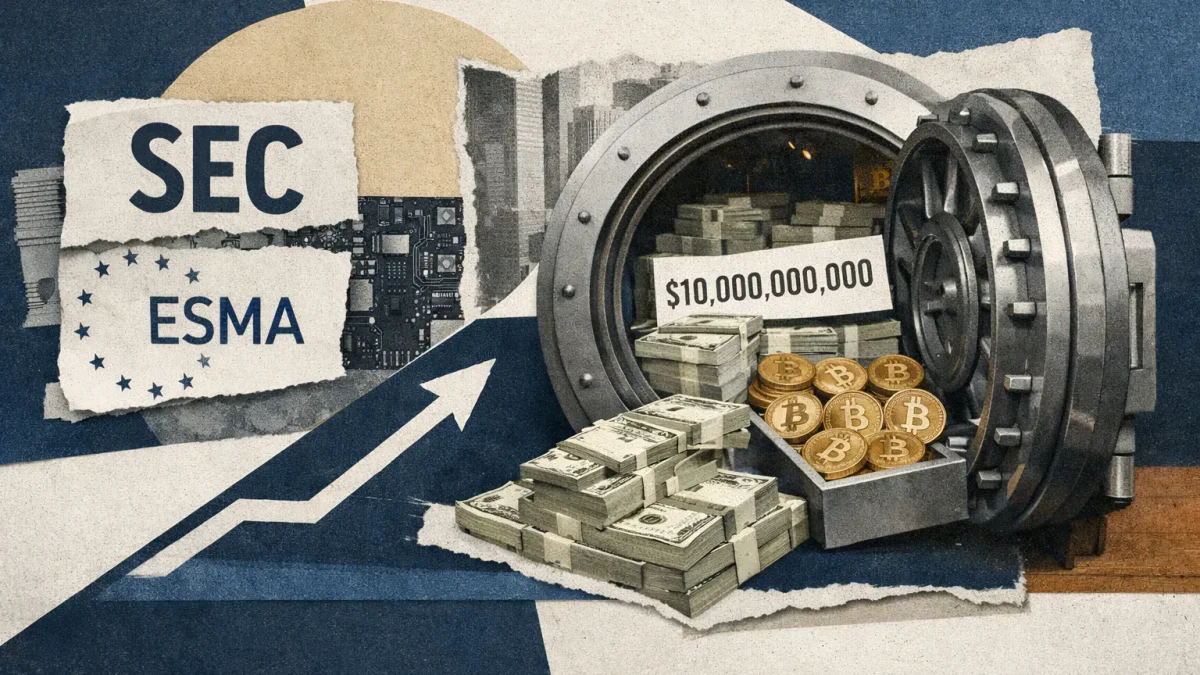
The volume of funds in crypto vaults has exceeded $10 billion as investors seek higher yields from stablecoins. According to the Financial Times, citing the analytical group Blockworks, there were about $4 billion in such vaults at the beginning of 2025. The growth of the segment has attracted the attention of regulators in the US and Europe due to risks associated with lending in decentralized finance (DeFi).
Crypto vaults allow digital asset holders to transfer tokens according to a chosen strategy and earn income, particularly through lending to traders. They use smart contracts to manage assets without traditional intermediaries, but each vault has a curator – similar to a fund manager: they choose the strategy, set risk parameters, and charge a fee. Typical strategies include lending or staking with yields around 3–10%, while riskier options may offer over 20%.
According to Steakhouse Financial co-founder Adrian Kachinero Vasilievich, the main contributors are fintech companies with significant stablecoin reserves, digital asset managers, and hedge funds. Steakhouse Financial is the largest vault curator according to FT.
Vaults give investors more control over collateral but can automatically liquidate positions in case of problems, which can intensify market sell-offs. "In a stress scenario, the situation can change very quickly," noted Andrew O’Neill, head of digital asset analytics at S&P Global Ratings. According to him, issues in DeFi spread much faster than in traditional markets. Kaiko's digital assets director Leopold Wenger called the segment risky: investors often focus on rates without understanding liquidity and other risk parameters, even though conditions are outlined in open smart contracts.
In July, the SEC stated that it is studying under what conditions crypto vaults fall under securities legislation. Commissioner Hester Peirce noted that vaults holding securities or distributing assets for investment in them may meet the definition of an investment company, and some may function similarly to mutual investment trusts. In September, ESMA proposed regulating intermediaries facilitating access to DeFi; according to an explanation for FT, the proposals may apply to lending vaults if access is provided by crypto service providers. Cahill Gordon & Reindel lawyer Jonathan Galea noted that curators constantly adjusting strategy parameters and controlling asset movements may be considered analogous to traditional fund managers – with all regulatory requirements. Wenger called the potential transition to regulated activities one of the biggest risks for curators: a significant part of the segment still operates without special oversight.
This material is prepared solely for informational purposes and does not constitute financial advice or a recommendation.
Related articles