Why Extreme Fear in the Crypto Market Doesn't Guarantee a Bitcoin Bottom
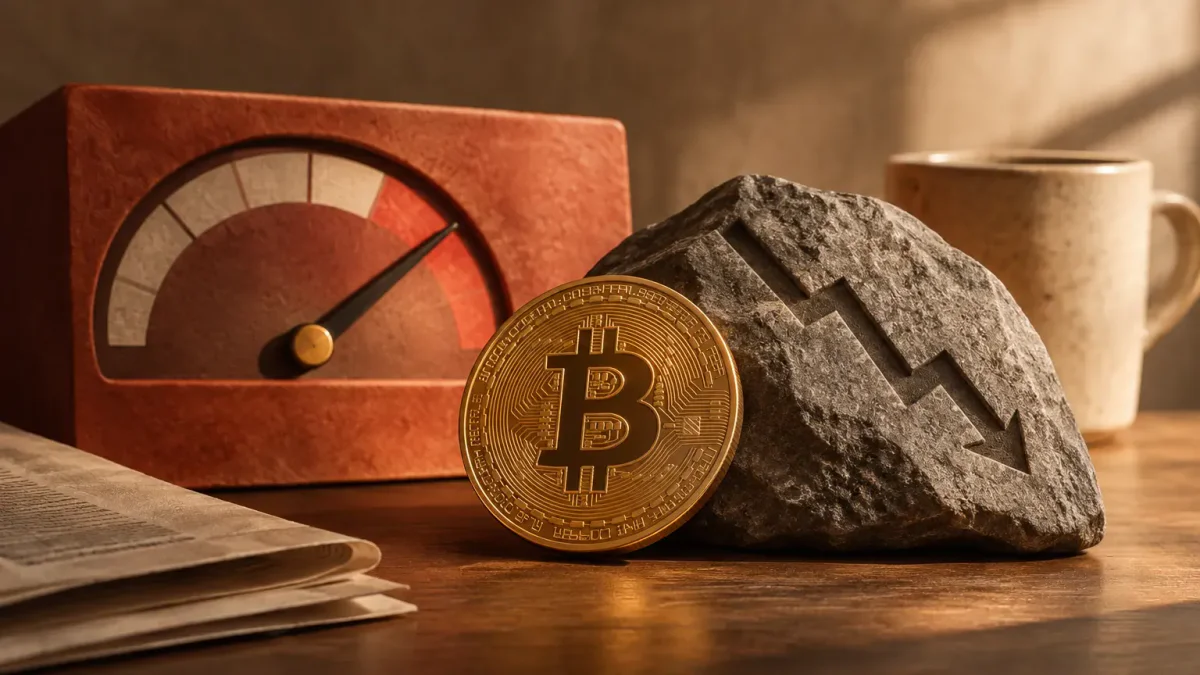
The Fear and Greed Index in the cryptocurrency market stands at 12 points out of 100 on November 27, remaining in the extreme fear zone. Despite the widespread belief that panic sentiments create favorable conditions for buying Bitcoin (BTC), historical studies show the indicator's limited ability to predict price recovery.
How reliable is the Fear and Greed Index
According to Alternative.me, the index rose from 11 to 12 points over the past day, while a month ago it was at a neutral mark of 51. Negative sentiments persist amid the prolonged correction of the cryptocurrency market.
The index is calculated taking into account the volatility of Bitcoin, market momentum, trading volume, social media activity, search queries, and the share of the first cryptocurrency in the total market capitalization. Indicators reflecting already occurred price changes play a significant role in its methodology.
In a study by K33 Research dated February 17, 2026, analysts examined about 3,000 daily index values. The average Bitcoin return over the subsequent 90 days with an indicator below 25 was only 2.4%. With values above 90, a similar indicator reached 95%, as periods of pronounced optimism often coincided with the acceleration of the upward trend.
The results obtained do not mean that buying Bitcoin during periods of extreme greed guarantees higher returns. However, they show that a low index value in itself is not a reliable signal of market bottom formation.
Outflows from Bitcoin ETFs continue to limit demand
One of the factors complicating the recovery of the cryptocurrency market remains the reduction of investments in U.S. spot Bitcoin ETFs.
Earlier, UNUM reported that the Fear and Greed Index from CoinMarketCap dropped to 10 points amid a prolonged correction and outflow of funds from cryptocurrency funds.
According to SoSoValue, by the end of trading on November 25, the cumulative net outflow from U.S. spot Bitcoin ETFs since the beginning of the month reached $5.39 billion. This is the largest monthly figure since the launch of the funds in January 2024, even though November is not yet over.
Prolonged outflows limit one of the sources of demand for Bitcoin. Meanwhile, the return of capital to exchange-traded funds could become an additional sign of market stabilization, although it does not guarantee price growth by itself.
What factors can confirm Bitcoin's recovery
Additional pressure on the cryptocurrency market is exerted by expectations of tightening U.S. monetary policy. Financial market participants assess the probability of a Fed rate hike in December at more than 90%, while the yield on ten-year Treasury bonds is around 4.9%.
High yields on government bonds increase their attractiveness relative to more volatile assets, including cryptocurrencies.
According to a study by Galaxy Research dated November 25, Bitcoin has ended seven consecutive trading weeks with a decline. Analysts also note that historical indicators of investor capitulation did not reliably determine the exact moment of market bottom formation.
In these conditions, more convincing signs of recovery may include a reduction in ETF outflows, stabilization of prices, and easing expectations regarding further Fed policy. The Fear and Greed Index remains a useful tool for assessing market sentiment, but it should be considered in conjunction with other financial indicators.
This material is prepared solely for informational purposes and does not constitute financial advice or a recommendation.