WMO Warns of Possible Temperature Record in 2027
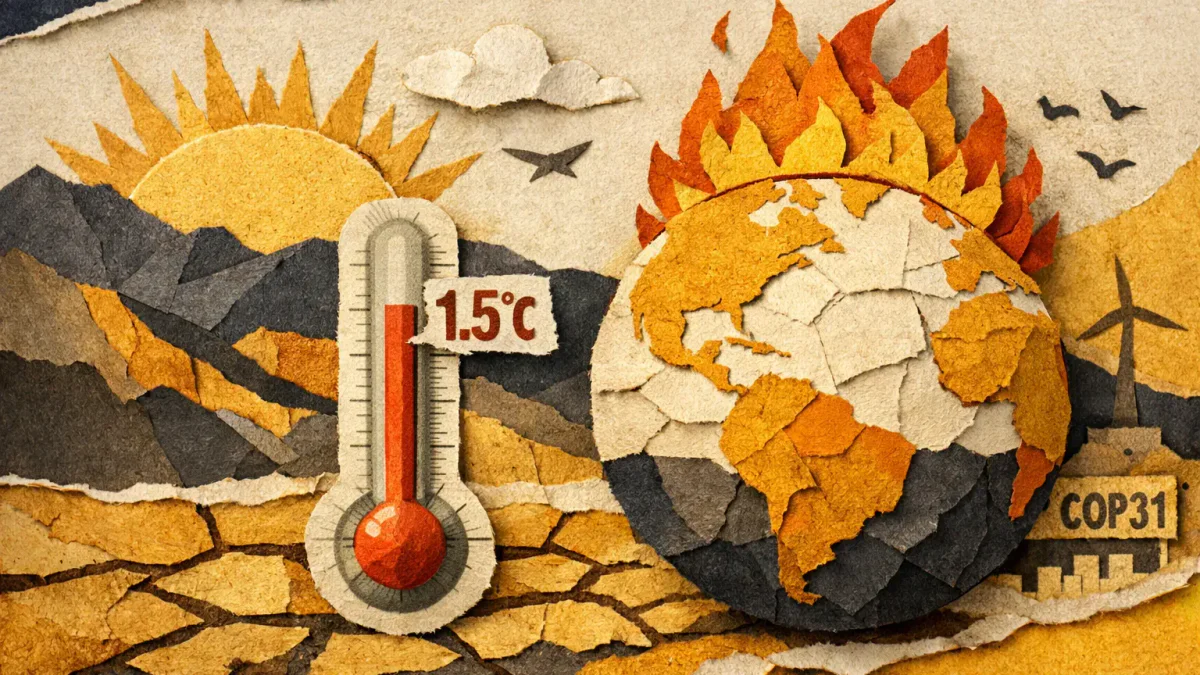
The year 2027 could become the warmest on record due to a combination of long-term global warming and a strong El Niño natural phenomenon. This was reported by the World Meteorological Organization (WMO) on November 9, 2026, as it presented a new climate report on the opening day of the UN COP31 conference in Antalya, Turkey.
According to the organization, the last 12 years are among the 12 warmest on record. Moreover, the years 2023–2026 have been the four warmest, although the final figures for 2026 are yet to be received.
Global temperature nears 1.5 °C mark
From January to September 2026, the average global surface temperature was 1.47 °C above the 1850–1900 levels, which are used as a pre-industrial baseline for comparison.
The margin of error is ±0.13 °C. This means that the actual deviation could have exceeded 1.5 °C. In 2024, the global average temperature reached a record 1.55 °C above pre-industrial levels.
However, exceeding 1.5 °C in a single year does not automatically mean surpassing the long-term temperature goal of the Paris Agreement. Climate change over an extended period is considered for its assessment.
Additional temperature increases are possible due to El Niño, a natural phenomenon associated with the warming of the tropical Pacific Ocean waters. It typically raises the average global temperature by 0.1–0.2 °C.
WMO Secretary-General Celeste Saulo reported that the current El Niño could become one of the strongest since observations began in 1950. Its impact is expected to persist into early 2027.
Extreme weather affected millions of people
The WMO presented preliminary data on the impacts of extreme weather events in 2026.
According to the organization, heatwaves, droughts, and wildfires caused over 30,000 additional deaths in Europe. In India, extreme heat in April affected approximately 146.5 million people.
In August, the collapse of glacier masses and subsequent sudden flooding in the Himalayas led to the deaths of over 1,300 people in Nepal.
Celeste Saulo noted that El Niño could increase the risks of heatwaves, tropical cyclones, and heavy rainfall. However, the impacts of such events depend on regional climate conditions and the readiness of infrastructure.
Sea level reached a record high
According to the WMO report, in 2026, the global average sea level reached its highest value during the satellite observation period.
The main long-term factors driving this rise remain the thermal expansion of ocean water and the melting of land glaciers. Additional short-term changes may be linked to El Niño, which affects the distribution of precipitation between land and ocean.
In 2025, glaciers worldwide lost over 400 billion tons of ice. According to the WMO, this corresponds to approximately 1 mm of global sea level rise.
At the opening of COP31, UN Secretary-General António Guterres urged governments to accelerate emissions reductions, transition from fossil fuels, and provide financial support to the most vulnerable countries.
The WMO report is based on preliminary data, mostly covering the period up to September 2026. The organization plans to publish the final results for the entire year in March 2027.
This material is prepared solely for informational purposes and does not constitute financial advice or a recommendation.
Related articles