

On August 25, 2026, Bitcoin's price surpassed $80,000 for the first time since mid-May, briefly reaching $81,000. According to data from the aggregator CoinGecko, the asset's value increased by more than 25% over the week. The growth momentum was supported by capital inflows through U.S. spot exchange-traded funds (ETFs). Over six trading sessions, net inflows into these financial instruments totaled approximately $2.26 billion. Notably, on August 24, funds recorded inflows of $337.56 million, with BlackRock's IBIT accounting for $208.93 million and Fidelity's FBTC for $104.57 million.
The preceding market dynamics were characterized by high volatility. On August 20, approximately $3 billion in positions were liquidated on crypto exchanges, of which roughly $2.7 billion were short positions. The following day, the volume of forced short position closures reached another $1.2 billion. Analysts at CryptoQuant noted that once the effect of position liquidations was exhausted, the market would require the formation of organic spot demand to sustain current levels. ETF inflow data partly reflects the emergence of such demand.
On the macroeconomic front, market participants are paying attention to actions by the U.S. Department of the Treasury. On August 19, the agency announced plans to at least double the maximum volume of buyback operations for previously issued Treasury bonds with maturities of 10 to 30 years. The limit will be increased from $2 billion to $4 billion per operation. The new parameters will take effect on September 9 and will remain in force until November 4. The official objective of this program is to maintain liquidity in certain segments of the government securities market, rather than to implement quantitative easing by the Federal Reserve (Fed). Nevertheless, former BitMEX CEO Arthur Hayes suggested in his analytical piece that this market pressure could compel the regulator to gradually expand the scale of its support, which could theoretically increase overall dollar liquidity in the financial system. He drew a parallel with the situation in late 2023, when changes in the structure of government borrowing coincided with increased activity in the digital assets market.
An alternative assessment of the macroeconomic situation was offered by investor Stanley Druckenmiller in his publication for The Wall Street Journal. He expressed concern about the impact of the expanded bond buyback program on confidence in the U.S. government debt market. In Druckenmiller's view, the currently elevated bond yields reflect fundamental macroeconomic challenges, including the pace of nominal economic growth, the budget deficit, and the federal debt, which has exceeded $40 trillion. The investor noted that liquidity management tools do not address the root causes of these imbalances, adding that attempts to artificially hold prices against fundamental factors have historically proven ineffective.
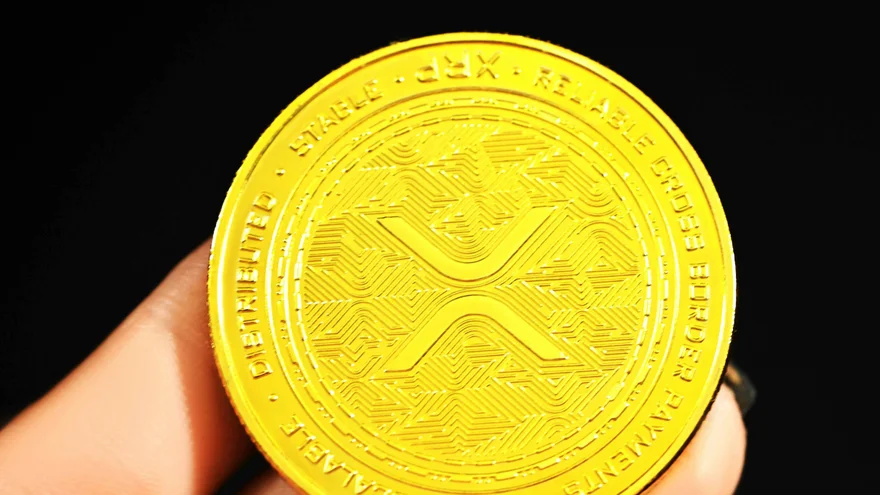
The bond market is showing a muted reaction to the announced measures. The yield on 10-year U.S. Treasury bonds has returned to around 4.7%, while that on 30-year bonds has returned to 5.22%. Earlier, the 30-year yield had reached 5.335%, which was the highest level in approximately 19 years. Alongside Bitcoin's rise, positive dynamics have spread to other digital assets as well. According to CoinMarketCap data, over the week the price of Ethereum increased by 31.02%, XRP by 49.79%, and Solana by 31.98%.
At the same time, signs of localized overheating are being recorded in the market. According to the analytics firm Bitfire Research, Bitcoin's Relative Strength Index (RSI) rose to approximately 78, which is traditionally interpreted by technical analysts as an overbought zone. The derivatives market is also sending mixed signals: on August 24, traders purchased call options worth $2.9 million with a strike price of $82,000 and an expiration date of September 4. Previously, BlackRock analysts had attributed the preceding market correction to deleveraging processes, outflows from exchange-traded products, and capital rotation into the artificial intelligence technology sector, while maintaining a positive long-term view on Bitcoin's role in diversified portfolios.
***
This material is prepared exclusively for informational purposes and does not constitute financial advice or a recommendation.