

Where Sony's Record Figures Came From
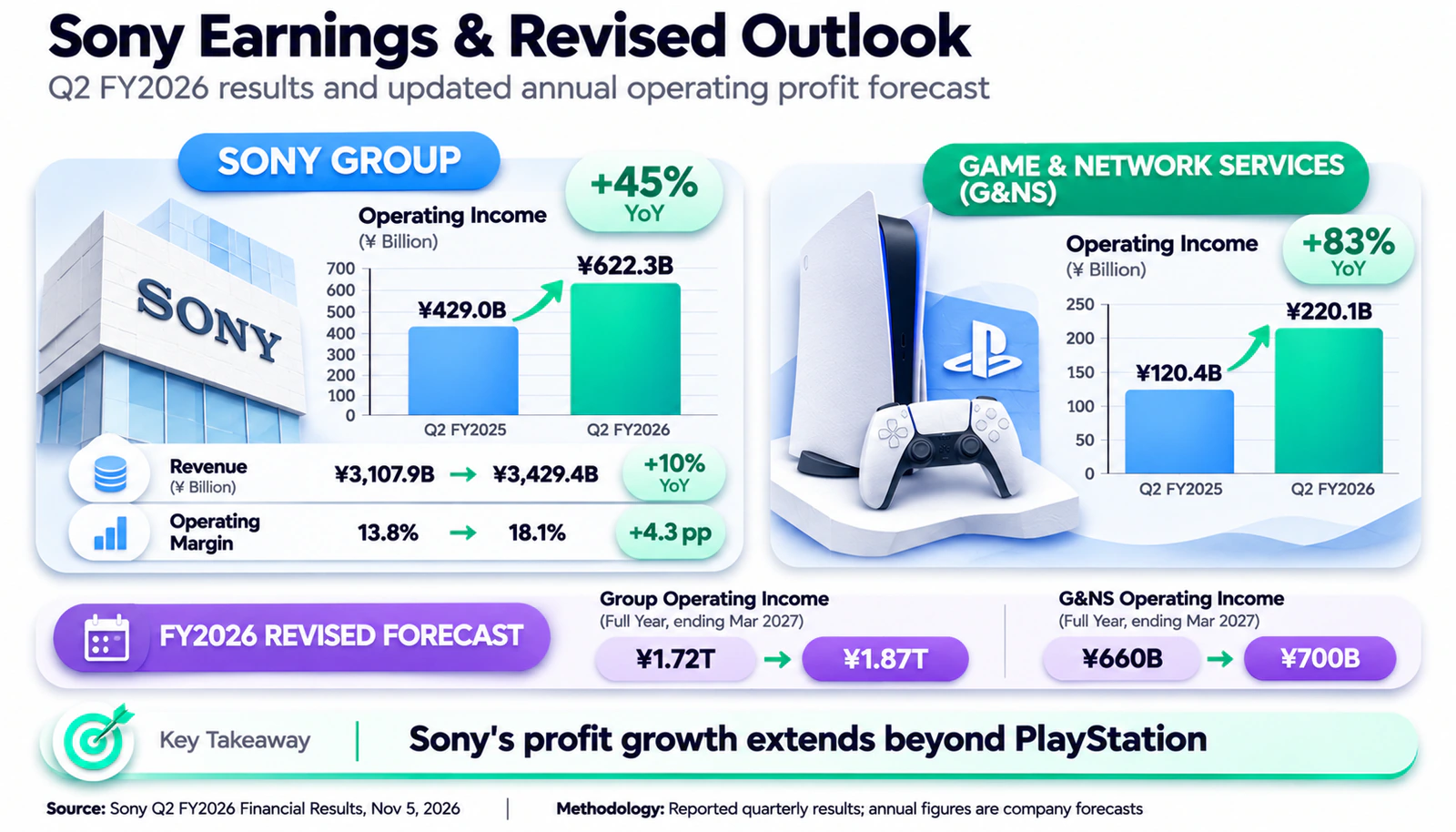
Sony's report for the second quarter of the 2026 fiscal year, published on November 5, showed a 10% increase in group revenue to 3.43 trillion yen. Sony's operating profit increased by 45%, reaching 622.3 billion yen, and the operating margin rose from 13.8% to 18.1%. Net profit grew by 44% to 449.6 billion yen.
The operating profit of the Game & Network Services (G&NS) segment reached 220.1 billion yen compared to 120.4 billion yen a year earlier, and Pictures reached 92.6 billion yen compared to 13.9 billion yen. Thus, the group's record cannot be solely attributed to the success of PlayStation.
Sony raised its forecast for operating profit for the year ending in March 2027 from 1.72 to 1.87 trillion yen, and revenue to 13 trillion yen. However, console production remains vulnerable to rising component costs.
Why PlayStation Profits Are Growing Despite Falling PS5 Sales
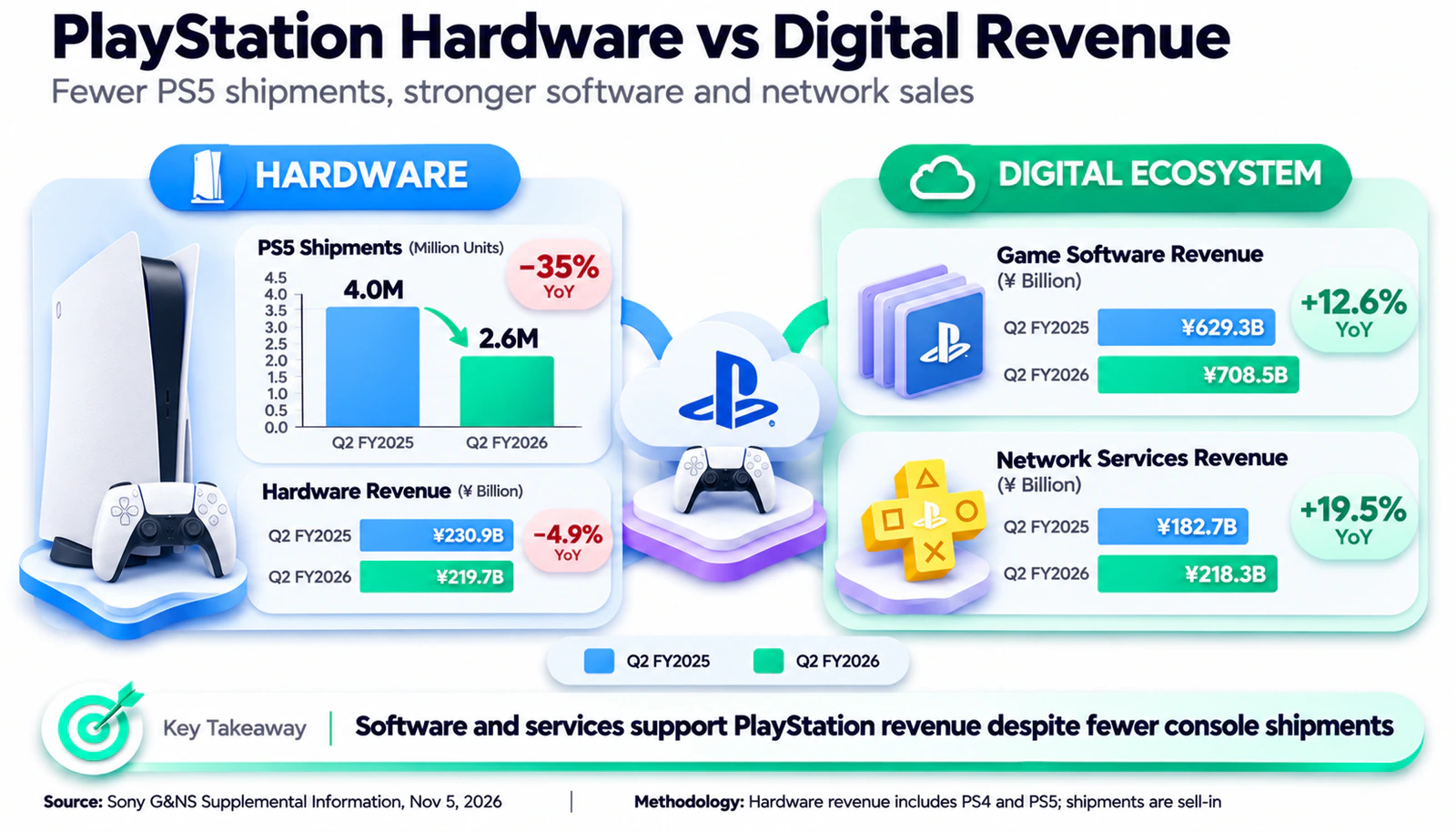
Sony shipped 2.6 million PS5 units compared to 4 million a year earlier — 35% less. However, revenue from the Hardware category, which includes PlayStation equipment, only decreased from 230.9 to 219.7 billion yen. The difference may be explained by pricing and sales structure, but Sony does not disclose the contribution of individual factors.
The main support for the gaming business comes from users of already sold consoles. Game and additional content sales brought in 708.5 billion yen compared to 629.3 billion yen a year ago, and network services brought in 218.3 billion yen compared to 182.7 billion yen. In September, the number of monthly active PlayStation accounts increased by 7% to 127 million. PlayStation Plus subscriptions and other PlayStation Network services support revenue regardless of new PS5 shipments.
The operating profit of G&NS grew by 83%, but a year ago Sony accounted for 49.8 billion yen in one-time expenses, including write-offs for Bungie. Without this low base, the growth was about 29%. The weakening yen also helped. Therefore, the growth in PlayStation's margin does not imply a reduction in the cost of the PS5.
How AI Demand Increases Memory Costs
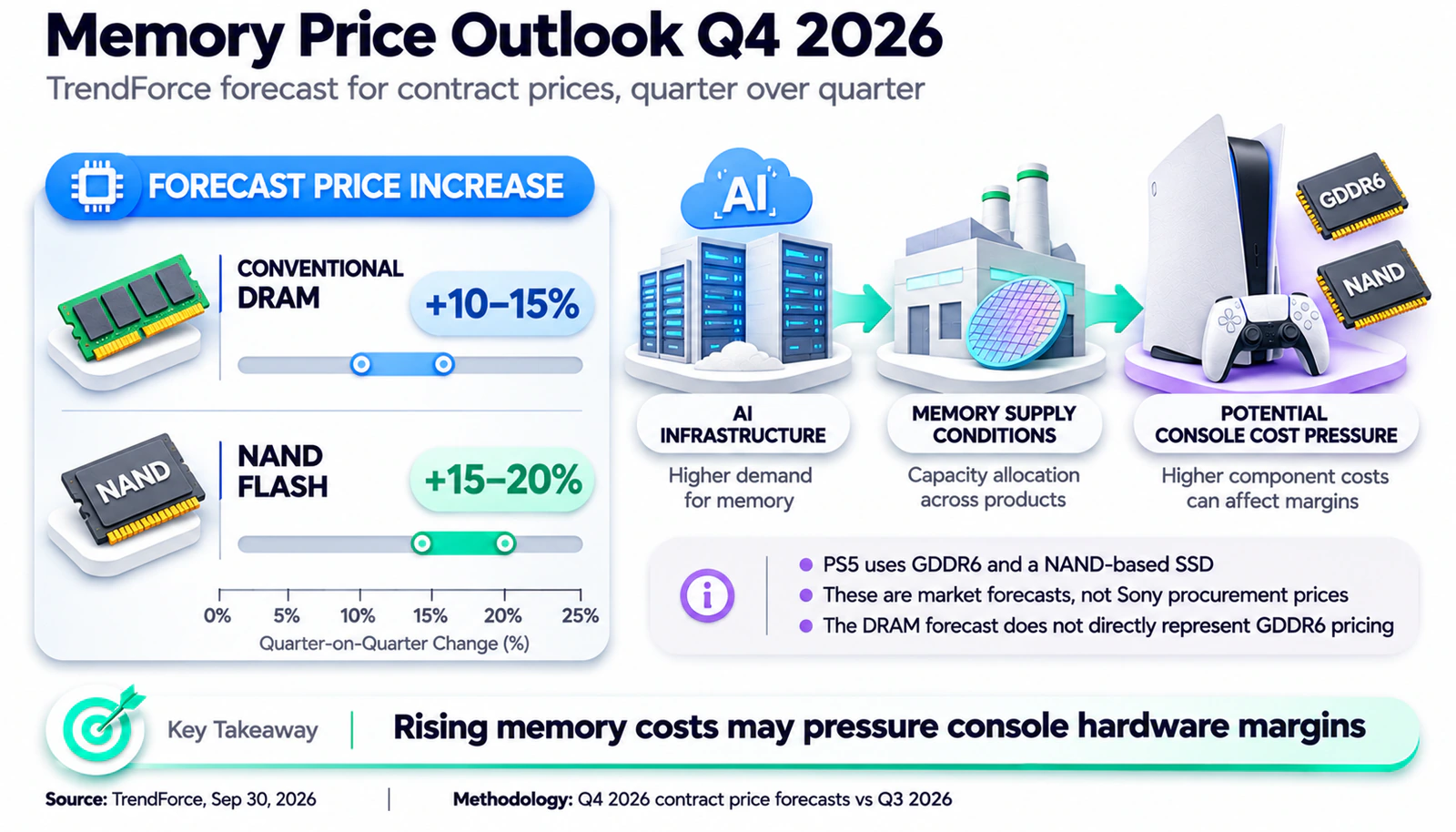
The PS5 is equipped with 16 GB of GDDR6 memory shared between the central and graphics processors and an SSD based on NAND Flash. The cost of both components depends, among other things, on the allocation of production capacities by suppliers.
Demand from AI infrastructure is growing for server DRAM, high-speed HBM, and enterprise storage. Semiconductor manufacturers are directing resources to more profitable areas, limiting supply in the consumer market. However, GDDR6, regular DRAM, and NAND do not necessarily increase in price at the same rate.
According to the TrendForce forecast from September 30, prices for traditional DRAM in the fourth quarter of 2026 may rise by 10–15%, and NAND Flash by 15–20% quarter-on-quarter. This is a forecast of market contract prices, not Sony's purchases, but it reflects the pressure on console costs. UNUM previously examined a similar risk in the case of Apple, although in the case of PlayStation, revenues from games and subscriptions play an important role.
How Sony Offsets Component Price Increases
In a quarterly results presentation, Sony's CFO Lin Tao described the mechanism for protecting margins:
We managed to offset the rise in memory prices by adjusting promotions and prices.
Sony is also cutting other expenses and expects the profitability of PS5 hardware to remain roughly at last year's level in the current fiscal year. The company has agreed with suppliers on memory volumes for the next fiscal year, but this does not guarantee previous purchase prices.
However, price protection for margins has its limits. Higher prices or smaller discounts may weaken demand. If Sony leaves prices unchanged, rising costs increase pressure on hardware profitability. The company attributes the decline in shipments primarily to the platform's age, rather than expensive memory.
Three Scenarios for Sony's Gaming Business
Base Scenario. Memory remains expensive, but pricing policy and cost control help protect margins. Games and services continue to support G&NS — this is closest to Sony's current expectations.
Positive Scenario. The rise in DRAM and NAND prices slows down, and game and subscription sales increase. This allows maintaining margins without further price hikes on consoles.
Negative Scenario. New contracts increase memory costs. Sony either raises prices at the risk of demand or accepts reduced hardware margins. Service revenues may not be sufficient.
What Investors Should Watch in Upcoming Reports
Investors evaluating Sony's shares should monitor not only the group's overall profit but also the resilience of G&NS:
G&NS Operating Margin. A decline in this margin with rising game revenues may indicate increased production or other costs.
PS5 Shipments and Hardware Revenue. Comparing these figures helps assess pricing dynamics, but not the exact price of a single console.
Games, Add-ons, and Network Services. Their revenue indicates the stability of income outside of new device sales.
DRAM and NAND Prices. Industry quotes are not equal to Sony's purchasing prices but indicate potential pressure.
G&NS Profit Forecast. Sony raised it from 660 to 700 billion yen. Future revisions will show the business's resilience.
Expensive memory may also affect the configuration of the next generation PlayStation, but the release date and price of PS6 are not yet determined.
Sony's 45% profit growth does not eliminate production risks. Currently, games and services help offset expensive memory, but in 2027, purchasing costs, PS5 demand, and G&NS margins will be decisive.